Choose by the explanation the viewer needs
Choose 2D medical animation when a clear diagram, sequence or decision pathway answers the viewer's question. Choose 3D when the explanation depends on depth, orientation, contact or movement through a structure. A hybrid film can use both, assigning each shot the format that makes its point easiest to inspect. Scientific accuracy still depends on the sources and review of the actual scene.
For a biotech or education team commissioning a short film, the useful question is specific: what must someone understand after watching? Write that answer before comparing visual styles. Then ask whether changing the viewpoint reveals information the audience needs, or simply makes the same explanation look different.
This guide provides a format decision table and an illustrative membrane-channel pilot. The pilot is a proposed production exercise, not a completed comparison experiment. It gives buyers a concrete way to discuss scope with an animator and test whether a more elaborate scene earns its place.
What changes between 2D and 3D production
In 2D animation, the production works with illustrated shapes and images. In 3D, it works with models that have depth and can be viewed from different camera positions. Both eventually can be delivered as an ordinary video. A 3D film does not require a headset or a stereoscopic display. Artery Studios definitions.
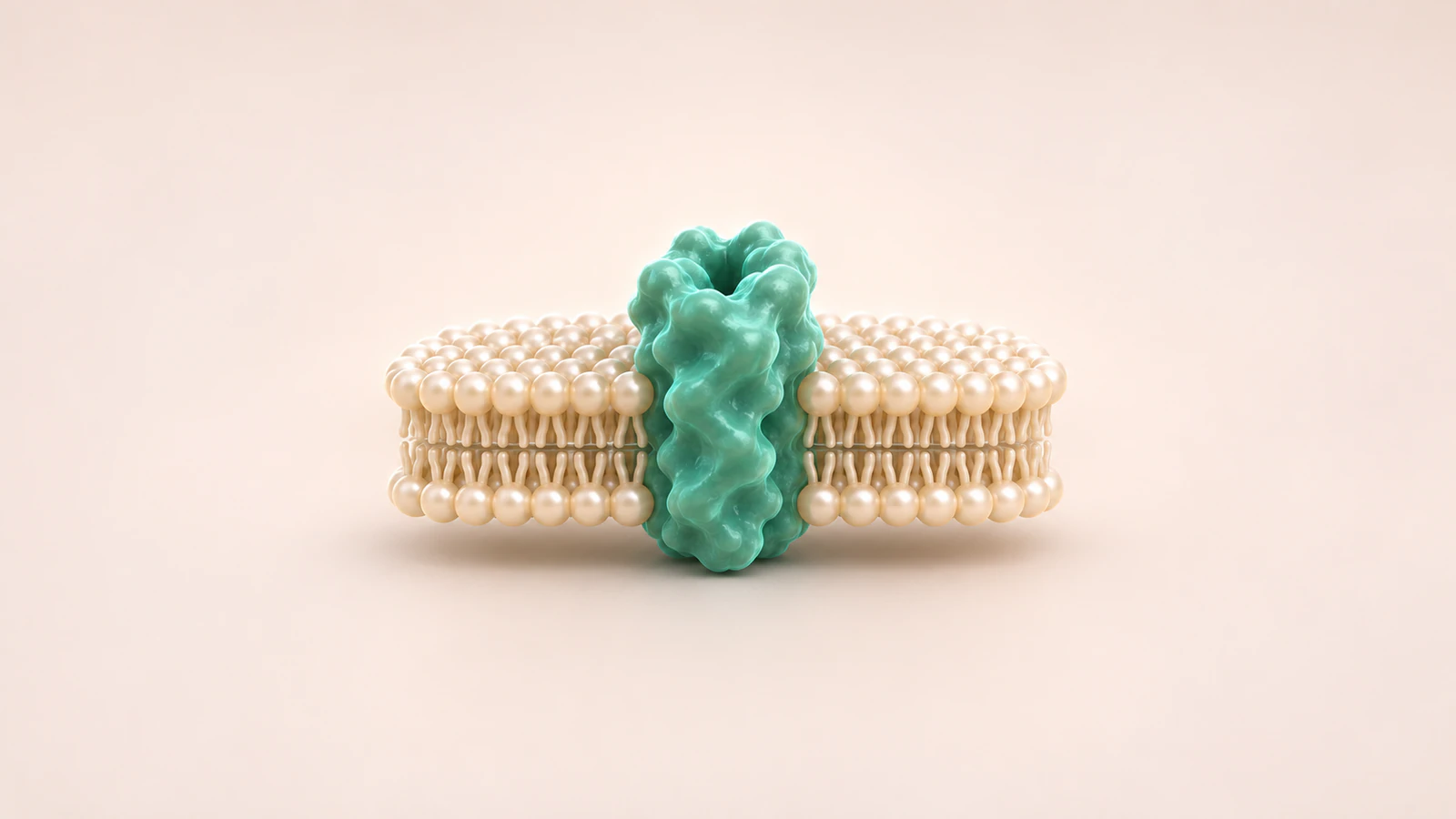
Consider a channel crossing a cell membrane. A side-view drawing can show the two sides and the path between them. A 3D scene can also reveal the entrance, the surrounding membrane and an oblique view. That extra perspective matters only if it helps the viewer answer a question that the drawing leaves unclear.
Style and dimensionality are separate choices. A 3D scene can be restrained and diagrammatic, while a 2D illustration can contain detailed anatomy. Ask for a representative shot rather than choosing from labels such as realistic or premium. The shot should contain the difficult part of your explanation.
Use a format decision table
Apply this table to individual shots before deciding the format of the whole film. The recommendations are an editorial framework for scoping a project, not measured learning outcomes. A viewer may need a flat pathway overview and a spatial close-up in the same explanation.
SingHealth Academy describes both 2D and 3D services for healthcare education and includes combinations of formats in its complexity levels. That supports considering a mixed production, without establishing that a particular mix will work for your audience. SingHealth animation services.
| Required explanation | Useful starting format | Acceptance question |
|---|---|---|
| Order of steps in a care pathway | 2D motion graphics | Can the viewer identify the next step? |
| Relative location of a device and tissue | 3D or a precise sectional drawing | Can the viewer identify contact and clearance? |
| A signaling sequence with many named entities | 2D diagram, with selective 3D close-ups | Can the viewer follow identity and order? |
| A molecule traversing a membrane | 2D side view or 3D cutaway | Can the viewer distinguish the pore from surrounding lipid? |
| Several viewpoints of the same anatomy | 3D model | Do the views remain mutually consistent? |
| Data accompanying a mechanism | 2D chart beside a separate mechanism scene | Can the viewer distinguish measurement from illustration? |
Do not buy accuracy from a rendering style
A polished surface cannot establish that a protein identity, anatomical relationship or claimed effect is correct. Ask which source supports each visible event. Review color, scale, timing and omitted structures as explicit choices. A flat drawing and a volumetric model can both make a misleading statement.
Research evidence also needs the right context. A 2026 study of mixed-reality neurosurgical training compared visual aids in a specific procedure, with 36 residents in the main experiment and 12 additional untrained controls. Testing used a physical phantom after training. It does not establish that a 3D marketing film outperforms a 2D one. Cascarano and colleagues.
Keep your acceptance question close to the intended use. For a conference mechanism film, ask whether a viewer can explain the depicted relationship and its limits. For procedural education, involve the appropriate subject expert in a task-specific review. Avoid turning evidence from one setting into a general claim about all medical animations.
Work through a membrane-channel example
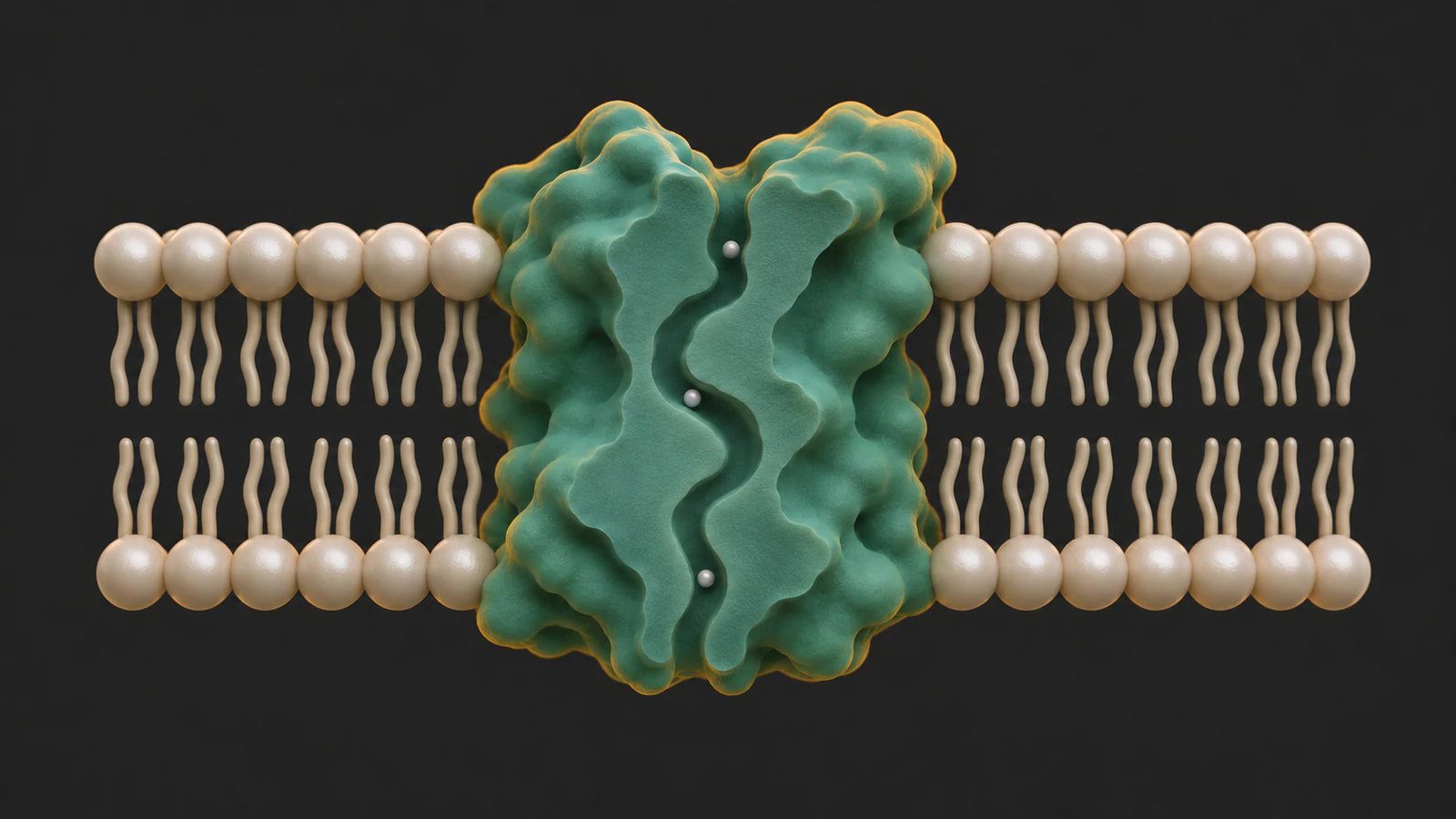
Suppose a research team needs a 30-second introduction explaining that a water channel provides a route across a membrane. The audience is scientifically literate but unfamiliar with the particular structure. The deliverable is one landscape video for a presentation, with no claim about a drug or clinical outcome.
A useful structural reference is human aquaporin-1 entry 1FQY. RCSB reports electron crystallography at 3.8 angstrom resolution. The associated Murata study examines structural determinants of water permeation. These sources inform the channel model; they do not supply a recorded movie of individual water molecules moving.
For a 2D pilot, draw a membrane cross-section, a distinct channel and a short illustrative transit path. For a 3D pilot, use a suitable structural model and a cutaway that exposes the relevant channel passage. If showing the aquaporin assembly, preserve the individual subunit pores rather than inventing one large central water tunnel.
Use the same explanatory sentence in both versions. Keep the beginning, intended event and end state equivalent. The generated illustrations in this article are conceptual and are not renders from 1FQY coordinates. A production model would need its own identity, assembly and orientation checks.
Specify the pilot before commissioning the full film

Write a small shot specification that a producer can price and a scientist can review. The durations below are illustrative editorial choices, not molecular times. They allocate attention to the explanation. A faster or slower version may be appropriate after observing the audience.
The difficult shot deserves the first review. If the channel passage is hidden in the proposed 3D view, another camera move may not solve it. Ask for a clear section or a simpler diagram. If the diagram makes the protein appear to float above the membrane, revise that spatial relationship before adding motion.
Keep production instructions in one agreed brief, including the audience, source record and person responsible for scientific approval. The mechanism animation brief checklist covers those inputs in more detail.
| Illustrative timing | Shot purpose | Review requirement |
|---|---|---|
| 0–6 seconds | Establish membrane and two sides | The same colors identify each side throughout |
| 6–18 seconds | Show the channel crossing the membrane | The protein spans both lipid leaflets |
| 18–25 seconds | Illustrate passage through a subunit pore | The path does not cross solid protein or lipid |
| 25–30 seconds | Return to the full membrane context | The cutaway is recognizable as a selected view |
Compare total scope rather than a format surcharge
Ask suppliers to quote the same script, duration, source inputs and output versions. Separate research, artwork or modeling, animation, review, narration and delivery. Otherwise, a simple 2D quote and a detailed 3D quote may describe different films rather than different ways to make the same film.
Fusion describes distinct production requirements and timelines for its 2D and 3D work. Treat supplier examples as that supplier's experience, not a universal percentage discount or delivery promise. Existing assets, custom anatomy and review requirements can change the work substantially. Fusion format comparison.
Specify the likely changes before selecting a route. If you expect several camera angles, ask how the reusable model will be retained. If you expect frequent changes to wording or a pathway, ask how those edits are handled. Use the medical animation budget template to compare the same cost categories across proposals.
Choose software or a studio after setting the format
A format decision does not automatically select a supplier. A team with an approved diagram and straightforward sequence may already have adequate slide or motion-graphics tools. A trained 3D artist may prefer a general-purpose modeling workflow. A commissioned production may suit a team that needs a producer to coordinate the script, artwork, audio and approvals.
Animiotics is relevant when you want an editable scientific 3D scene and your team can review the resulting explanation. Its scientific animation software page describes that workflow. Current documentation includes molecular structure imports, camera and timeline controls, and rendering. Confirm the required operation in the product manual before building your purchase specification around it.
The manual editor and paid generation are different offerings. Check the current pricing for the applicable audience, currency and generation allowance; generation and exports require a paid plan. For company use, also check the Industry license and third-party asset conditions in the terms. This comparison assumes no particular subscription price or guaranteed production time.
Review one shot at the actual viewing size
Show the pilot on the screen where it will be used. Ask a representative viewer to point to the channel, identify the membrane sides and describe what crosses between them. Record the answer in their own words. This is a practical clarity check, not a controlled learning study or a promise of audience performance.
Inspect one paused frame as well as the moving sequence. A dark channel entrance may disappear on a projector. A close-up can hide the surrounding membrane, while an ambitious camera move can reverse the apparent direction. Check the transition back to the intact cell so the viewer understands that the scale has changed.
For an existing spatial example, the Animiotics heart-valve film follows blood through the opening valve and shows leaflet closure. Its page identifies exaggerated cell size and timing, and animated rather than measured flow. Use that example to discuss viewpoint and simplification, not as evidence of a clinical outcome.
Put observed failures into one consolidated review record. Request the specific correction, the affected shot and the acceptance condition. The revision-rounds guide explains how to keep those changes manageable without confusing a correction with a new scene.
Frequently asked questions
Is 3D medical animation always more accurate?
No. Accuracy depends on sources, model selection and the relationships and events actually shown. Depth can make a spatial explanation easier to inspect, but it does not validate a biological claim.
Is 2D enough for a mechanism-of-action film?
It can be. A sequence of interactions may be clear in a carefully designed diagram. Add a spatial view when the audience needs to understand orientation, contact or a route through a structure.
Can one medical animation combine 2D and 3D?
Yes. Specify which shots use each format and how they join. Keep identity, terminology and scientific meaning consistent across transitions, and agree who handles the final edit.
Will 2D always cost less?
No universal saving applies. Compare the same script, asset requirements, versions and review scope. A detailed custom 2D film and a simple scene using an existing 3D model involve different amounts of work.
Should we commission a pilot first?
A short representative pilot is useful when a difficult spatial explanation could change the production route. Agree its scope and acceptance conditions before commissioning it; do not assume a pilot is included in a supplier quote.
Try a spatial explanation in Animiotics
Start with one question: can the viewer see how the channel crosses the membrane? Prepare the structural reference and the intended explanation, then create and inspect a short scene. Review the protein, membrane relationship and illustrative motion before expanding it into a finished film.