
What a revision round should include
Medical animation revision rounds are agreed opportunities to review a version and return a consolidated set of changes. Before buying, establish which stages receive rounds, what counts as a correction, who approves the response and how additional work is priced. The useful allowance depends on the film and its reviewers. A headline count alone gives an incomplete picture.
For a biotech team commissioning a molecular film, write down the decisions each round must settle. The script establishes the explanation, a storyboard establishes the shots, and a motion preview exposes timing problems. Final inspection checks the approved work in its delivery format. Agree these checkpoints with the supplier before comparing quotes.
This guide uses a proposed DNA scene review to make those questions concrete. The change requests and acceptance tests are illustrative. You can adapt them to a commissioned film or an editable project that your team maintains.
Compare the allowance at each stage
Published offers use different units. Animate Your Science lists two revision rounds at each stage. Vuelab describes two client rounds within its full production package and hourly billing for additional rounds. Ask each supplier to map its allowance onto your actual production stages. These are provider statements checked on November 7, 2026. Animate Your Science, Vuelab.
Random42 describes unlimited storyboard changes during its initial process. That statement concerns a particular stage. Obtain written confirmation of the animation-stage allowance for the proposed project. Random42 scientific review process.
Use the table to prepare questions for a quote. A supplier offering fewer rounds can still fit a short, stable film whose reviewers agree early. A complicated mechanism with several approval owners needs a review plan that accommodates those owners.
| Published offer | What it states | Question for the quote |
|---|---|---|
| Animate Your Science | Two rounds at each stage | Which stages and deliverable versions are included? |
| Vuelab full production | Two client rounds, extra rounds billed hourly | How are feedback batches counted across milestones? |
| Random42 initial storyboard | Unlimited changes during the storyboard stage | What allowance applies once animation starts? |
| Animiotics Done for you | One revision round for the stated short-film offer | Which changes fit the confirmed brief and round? |
Put the review rules in the scope
Specify the version being reviewed, a feedback deadline, the person collecting comments and the deliverable returned after the round. Define whether one round means a single consolidated list followed by a revised preview. Ask how late comments, contradictory directions and a reopened approval are handled. Both sides need the same operational definition.
List the expected reviewers before production starts. A scientific lead may approve molecular identity, while a communications lead approves audience fit. One coordinator can collect their decisions and identify unresolved points. Give the supplier a single agreed instruction for each issue, with the responsible reviewer named.
Keep the initial evidence and intended audience beside these rules. The mechanism-of-action animation brief checklist provides a starting record. During revision, refer back to that approved record whenever a requested change expands the explanation or introduces another biological claim.
Review the decisions that exist now
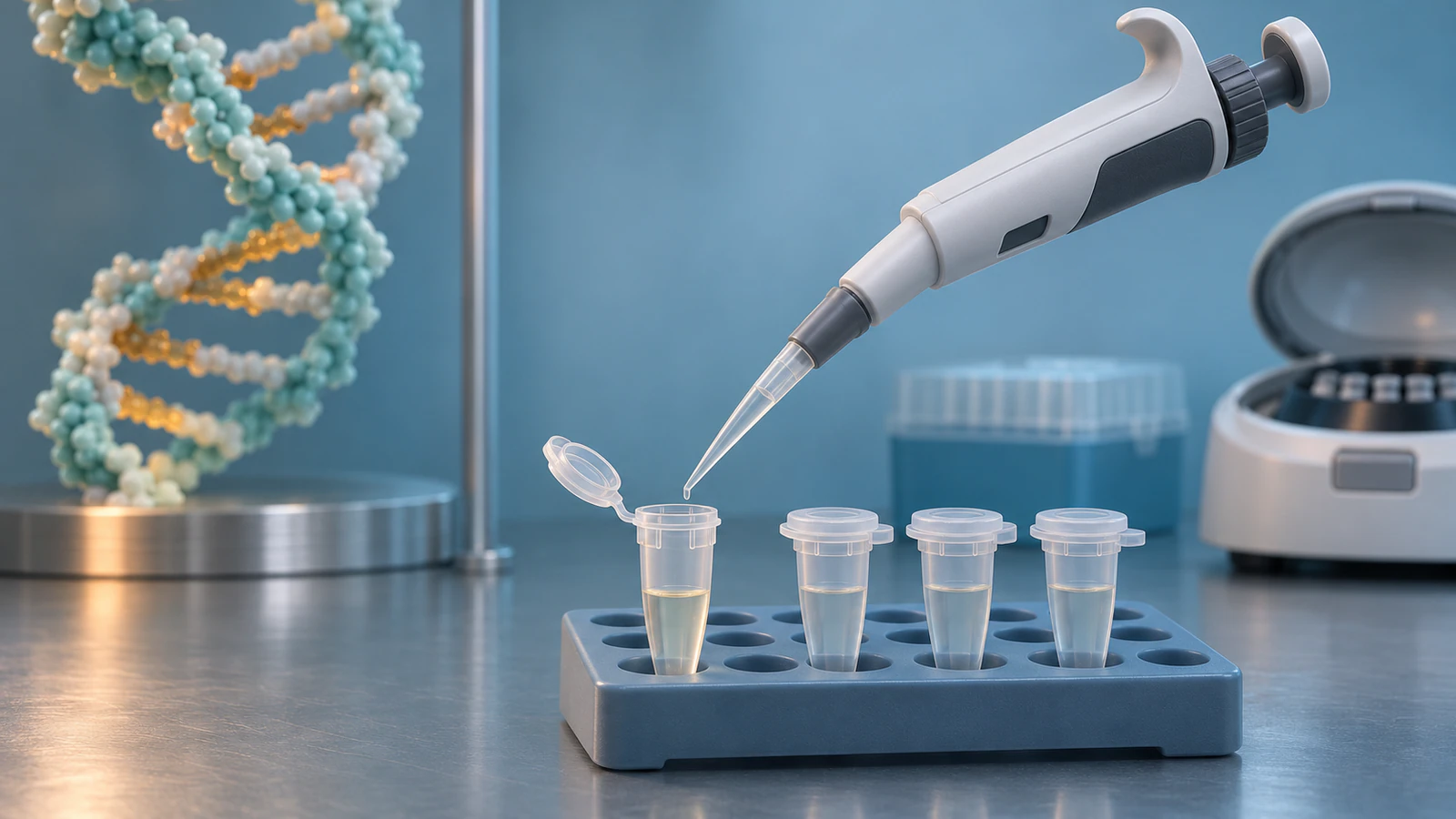
At script review, read each scientific statement against its source and audience. At storyboard review, inspect the chosen structures, orientation and sequence of events. An animatic, a timed rough version of the shots, lets reviewers judge whether the sequence can be followed. Ask for a motion preview before authorizing the final render.
Nucleus describes client review at script, storyboard, rough animation and final polish milestones. Addax recommends collecting comments and identifying their precise time in the film. Those published processes support early, specific review. The particular checkpoints and turnaround for your project still need agreement. Nucleus review stages, Addax review guidance.
For example, resolve a wrong nucleotide sequence before approving a close-up of base pairing. Check whether the pairing is visible in a rough preview, then inspect lighting and captions in the rendered version. Each pass should leave a record of the decisions made and the questions still open.
Work through a DNA scene correction

Consider a proposed short explanation of DNA hybridization, the pairing of complementary strands. Use the existing Animiotics DNA hybridization film as a review reference. Its page identifies PDB 1BNA as the source of the double-helix geometry and describes the strand motion, colors and timing as illustrative.
RCSB lists 1BNA as an X-ray structure at 1.90 angstrom resolution, with two DNA chains of 12 nucleotides each. The deposited sequence is CGCGAATTCGCG. Its crystallographic coordinates describe the assembled duplex. A proposed animation needs separate support for any claim about the path or duration of strand association. RCSB 1BNA, Drew and colleagues.
Suppose a reviewer asks to replace the sequence with a company probe. Identify whether the request changes the strand length, complement, labels and narration. Preserve the existing source record, then agree the replacement evidence and affected shots. The new probe requires a suitable structural or explicitly schematic treatment.
The first-party film gives this discussion an inspectable example. The illustrations in this article are conceptual CGI. Use the source coordinates and the actual scene for nucleotide-level checks.
Write feedback that can be checked
Give every note a version, shot or timestamp, observable problem, requested result and acceptance check. Attach a frame if the issue depends on a particular angle. When the note changes the science, add its source and the scientific reviewer who will confirm the fix.
An illustrative note could read, "Version 3, shot 2, 00:08. The second backbone is hidden throughout the pairing moment. Adjust the framing so both strands can be followed into the duplex. Keep the selected structure and the approved narration. Return a preview of this shot for inspection." The timestamp here belongs to the hypothetical review.
A different note might ask for a new probe sequence. That needs an input file or sequence record and an explicit decision about which previous approvals must be revisited. Vague feedback such as "make the DNA more accurate" leaves the animator to guess which feature the reviewer means.
For polarity checks, use the DNA strand-direction guide. Record the actual direction and sequence requirement in the review note so the supplier can demonstrate the result.
Classify the change before estimating it
Ask the supplier to explain the affected work before accepting a revised schedule. A camera adjustment may require rendering again. A new sequence may require rebuilding geometry and rechecking the narration. The effort depends on the project and how the scene was constructed.
Use this proposed change matrix with the approved brief beside it. Agree how an error against that brief will be corrected, including review and cost treatment. Record newly supplied scientific evidence separately, since it may change a previously accepted explanation.
| Requested change | Work to inspect | Completion evidence |
|---|---|---|
| Reveal the second DNA strand | Camera, occlusion and framing | Preview shows both strands through the pairing shot |
| Replace the probe sequence | Input sequence, geometry and affected script | Reviewer confirms the replacement against the supplied record |
| Slow the pairing moment | Motion timing, narration and total length | Revised preview remains synchronized and readable |
| Add a cell-nucleus scene | New assets, scale transition and scientific context | New shot has an approved purpose and source record |
| Correct an export glitch | Encoding and affected output versions | Delivered file plays correctly in the intended setting |
Choose who will make later changes
A commissioned studio is a reasonable choice when your team wants a production partner to coordinate the film and its revisions. An existing in-house 3D workflow can be sufficient when a capable colleague already maintains the scene and can make the expected changes. Check that review time is allocated in either route.
Animiotics fits teams that want to inspect and revise an editable scientific scene themselves. Its current documentation describes object, material, camera and timeline controls, alongside generation and rendering. For the DNA example, the relevant starting point is molecular animation software. Agree the scientific result before making the edit.
Test one representative change before committing to a longer production. Open the chosen scene, adjust a camera or color, save a new version and inspect a preview. This proposed evaluation remains unexecuted for this article. Check the resulting structure, framing and playback together.
Decide how later work will be handed over using the medical animation deliverables checklist. The editable project, relevant dependencies and a clear source record help the next person understand the accepted version.
Budget for edits and reviewer time
Separate supplier production effort, your internal review time and paid software usage in the estimate. Ask for the method used to price extra work, including any minimum charge and whether a revised preview is included. A short request can affect several shots when the same model or narration appears throughout the film.
As checked on November 7, Animiotics pricing describes a generation as creating or editing an animation and lists separate Academic and Industry options. The Done for you offer includes one revision round for a film up to 30 seconds. Confirm the applicable offer and scope when purchasing. Current Animiotics pricing.
For company use, check the applicable commercial license and third-party asset obligations. Animiotics terms describe commercial-use rights for Industry plans and continuing obligations for third-party material. Include any new model, audio or image introduced during revision in your asset record. Animiotics terms.
Allow time for the people who can approve the science to see the revised version. Reserve final playback checks on the conference screen, website or presentation setup specified in the brief.
Close each round against the notes
Keep the previous version, the consolidated feedback and the returned version together. Mark each note resolved, partly resolved or awaiting a decision. For a partly resolved note, state the remaining observable problem. The coordinator can then send a short, precise response.
Inspect adjacent shots after a correction. Changing a DNA strand color can create a continuity problem elsewhere. A timing change can put a caption ahead of the event it describes. Recheck the affected sequence with sound and in the intended viewing format.
Finish with a named approval of the exact delivered version. Carry unresolved scientific questions into the next decision explicitly. If the next request introduces a different audience or mechanism, create a revised scope with its own evidence and acceptance checks.
Frequently asked questions
How many medical animation revision rounds should we buy?
Choose an allowance mapped to the stages and reviewers your project needs. Compare the included feedback batches, correction policy and extra-work rates. Published providers use different counts and stage definitions.
Does unlimited revision mean unlimited changes to the film?
Read the scope carefully. The phrase may apply to one stage, such as storyboarding. Ask how later changes, new scenes and reopened approvals are treated.
Should scientific errors use a revision round?
Agree this explicitly before production. Identify the approved source or requirement the version fails, request correction and document how its cost and review are handled.
Can our team revise an Animiotics scene?
Current documentation supports editing scene objects, appearance, camera and timing. Evaluate the particular change you need on a representative scene and check the current plan requirements for paid operations.
What should happen when reviewers disagree?
Have the coordinator record the disagreement and ask the responsible scientific or communications owner for a decision. Send the animator one resolved instruction and keep its rationale with the version.
Try a DNA scene revision in Animiotics
Try the DNA hybridization starter with one defined change, such as a clearer view of the second strand. Keep its source record nearby and compare the saved preview with your acceptance note. Review current plan terms for generation, rendering and exports before starting paid work.