
Build the budget around a defined film
A medical animation budget template should record the film’s scope, supplier fees, internal review time, optional deliverables and a reserve for named uncertainties. For a 30-second mechanism film, start with one audience, one biological event and an agreed list of outputs. Ask every supplier to price that same specification. Add the work your own team must contribute before choosing a production route.
The worksheet below is designed for a biotech communications or research team planning a short explanation of antibody receptor blockade. It includes an illustrative calculation and questions that make quotes easier to compare. Replace every assumed amount with your actual quote or internal estimate before approving expenditure.
Keep the budget beside the scientific brief. A price becomes easier to interpret when the reviewer can see which structures, claims and viewing formats the work includes. The mechanism-of-action animation brief checklist helps collect those inputs.
Define the 30-second example
Our proposed film explains a single antibody blocking access to a cell-surface receptor. Its intended viewer is a scientific partner watching a presentation. The requested output is one 30-second landscape video with English captions, a silent version and one still. These are planning choices for this example, with availability and cost to be confirmed in each quote.
The existing Animiotics antibody receptor-blockade film provides a concrete visual reference. It shows a Y-shaped antibody approaching and binding a membrane receptor. Its page identifies the models and timing as conceptual. A buyer can use that reference to discuss visibility, pace and the level of molecular detail.
Write the acceptance condition in observable terms. A viewer should be able to identify the antibody, locate the receptor and see the occupied binding region. Have the scientific lead approve any statement about the effect of that occupation. Keep the chosen audience and acceptance condition at the top of every supplier’s worksheet.
Copy this budget worksheet
Create one row per cost component. Add columns for the responsible person, quoted amount, confirmed inclusion, payment date and evidence link. Use “included” when a supplier bundles a component into its base fee, and “awaiting quote” when the amount is unresolved. An empty cell can conceal work that still needs an owner.
General animation budgets commonly include script development, staffing, storyboards and audio. This worksheet adds scientific-source preparation, reviewer effort and output acceptance to suit the molecular-film example. Voices animation budget categories.
Keep supplier payments and internal effort in separate totals. Both belong in the project decision, while only the supplier payments necessarily appear on a new invoice. Record the currency for each amount and the exchange-rate date if your finance team converts currencies.
| Budget row | What to specify | Amount to enter |
|---|---|---|
| Scientific preparation | Approved claim, structures, references and reviewer | Internal hours × internal rate |
| Base production | Script, storyboard, models, motion and agreed render | Written project quote |
| Review and corrections | Stages, feedback batches and correction policy | Included or separately quoted |
| Audio and captions | Narrator, music, caption file and language | Confirmed supplier amount |
| Additional outputs | Silent version, still, aspect ratios and source access | Price each requested output |
| Usage and assets | Intended use and third-party permissions | Confirmed fee if applicable |
| Delivery checks | Playback, captions and final scientific approval | Internal hours × internal rate |
| Contingency | Specific unresolved change and release authority | Team-approved reserve |
Read published prices with their scope
Public prices help identify suppliers worth briefing. The table records offers read on November 9, 2026. Each describes a different production package. Ask the supplier to confirm how your antibody example fits its offer, including the supplied evidence and the expected review effort.
Addax lists an Essential 30-second package from $3,000 for a settled mechanism or procedure with supplied references. Its literature-led MOA and cellular tier starts at $5,000 for 60–90 seconds. A short molecular commission therefore needs a scope-specific quote. Addax published pricing.
Medmovie publishes a 30-second minimum project range of $7,500–$10,800. Its separate $260–$360 per-second statement gives a different lower endpoint when multiplied by 30. Use the stated project range for initial discussion and request clarification in the written estimate. Medmovie pricing FAQ.
Microverse gives a $25,000–$30,000 example for a 30-second production and explains its research, creative and production components. That figure belongs to its described service and production approach. Microverse scientific-animation pricing.
| Published offer | Published amount | Scope question |
|---|---|---|
| Animiotics Done for you | From $999, up to 30 seconds | Does the confirmed brief include each requested output? |
| Addax Essential | From $3,000, 30 seconds | Does this molecular scene fit Essential or another tier? |
| Medmovie minimum project | $7,500–$10,800, 30 seconds | Which production and usage items are included? |
| Microverse short production | $25,000–$30,000 example | Which research and custom production work does the quote cover? |
Calculate supplier cash and internal effort
Use an illustrative supplier quote of $4,800 for the base film. Suppose separately quoted narration costs $350, an additional format costs $250 and an asset permission costs $100. The supplier subtotal is $5,500. These amounts are invented worksheet inputs so you can check the calculation, and should be replaced with actual estimates.
Next suppose your team allocates eight scientific-review hours at an internal costing rate of $75 per hour and four coordination hours at $50. Internal effort totals $800. The combined project estimate is $6,300 before any applicable tax, currency conversion or contingency.
If the team approves a $600 reserve for one unresolved structural replacement, planned supplier cash becomes $6,100 and the combined budget becomes $6,900. Document who may release that reserve and which change it covers. A reserve for a specific unresolved decision is easier to manage than an unexplained uplift.
The same arithmetic works for a software-led project. Enter the actual subscription charge, separately purchased services and your team’s creation, review and delivery time. Allocate a shared subscription consistently across projects and retain the full cash payment in the finance record.
Connect scientific detail to production work

An antibody model needs a clear identity and source record. RCSB PDB entry 1IGT is a mouse immunoglobulin structure determined by X-ray diffraction at 2.80 angstrom resolution. The associated paper describes an intact IgG2a antibody with an asymmetric arrangement of its arms and stem. RCSB 1IGT, Harris and colleagues.
For a general antibody-shape discussion, that entry offers a documented structural reference. A film about a particular therapeutic antibody and receptor needs evidence appropriate to those identities and their interaction. Allocate preparation time to finding that evidence, choosing the assembly and recording any illustrative placement or motion.
Ask the animator which assets are supplied, reusable or newly built. A membrane patch, receptor, antibody and signaling molecule create a different workload from a film that also moves through a whole cell and organ. The article’s CGI images illustrate those changes in scale. Their shapes were generated conceptually, independently of the 1IGT coordinates.
When the target interface remains uncertain, have the scientific lead approve an explanatory representation and its wording before detailed production. Record the approved level of detail in the quote. That gives a later reviewer a concrete basis for deciding whether a requested replacement changes the scope.
Price a short scene plan
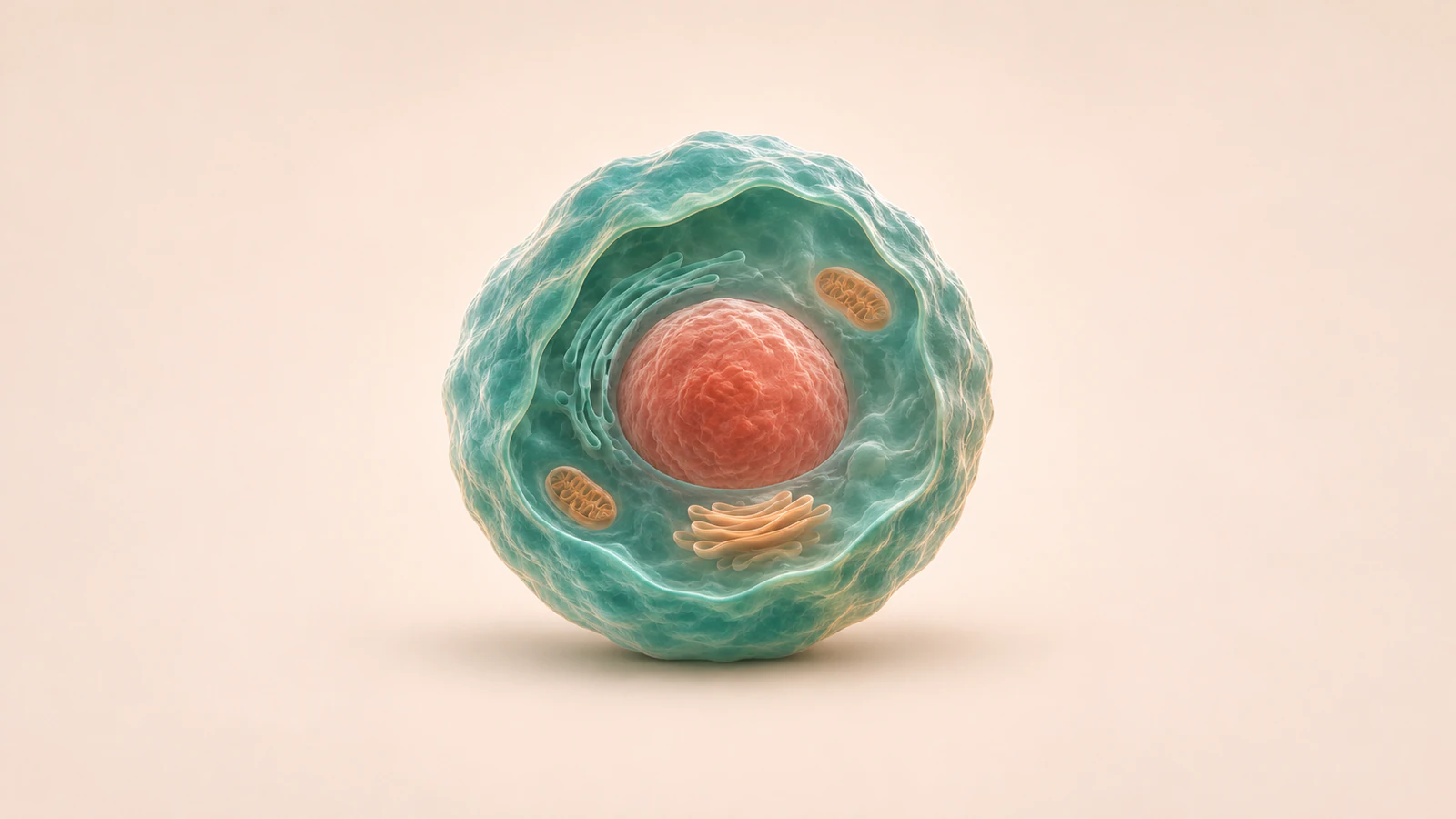
Use this proposed timing plan to ask for an estimate. The durations describe screen time chosen for communication. Scientific sources must support any biological timing statement used in narration. This plan has not been executed as a new Animiotics film.
For each shot, ask whether the same assets and lighting can be reused. The close-up may need more surface detail than the opening view. A new cell-scale ending introduces an environment, scale transition and another scientific review decision. Price that ending as an explicit option.
Glow Medical identifies source material, scientific complexity and adaptations as scope factors. VOKA’s calculator distinguishes custom production from catalog content and edited compilations. A suitable existing clip may satisfy a generic teaching need when its content and permitted use fit. Glow production planning, VOKA production options.
| Screen time | Proposed shot | Budget question |
|---|---|---|
| 0–6 seconds | Establish the receptor in a membrane patch | Which molecular assets already exist? |
| 6–16 seconds | Show antibody approach and contact | Who approves the contact placement and motion? |
| 16–24 seconds | Hold on the occupied receptor region | Does the close-up need more model detail? |
| 24–30 seconds | Return to the overview with a concise caption | Can the existing environment deliver the ending? |
Compare production responsibility
Choose software-led production when your team can prepare the evidence, develop the explanation and review the result. Animiotics supports editable scientific scenes with object, camera, appearance and timing controls. For this mechanism example, review the current MOA animation software options against the tasks your team will own.
The live pricing page lists Done for you from $999 for up to 30 seconds at 1080p, with one revision round and delivery in five working days after the agreed service process. The brief is confirmed before payment. Obtain confirmation of the silent version, still and captions requested in this worksheet. Animiotics pricing.
A commissioned studio can fit a project needing a dedicated production team, custom art direction and a recorded professional narrator. Compare portfolios relevant to the specific science and ask who performs each review. Software-led creation also needs a named scientific reviewer and time for checking the exported result.
For commercial company use, check the applicable plan. Current Animiotics terms grant commercial-use rights under Industry plans and preserve third-party licensing obligations. Record the applicable terms with the project and confirm any service-specific rights in its order. Animiotics terms.
Resolve exclusions before approving the quote
Send the same worksheet and reference film to each shortlisted supplier. Ask for an amount or a clear inclusion statement on every row. Confirm the currency, applicable taxes, payment milestones, quote validity and delivery dependencies in the written estimate.
Match review allowances to the stages your team will use. The medical animation revision-rounds guide explains how to define feedback batches and scientific corrections. Assign one coordinator to reconcile comments before they reach production.
Before approval, verify how you will receive and use the final work. The medical animation handoff checklist covers file acceptance and editable handoff questions. A promised source file should have an identified format, required application and practical reopen check.
Frequently asked questions
What belongs in a medical animation budget template?
Include scientific preparation, production, review, audio, captions, additional outputs, usage permissions, delivery checks and contingency. Record a responsible person and a confirmed inclusion or estimate for each row.
Does a 30-second film cost half as much as a minute?
Ask for a scoped quote. Research, asset preparation and storyboarding can remain substantial even for a short film. Published suppliers use different minimums and production packages.
How much contingency should we add?
List the unresolved decisions first, estimate their possible cost with the supplier and have your team approve a reserve. The $600 example here is an illustrative input for one named change.
Can an existing animation meet the brief?
It can when its scientific explanation, audience, format and permitted use match your requirements. Check those points before budgeting for custom assets or extensive edits.
How should we compare software with a studio quote?
Record the subscription or service charge and the work your own team will perform. Compare the total effort needed to produce and approve the same defined deliverable.
Try the antibody scene in Animiotics
Try the antibody receptor-blockade starter with a clearer close-up of the occupied receptor. Use that small review exercise to decide what your team can prepare and check itself. Review the current paid generation, rendering and export terms before starting production.