Specify what your team must receive
Medical animation deliverables should include the approved video, the versions needed for each channel, and the scientific record that explains what the film shows. If your team needs future changes, specify editable project access or source files separately and test an actual revision. A finished MP4, an interactive viewing link and an editable production project serve different jobs.
Start with the change you expect after delivery: a new camera angle, a corrected structure, a translated narration or a shorter conference loop. That change determines which files and permissions you need. Requesting every possible format adds work without necessarily making the animation easier to maintain.
This checklist is for a research, biotech or medical communications team accepting a film or choosing a production route. It concentrates on the handoff. Use the mechanism-of-action animation brief checklist earlier in the project to agree the message, evidence and reviewers.
Choose files by the next task
Ask suppliers to distinguish included deliverables from optional ones. Get Animated Medical describes its normal final delivery as MOV or MP4. Glow Medical says cutdowns, stills and language versions should be planned at the start. These are each provider’s stated practices, not universal package contents.
The table below is a purchasing framework. Include only the rows your team will use, name the person receiving each item and write a simple acceptance condition. A file extension alone does not establish that the file contains the controls or assets required for your next edit.
| Next task | Request | Acceptance check |
|---|---|---|
| Present the approved story | Final master and playback copy | Plays with correct sound, framing and version |
| Publish on another channel | Agreed aspect ratio or shorter cut | Essential biology remains visible and understandable |
| Translate the film | Approved script, subtitle file and agreed audio components | Timing and terminology match the released film |
| Change objects or camera | Editable project and required dependencies | Recipient can perform the agreed edit |
| Move geometry to another tool | Agreed exchange file such as GLB | Required objects and supported features survive import |
| Reassess the science | Source record, assumptions and approval history | Reviewer can trace each important visible claim |
Define editable before comparing prices
A delivered movie lets an editor trim the sequence or add a title. It does not restore the protein objects hidden behind the pixels. An interactive link may let a reviewer orbit the scene but still provide no editing rights. A native project may expose cameras and materials while relying on separate assets or a particular software version.
Write an edit requirement as an observable task: “Our scientific lead can recolor the two alpha chains together, keep the beta chains unchanged and render a new still.” Ask which application, account and plan make that possible. Then establish whether the recipient can do it independently or must return to the original producer.
Supplier archiving can be useful without transferring the project. TramBauer describes retaining scene assets for later updates. Its public statement about archiving does not establish that every client receives every source file. Confirm the arrangement for your project and choose it deliberately if outsourced updates meet your needs.
Keep the evidence with the scene
The handoff should explain the scientific inputs as well as the visual output. Record structure identifiers, selected chains or assemblies, coordinate files, citations and any modeled additions. Keep the approved script and a short list of illustrative choices beside them. A new animator should not have to reverse-engineer these decisions from colors.
Liu and colleagues described an annotation interface for scientific animations that connects depicted structures with evidence and discussion. Their SARS-CoV-2 project illustrates why a smooth film can conceal differences between established observations and uncertain mechanisms. It is a project report, not evidence that any particular handoff checklist improves commercial results.
For your own package, use one source row per important object or event. Include the source URL, version or retrieval date, the claim it supports and what it does not establish. If a camera move is illustrative, say so. If a structural model is predicted, keep that distinction visible in the record.
Use one structure as a handoff test

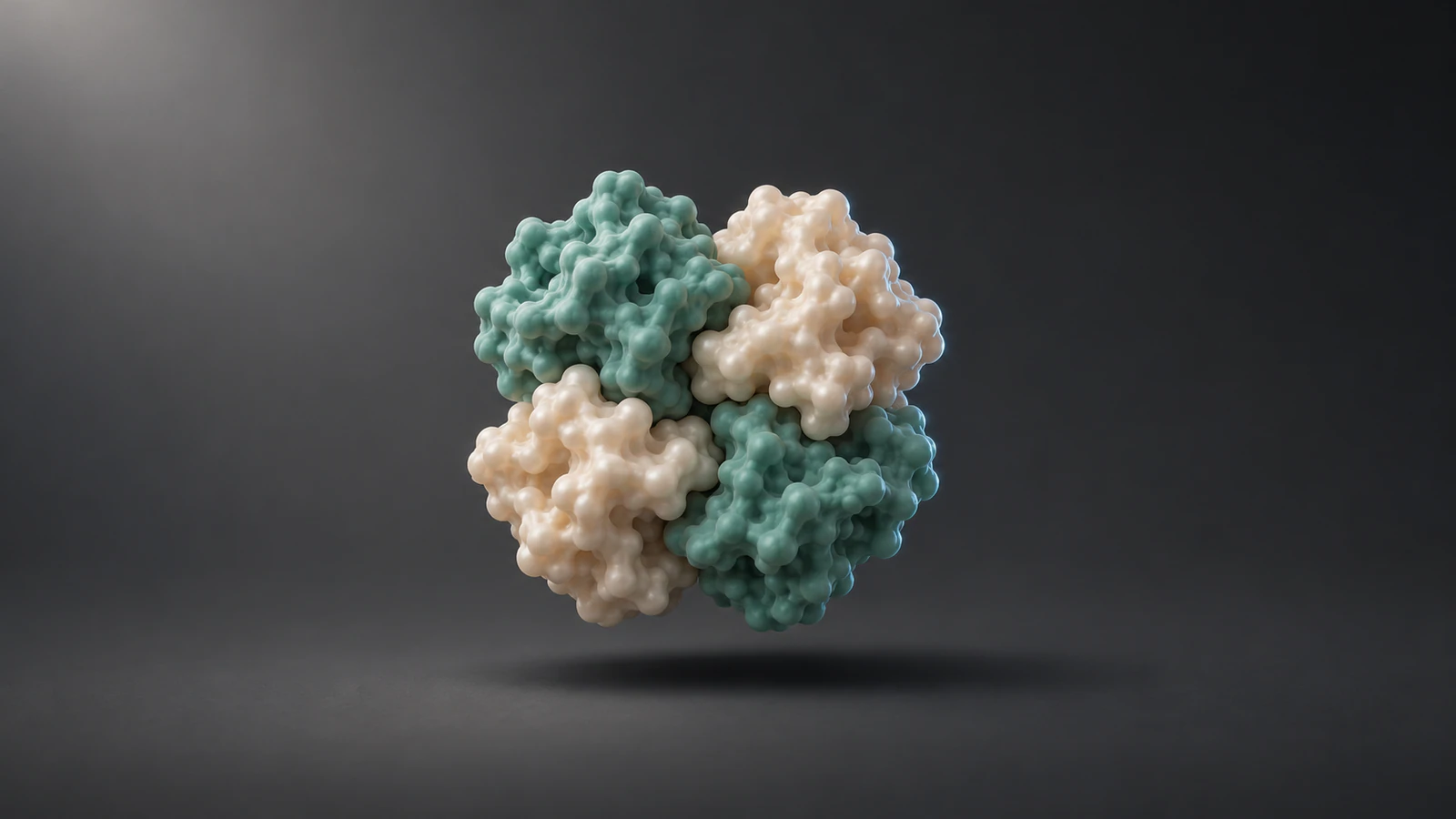
A compact worked example is a hemoglobin structure movie for a scientific presentation. RCSB PDB 4HHB describes human deoxyhemoglobin determined by X-ray diffraction at 1.74 angstrom resolution. Biological assembly 1 contains two alpha and two beta subunits. The deposited chain identifiers are A and C for alpha, B and D for beta.
Specify that the supplied coordinate file is retained, that all four protein chains and their heme groups remain identifiable, and that the color key survives a later edit. Here, heme is the iron-containing cofactor associated with each globin subunit. A surface representation may hide it, so the source record and inspection view matter.
Do not add oxygen-loading motion and call it measured by this structure. A static deoxyhemoglobin model does not supply a time-resolved binding sequence. The biological assembly guide explains how to check the chosen complex before building the animation.
The proposed test is a slow orbit, followed by a second camera angle and one chain-color change. Those are presentation edits. They should leave the underlying coordinate relationships unchanged. The illustrations in this article are conceptual and are not renders of the 4HHB coordinates.
Run a small acceptance test
Ask the intended recipient to open the delivered project in the agreed environment. Start from the delivered folder or account project, not the producer’s already-open session. Record the application version, missing-file warnings and any extra installation or paid dependency needed to proceed.
First compare the original view with an approved reference frame. Then make the agreed edit, save it as a separate version and produce a short preview or still. Reopen the saved result to confirm the change persisted. If external portability is required, repeat the necessary checks in the destination tool.
For the hemoglobin example, inspect the chain grouping and heme visibility before judging the new color. Compare geometry and object counts, not merely the attractiveness of the render. Our molecular color continuity guide helps define which identity cues should remain consistent.
This is a proposed acceptance protocol, not a claim that we executed a new Animiotics export for this article. Ask the producer to demonstrate the required result on your actual package. A failure becomes a specific correction: missing texture, flattened object selection, lost motion or unavailable project access.
- Open the received project and resolve missing dependencies.
- Match the approved reference view.
- Perform one agreed object or camera edit.
- Save a separate version and export a preview.
- Reopen and verify the saved result.
- Record any transfer limitations before accepting the package.
Separate scene exchange from full production handoff
A portable 3D file can be useful for reusing geometry without reproducing the full film. Ask which objects, materials, cameras and motion survive the particular export and import path. Treat unsupported elements as explicit exclusions, and decide whether they matter for the next task.
A scene file also cannot replace an editorial project containing narration, subtitles and final sound mixing. If your next job is translation, the approved script and separate audio may matter more than a molecular mesh. If it is a new close-up, access to geometry and camera controls matters more.
For Animiotics, the current documentation describes saved editable scenes, read-only sharing and GLB scene export. This does not by itself promise a complete native Blender production package or identical rendering in another application. Test the transfer you need rather than assuming that “3D export” preserves every production feature.
Compare who will make the next change
Choose a production route around your team’s time and skills. A finished studio film can be sufficient when the message is stable and you prefer the supplier to make updates. An existing molecular viewer may be sufficient for a restrained structure rotation. You do not need a larger production system solely to deliver that simple result.
Animiotics molecular animation software is relevant when your team wants to build and revisit a scientific scene. For a therapy film spanning several biological contexts, check the supported inputs and review responsibilities before choosing self-service or commissioned production.
The comparison below concerns responsibilities. It does not rank artistic quality or promise the same result from every route. Use the same proposed revision when asking for demonstrations, so each option answers the same practical question.
| Route | Who handles revisions | Useful when | Check first |
|---|---|---|---|
| Molecular viewer workflow | Your scientific team | A coordinate-based view or rotation is enough | Tool license, session files and required export |
| Animiotics self-service | Your team using the saved scene | Repeated scene changes are part of the job | Plan, saving, object edits and needed output |
| Studio with retained assets | The commissioned producer | You want updates delegated | Archive period, response process and revision scope |
| Studio with agreed source handoff | Your designated future editor | Independent downstream editing is required | Software, dependencies, rights and a demonstrated edit |
Check rights, access and ongoing costs
Separate permission to distribute a rendered film from access to editable assets. Ask about third-party models, music, fonts and any restrictions affecting reuse or transfer. Do not assume that paying for an animation transfers every component or that receiving a source file establishes unrestricted rights.
As checked on November 5, 2026, Animiotics pricing distinguishes Academic and Industry plans and states that one generation can create or edit an animation. The terms describe commercial-use rights under Industry plans while preserving third-party obligations. Confirm the current plan and intended use before purchasing.
Budget for the work left with your team: scientific review, preparing inputs and checking exports. A generation allowance is not a promise of that many approved finished films. Also clarify ongoing project access, storage, retention and the cost of later commissioned revisions. Record unresolved requirements before accepting a quote.
Accept the scientific version, not just the file
Use one delivery register with filenames or project links, version dates, intended channels and approval owners. Attach the exact reference frames and script that were approved. If a later revision changes the science, route that change to the scientific reviewer even when the technical edit is easy.
A useful first-party reference is the Animiotics kinesin film. Its page identifies structural sources and distinguishes illustrative timing and anatomy. Use that pattern when requesting a source record for your own animation. It does not establish evidence for a different motor, species or therapeutic claim.
Close the handoff when the required files work, the agreed edit is possible and the scientific record matches the accepted version. Leave optional formats out of the acceptance gate unless they were part of the scope. Keep the original delivery intact so a later correction can be compared against it.
Frequently asked questions
Are editable source files normally included?
Inclusion depends on the agreed scope. Ask explicitly about the native project, dependencies, permissions and the software needed to reopen it. A final video or a promise of supplier archiving does not answer those questions.
Is a GLB file the same as an editable animation project?
No. It can carry useful scene content, but what survives depends on the export and receiving application. Test the objects and motion you need, and request editorial files separately when required.
What scientific documentation should accompany a molecular film?
Request structure identifiers, selected chains or assemblies, coordinate files, citations, modeled additions and illustrative assumptions. Keep those records matched to the approved script and film version.
Do we need source files for a one-off conference film?
Not necessarily. If the message is stable and the supplier will handle updates, agreed video versions and a documented revision route may be sufficient. Decide from the future tasks you actually expect.
What is the most useful handoff test?
Have the intended recipient reopen the delivered project, make one agreed change, save it and produce a preview. Check that the scientific content and required assets remain intact.
Try a reviewable molecular scene in Animiotics
Try a focused structure scene with a clear source record and one planned revision. Keep the protein assembly fixed, change the camera or a chain color, and inspect the saved result before extending the animation. Check current plan terms for generation and export access.