A real 3D scene, not a flat clip
Open the finished scene, turn it from any angle, select a protein and change its color, position or timing.
AI scientific animation generator
Describe a biological process in plain words. Animiotics plans the film, downloads the real structures from the Protein Data Bank, builds a 3D scene in the cloud and renders it. You get the video and the scene behind it, so you can look around, fix details and render again.
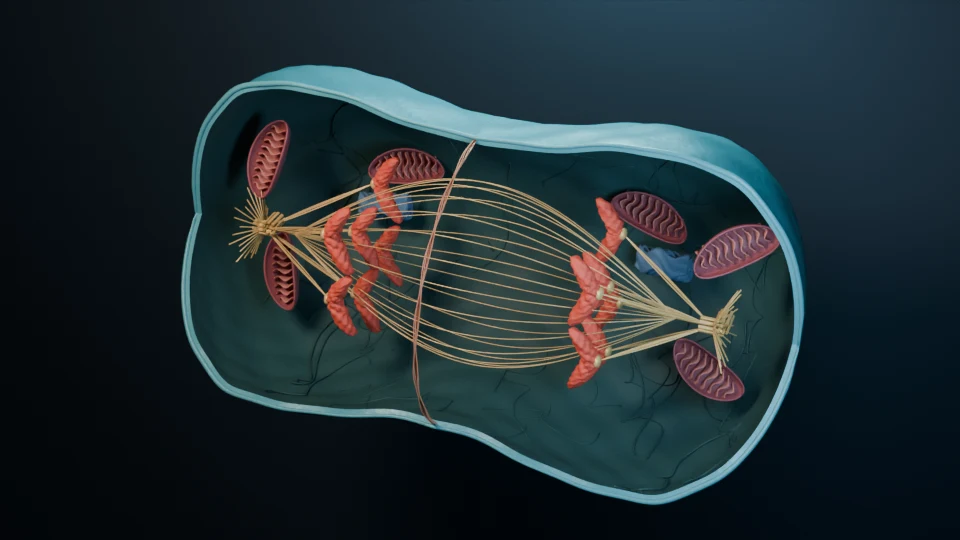
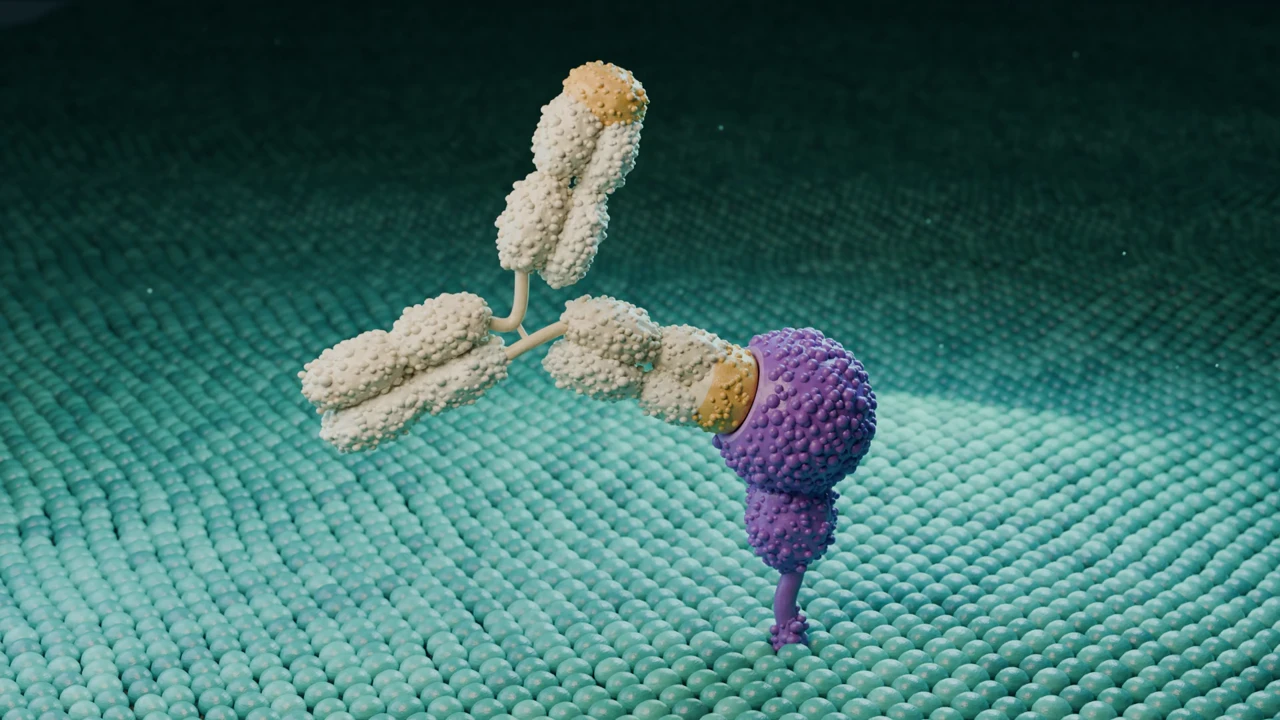
Animiotics is an AI generator for scientific animation. You write up to 3,000 characters about what should happen, for example a kinase inhibitor entering the ATP pocket or a cell dividing. A frontier AI model plans the shots, fetches experimental coordinates where they exist, reads any paper you attach, builds the scene in Blender on cloud computers, checks its own rendered frames and fixes what it sees. A new animation usually takes about an hour and can be up to 60 seconds long.
The difference from a text-to-video tool is what you receive. A video generator gives you pixels. Animiotics gives you a 3D scene with real models, materials, lights and a camera, and the film rendered from it. If a protein is the wrong color or the camera moves too fast, you change that one thing instead of generating a new clip and hoping.
Write it the way you would explain it to a colleague. Name the molecules, the order of events and where the camera should look.
In a February 2026 test at Duke University, ChatGPT, Luma and Google's Veo 3.1 were asked to animate aspirin assembling from its atoms. None produced an animation the author could use for teaching: atoms appeared and vanished, counts were wrong and the motion drifted (Stephen Toback, Duke Digital Media Community, "Molecular Mess").
| Animiotics | Text-to-video tools (Veo, Runway, Luma) | |
|---|---|---|
| What it makes | A 3D scene and the film rendered from it | A video clip of predicted pixels |
| Molecular structures | Downloaded from the Protein Data Bank or your PDB and mmCIF files | Invented shapes that look plausible |
| Fixing one detail | Edit the object, color, camera or timing, or ask in words | Generate the whole clip again |
| Same molecule in every shot | Yes, it is the same model | Often drifts between frames |
| Sources | The scene lists the structures it used | None |
| Price | From $19 a month, rendering included | A video subscription |
Checked October 2026. Video generators are excellent for mood shots and live action. For mechanisms where structure matters, start from coordinates.
Up to 3,000 characters. Attach a PDB or mmCIF file, up to five reference photos or a paper as PDF, text or Markdown if you have them.
It searches the Protein Data Bank, Europe PMC, UniProt and PubChem, builds in Blender on cloud machines and reviews draft frames. You can close the tab while it works.
Open the scene in the browser, turn it from any angle and change objects, materials, camera and keyframe timing, or ask for changes in the same conversation.
Render an MP4 up to 1920 px wide at up to 60 frames per second or a PNG still, or send a 3D link that opens without sign-in.
Open the finished scene, turn it from any angle, select a protein and change its color, position or timing.
Attach a PDB or mmCIF file up to 10 MB, a paper or notes, and up to five reference photos.
The AI renders draft frames, looks at them and fixes what is wrong before you see the result.
No graphics card needed. A school laptop or a phone is enough.
Describe, follow progress, look around, render and share. Detailed editing works best on a computer.
Ask for a slower binding step or a different camera angle. Only that part changes.
No AI guarantees scientific correctness. Working from real coordinates and checking its own frames removes much of the invented detail you see in AI video, but you know your field best. Review the mechanism, the scale and any labels before you present or publish, and correct anything that is off in words or in the editor.
Signing up and the manual 3D editor are free, but there are no free AI generations: each one uses real AI and cloud GPU time. New customers can try Starter for $2.99 for a 7-day Starter trial with your first animation.
More accurate when it works from coordinates. Animiotics downloads experimental structures and records which entries it used, so a protein keeps its real shape. Timing, crowding and scale are still simplified, and you should review the result like any teaching or communication material.
A chatbot can write a Blender or PyMOL script. You would still run it, fix it, find the structures and render on your own computer. Animiotics gives the model the whole workshop in the cloud and hands you the finished, editable animation.
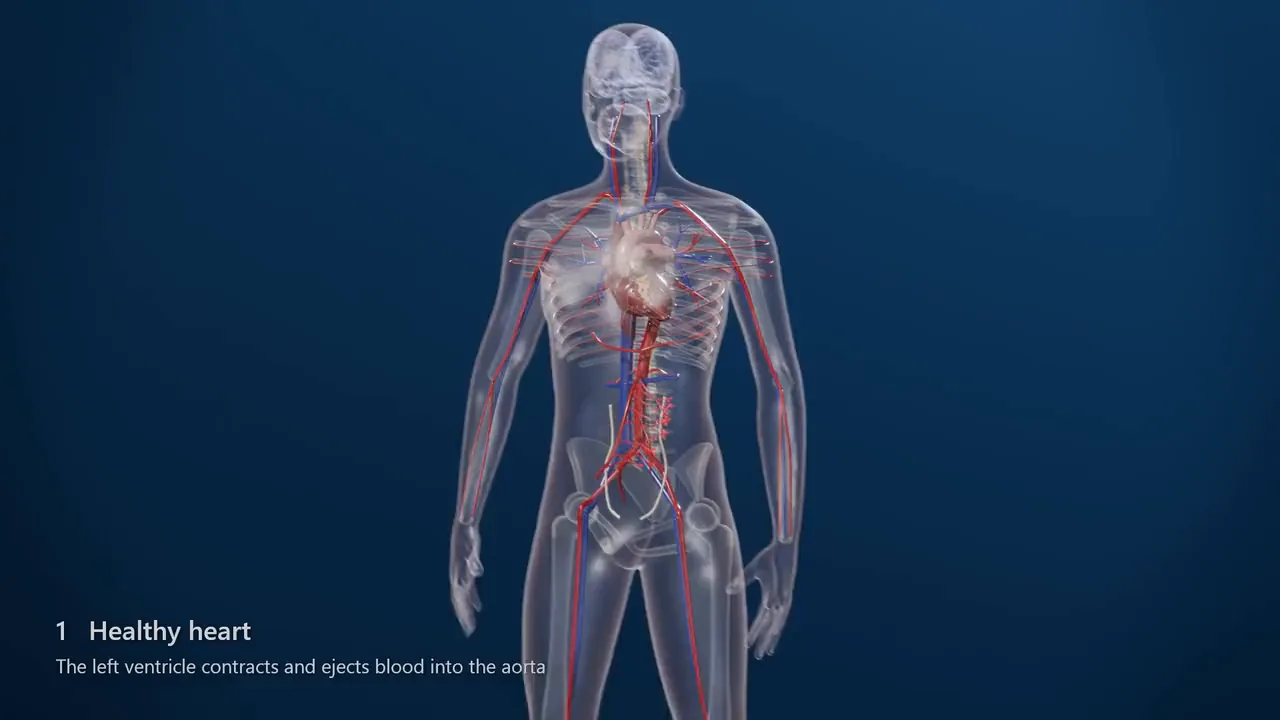
Yes for mechanism, cell and molecular biology and organ-level scenes such as the heart failure example. It is not a surgical simulation or diagnostic tool. Industry plans include a commercial license.
An MP4 up to 1920 px at up to 60 fps, PNG stills, a GLB export of the scene and an interactive 3D share link. Exports need a paid plan.
Try Starter for $2.99 for a 7-day Starter trial with your first animation, or start with the free editor.