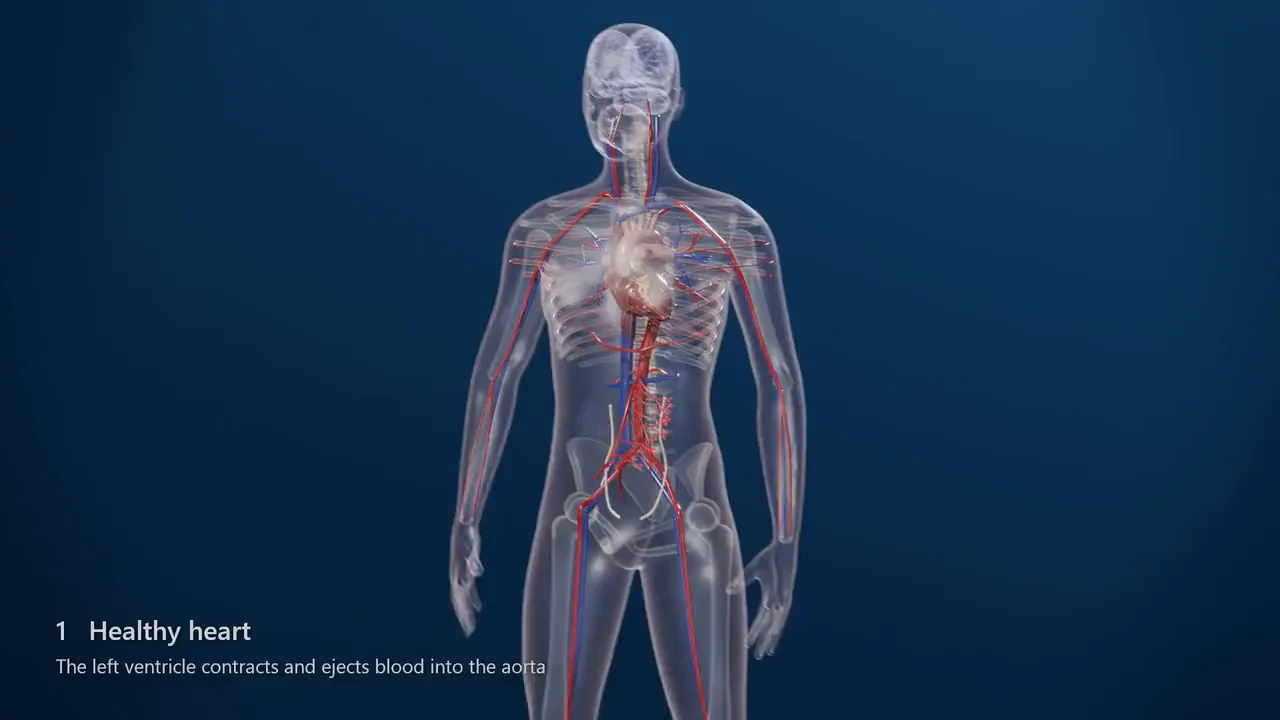
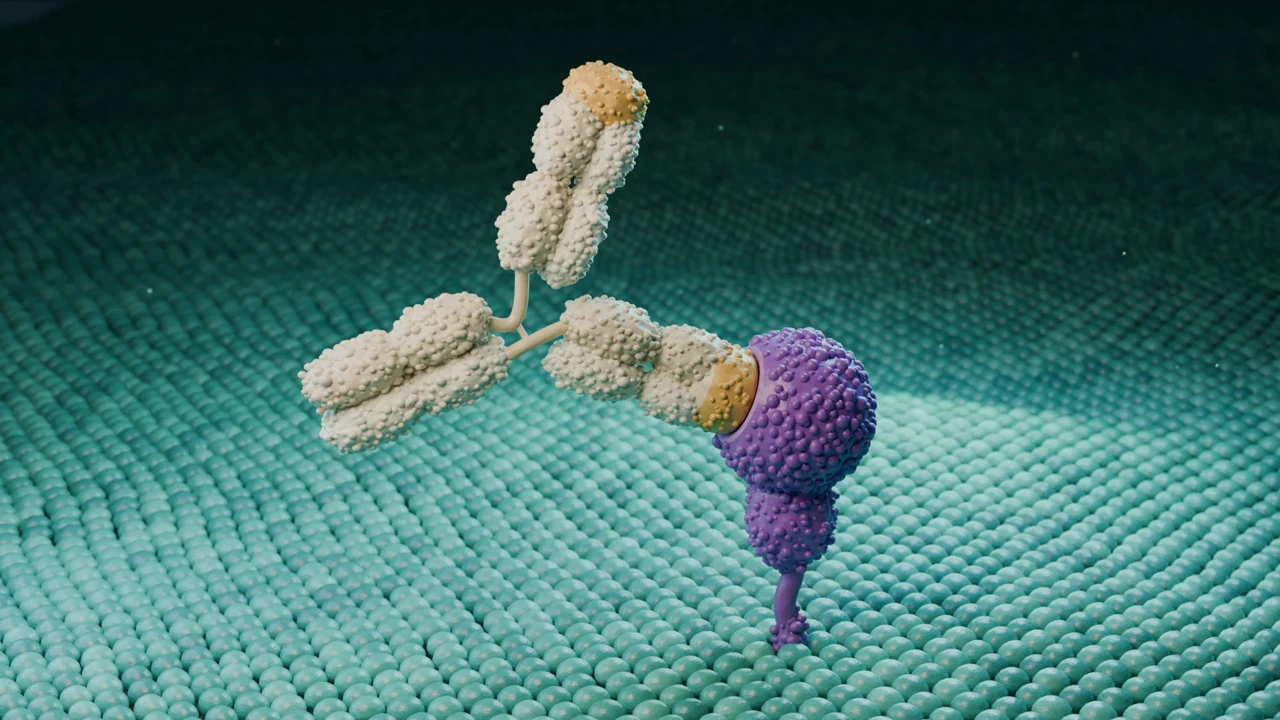
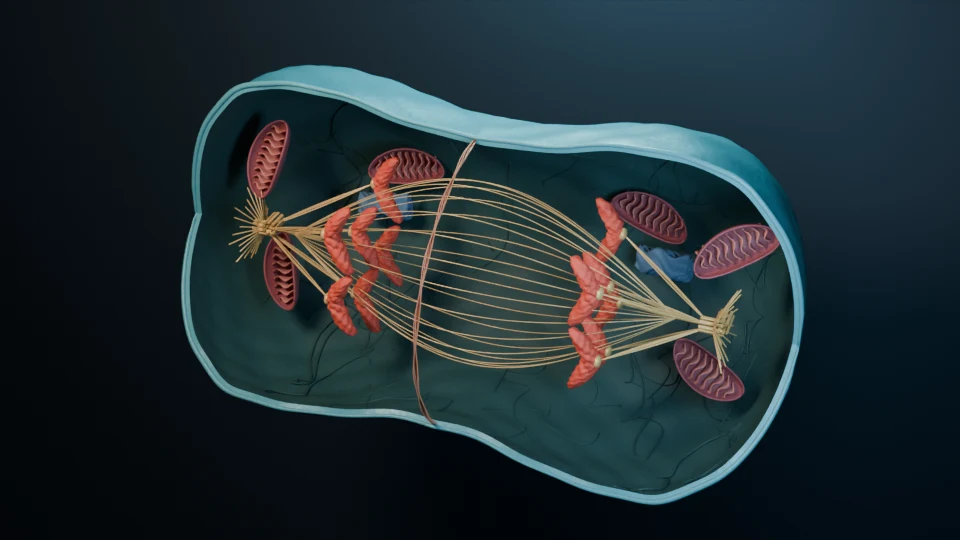
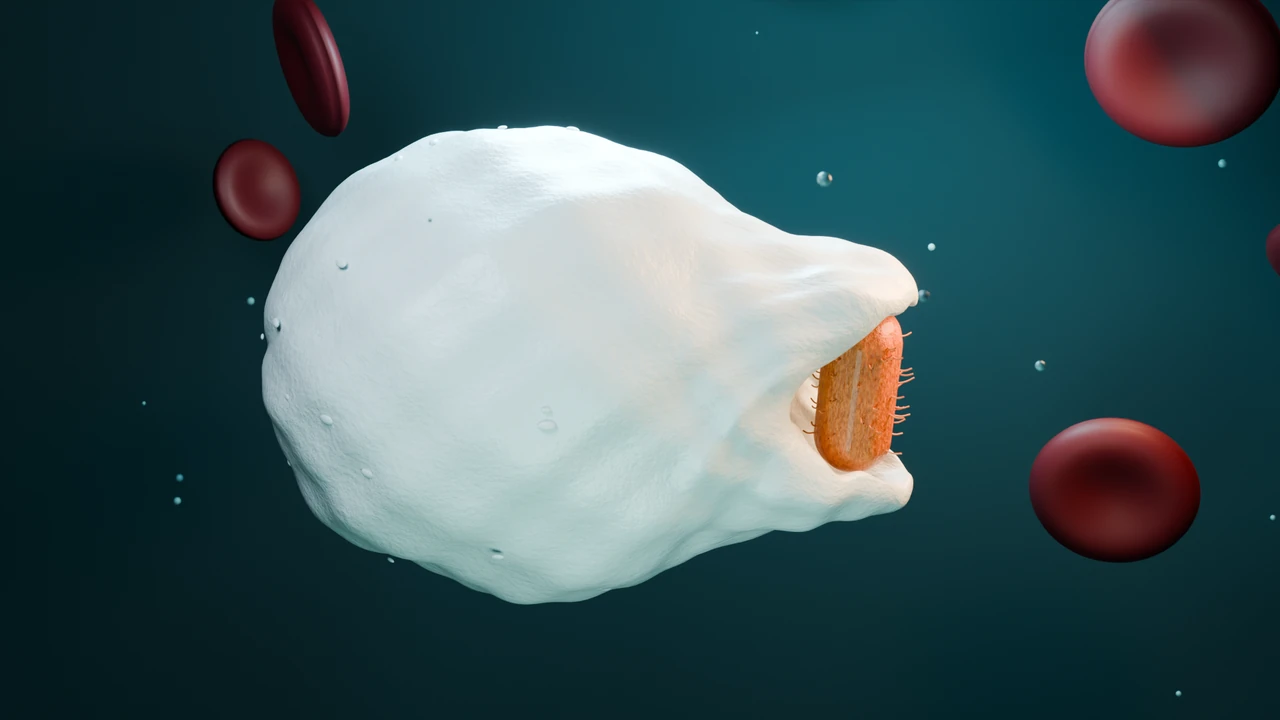
Describe the biology. Get a real 3D scene you can step inside.
Animiotics turns a written description into a cinematic 3D animation built from real scientific structures. The heavy work runs on our cloud computers, so it works from an ordinary laptop or your phone, and the result stays editable after it is made.
Kinesin transport along a microtubule. Made in Animiotics from a written description.
What makes Animiotics different
Live 3D sceneLook aroundEdit anythingRender again
A real 3D scene, not a flat AI video
Every animation is a 3D scene with models, materials, lights and a camera. Open it, look around from any angle, select a protein, change its color, move it or change the timing. An AI video generator gives you pixels you cannot open up.
RCSB Protein Data BankmmCIFAlphaFoldYour PDB filesPapersReference photos
Built from real structures
When a molecule has an experimental structure, the generator downloads its coordinates from the RCSB Protein Data Bank and records which entry and assembly it used. You can also attach your own files.
AI with the tools to do the whole job
It plans the film, builds it in Blender, searches the literature, checks its own rendered frames and fixes what it sees.
Cloud CPUsCloud GPUs
Cloud computers do the heavy lifting
Your device only shows the result, so an ordinary laptop is enough.
Drag to explore
Make animations from your phone
Describe an animation, follow its progress, look around the finished scene with your finger, render it and share it. Detailed manual editing works best on a computer.
Show an antibody turning into position and blocking a receptor on a moving cell membraneStart creating
No 3D skills, no AI subscriptions
No Blender, no modeling course, no graphics card and no AI subscription of your own. Write what you want in plain language and ask for changes the same way.
Why not just ask ChatGPT, Claude or Gemini?
General chatbots are excellent at explaining biology, and they can write a Blender or PyMOL script on request. What they cannot do on their own is turn that script into a finished film. You would still need to install Blender and learn enough of it to run the code, find and load the right structure files, fix the errors, render on a capable graphics card and send screenshots back for every round of changes. A chatbot also writes from memory, so a protein it describes in code can drift from the real one.
Animiotics gives a frontier model the whole workshop instead of a chat window. It runs Blender on our cloud machines, downloads real coordinates from the Protein Data Bank, reads the papers you attach, searches Europe PMC, UniProt and PubChem, and reviews its own rendered frames before you see them. You receive a 3D scene you can open, explore and edit, and you pay per animation instead of per chat subscription.
Each option is good at something. This is how they compare for the job of producing a scientific 3D animation.
Animiotics
General AI chatbot
AI video generator
Desktop 3D tools
Animation studio
What you get
An editable 3D scene and the rendered video
Explanations and code you run yourself
A flat video clip
Full control, once you build it yourself
A finished film
Real molecular structures
Downloads PDB entries or uses your files
Only if you load them yourself
No, shapes are generated pixels
Yes
Usually
Changes after it is made
Edit objects, colors, timing and camera, or ask the AI
Rewrite and rerun the script
Generate again and hope
Yes, by hand
Paid revision rounds
Skills you need
Describe it in words
Blender or PyMOL scripting
Prompt writing
Weeks to months of 3D practice
A brief and a budget
Hardware
Any modern browser, phones included
A computer that can render
A browser
A capable GPU for rendering
None
Price
From $3.99 a month
A subscription plus your time
A subscription, not built for science
Often free software plus your time
Our own studio projects start at €4,000
Why it costs so little
Animiotics is subsidized right now. One generation uses several dollars of frontier AI time, cloud CPU time to build the scene and cloud GPU time to check and render it. On most plans you pay less per animation than that costs us. We keep prices this low on purpose while we grow, so researchers, teachers, students and small biotech teams can make 3D animations without a studio budget.
Doing the same work yourself means paying for an AI subscription, a computer that can render and many hours of setup and fixing. With Animiotics the AI, the 3D software and the cloud rendering are all included.
Single: $3.99 a month for one animation a month
Starter: $19 a month for 6 generations (about $3.17 each)
Plus: $49 a month for 18 generations (about $2.72 each)
Studio: from $99 a month for 40 generations (about $2.48 each)
Industry Solo: $99 a month for 20 generations with a commercial license
Signing up and the manual 3D editor are free. AI generation and exports need a paid plan.
Bring your own science
Start from words alone, or give the AI and the editor your own material.
Structures
Attach a PDB or mmCIF file to a prompt. In the editor, upload PDB, mmCIF, ENT or SDF files, or search the Protein Data Bank and AlphaFold directly.
Molecular dynamics trajectories
Load trajectories in the editor: multi-model PDB, XTC with a PDB or mmCIF topology, XYZ and extended XYZ, ASE .traj, XDATCAR and H5, up to 500 MB and 2,000 frames.
Photos and papers
Add up to five reference photos to guide how a scene looks, or attach a publication or notes as PDF, text or Markdown for the AI to read.
3D models and images
Search Sketchfab models in the editor, upload your own GLB or FBX models, place images in a scene or use a photo as the background.
How it works
Describe it
Write what you want to show, in up to 3,000 characters. Add structures, photos or a paper if you have them.
The AI builds it in the cloud
A new animation usually takes about an hour. You can close the tab and come back; progress shows as it works.
Look around and refine
Explore the scene from any angle. Change objects, colors, materials, camera and timing in the editor, or ask for changes in words.
Render and share
Render an MP4 up to 1920 px wide at up to 60 frames per second, or a PNG still. Share an interactive 3D link that opens without sign-in.
What we will not pretend
AI can still get science wrong. Animiotics works from real structures and sources and checks its own frames, which removes a lot of invented detail, but no AI guarantees correctness. You know your field best: review the mechanism, scale and labels before you present or publish, and use follow-up prompts or the editor to fix anything that is off.
Scenes are illustrative unless they are built from measured data. The Scientific sources panel lists the structures a scene used.
A new animation usually takes about an hour, sometimes longer for complex scenes.
Animations are up to 60 seconds long.
Phones can create, preview, explore, render and share. The full manual editor needs a computer.
Animiotics uses frontier AI models; it does not train its own. What we build is the science tooling and workflow around them.
Made in Animiotics
Each of these films started as a written description.
No. An AI video generator predicts pixels. Animiotics builds a 3D scene with models, materials, lights and a camera, then renders video from it. You can open the scene, look around it, edit it and render it again.
Which AI model does Animiotics use?
Animiotics uses frontier AI models inside a workflow built for biology: tools that download real structures from the Protein Data Bank, search the literature, read the papers you attach, run Blender in the cloud and review rendered frames. The model is not custom-trained; the biology-specific part is the tooling around it.
Can I make animations on my phone?
Yes. On a phone you can describe a new animation, follow its progress, look around the finished scene, ask for changes, render and share. The detailed manual editing tools are designed for a computer.
Do I need a powerful computer?
No. The AI, the scene building and the final rendering all run on cloud computers. Your browser shows a lighter preview of the scene, which ordinary laptops and phones handle.
Can I use my own PDB files or MD trajectories?
Yes. You can attach a PDB or mmCIF file to a prompt. In the editor you can upload structures, search the Protein Data Bank and AlphaFold, and load molecular dynamics trajectories in several common formats.
Why is it so cheap?
Prices are subsidized while we grow. On most plans you pay less per animation than the AI and cloud computing for it cost us.
Is the science guaranteed to be correct?
No AI can guarantee that. Animiotics reduces made-up detail by working from real structures and sources and by reviewing its own frames, and it lists the structures it used. Review the result before you present or publish it.
How long does an animation take?
A new animation usually takes about an hour, and can take longer for complex scenes. Rendering the final video is a separate step whose time depends on length and quality.