Why Endocytosis Animation Services Matter
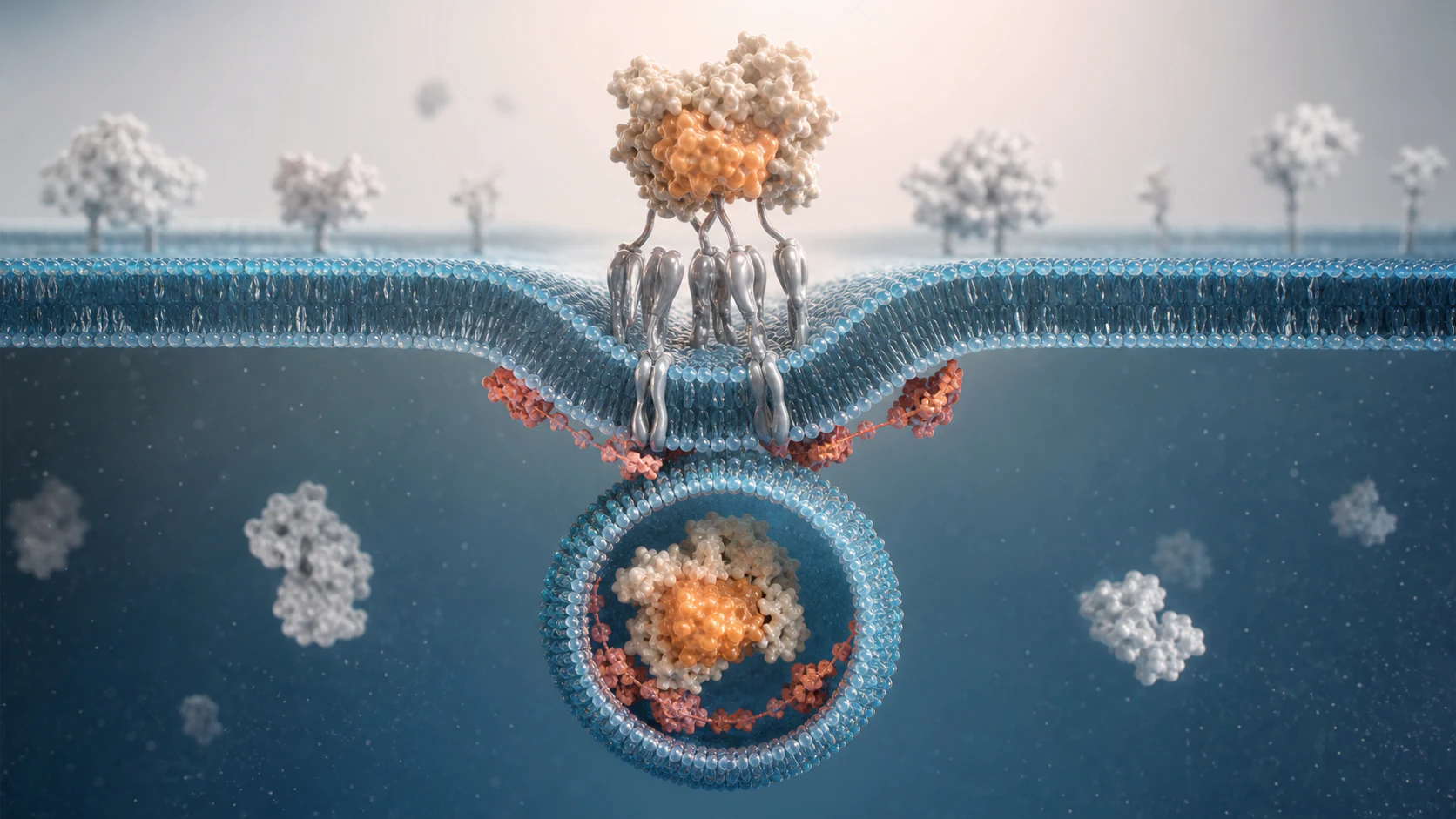
Endocytosis animation services help biotech, pharma and platform teams explain one of the most important events in delivery biology: how a molecule, vesicle, particle or receptor complex moves from the cell surface into the cell. The mechanism is familiar to scientists, but it is often visually unclear for buyers because uptake involves membrane curvature, receptor engagement, vesicle budding, endosomal sorting and intracellular release.
That complexity matters commercially. A delivery platform may depend on receptor-mediated uptake. A therapeutic payload may need to avoid lysosomal degradation. A biologic, RNA construct, nanoparticle or extracellular vesicle may only be valuable if the viewer understands where it goes after binding the cell. If the visual story stops at surface contact, the platform value can feel incomplete.
Animiotics builds premium 3D scientific renders and animations that turn uptake biology into readable sequences for websites, investor decks, pharma partnering materials, research presentations and conference loops. The goal is not a crowded pathway chart. The goal is a clear molecular scene where the audience can see the membrane, the uptake event, the vesicle route and the delivery claim.
- Show cellular uptake as a visible mechanism rather than a sentence in the deck.
- Connect receptor engagement to intracellular trafficking and payload fate.
- Make delivery biology credible for business development, investor and research audiences.
Start With The Uptake Claim
A strong endocytosis visual starts with one precise claim. Is the team explaining receptor-mediated uptake, clathrin-coated vesicle formation, caveolae entry, macropinocytosis, endosomal escape, lysosomal routing or platform-specific delivery efficiency? Each claim needs a different camera path and a different level of biological detail.
For buyer-facing communication, the first scene should usually establish the cell membrane and the uptake trigger. A receptor cluster may gather around a ligand. A nanoparticle may contact a membrane domain. An extracellular vesicle may approach a receptive cell surface. From there, the membrane can curve inward, form a vesicle and carry the cargo into a simplified intracellular space.
The mistake is trying to show every pathway branch in one frame. Endocytosis is a network, but commercial animation needs a guided sequence. One clean uptake route can make a platform easier to understand than a dense map of every possible fate.
- Name the uptake mechanism before designing the scene.
- Use the membrane as the visual anchor for the whole story.
- Sequence pathway branches instead of crowding them into one image.
What Buyer-Ready Endocytosis Visuals Should Show
Buyer-ready endocytosis visuals usually need four layers. The first layer is the cell surface: membrane, receptor or entry domain. The second layer is the uptake event: binding, clustering, membrane curvature and vesicle budding. The third layer is the trafficking route: early endosome, maturation, recycling, degradation or cytosolic release. The fourth layer is platform value: why this route supports delivery, selectivity, potency or safety.
Those layers should feel connected. A polished animation might open on a clean cell membrane, reveal a receptor-bound payload, follow vesicle formation below the surface and then show the cargo separated from the endosomal membrane. A platform page can then explain why the delivery route supports better target-cell access or more useful intracellular exposure.
For related context, see https://animiotics.com/blog/lipid-nanoparticle-animation-services-how-to-explain-formulation-delivery-endosomal-escape-and-platform-value-clearly/ and https://animiotics.com/blog/extracellular-vesicle-visualization-services-how-to-explain-exosome-platforms-cargo-and-delivery-clearly/. Those pages focus on specific delivery vehicles, while endocytosis animation services focus on the cellular uptake and trafficking logic that many delivery modalities share.
Reusable visual planning is important because uptake stories often need several assets. A team may need a website hero, a short mechanism animation, high-resolution deck stills, social crops and partner-specific versions that swap the cargo or receptor while preserving the same visual system.
- Show surface binding, internalization, trafficking and delivery outcome in order.
- Keep the cargo, vesicle and membrane readable at every camera distance.
- Design the scene so the same asset system can support multiple commercial formats.
Visualizing Receptor-Mediated Uptake
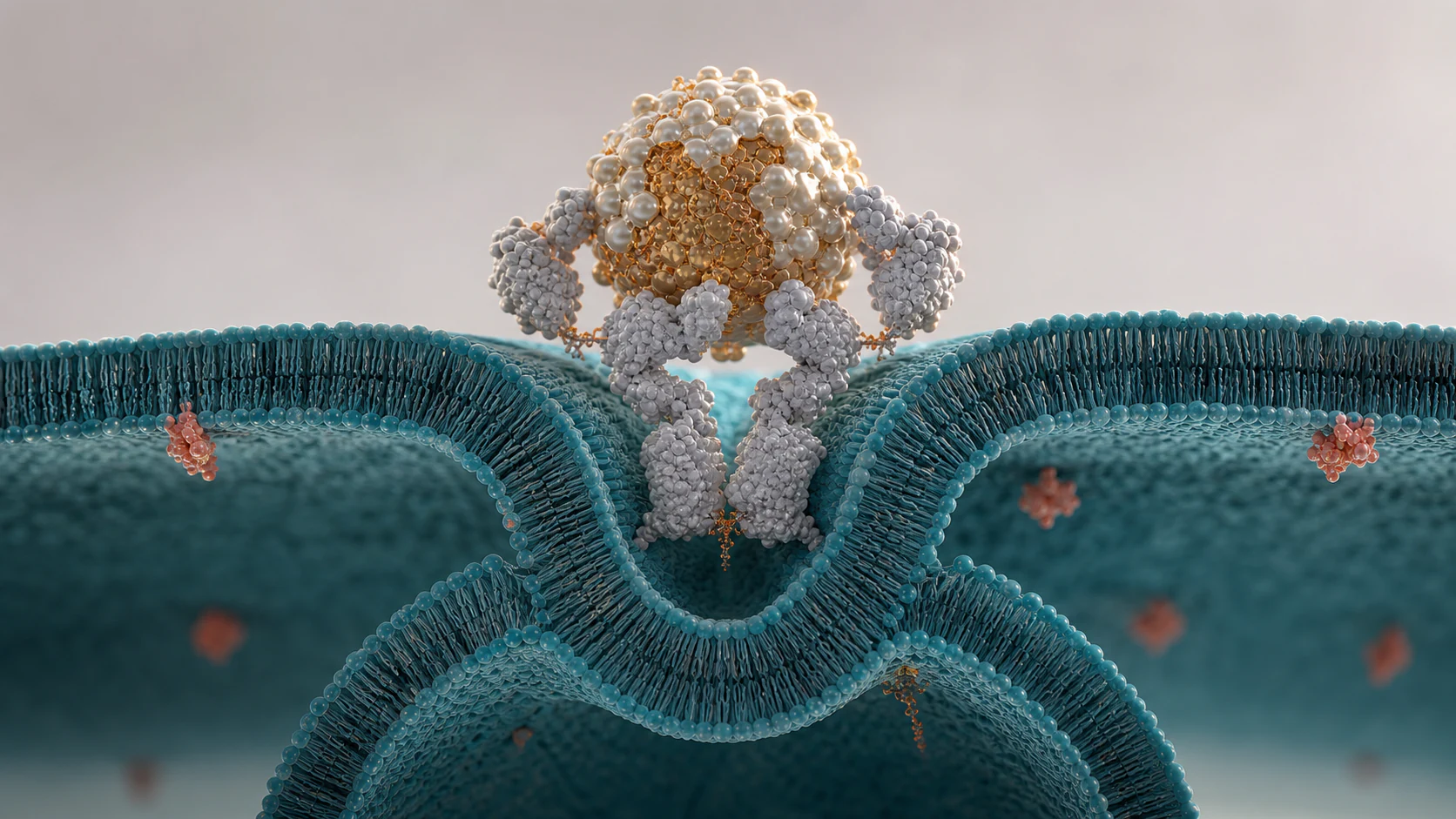
Receptor-mediated endocytosis is often the most commercially important version of the story because it links selectivity to uptake. The animation should make the receptor visible without turning the frame into a structural biology puzzle. A clean receptor cluster, a distinct ligand or particle and a curved membrane region can show the core event quickly.
The strongest visuals avoid generic glowing dots. A receptor can be represented as a plausible biomolecular surface embedded in a lipid bilayer. The cargo can use a restrained accent color so it remains visible. Supporting adaptor-like forms may appear briefly if they clarify vesicle formation, but the hero remains the receptor-cargo complex and the membrane movement around it.
This matters for antibodies, peptides, nanoparticles, RNA delivery systems, cell-targeting ligands and engineered vesicles. Buyers need to understand why a specific surface interaction should produce meaningful internalization rather than simple binding. The visual can show that shift from contact to entry in a way text alone rarely does.
- Use receptor clustering to make selectivity visible.
- Show membrane curvature as the transition from binding to uptake.
- Keep adaptor and vesicle details sparse unless they support the claim.
Explaining Endosomal Escape And Cargo Fate
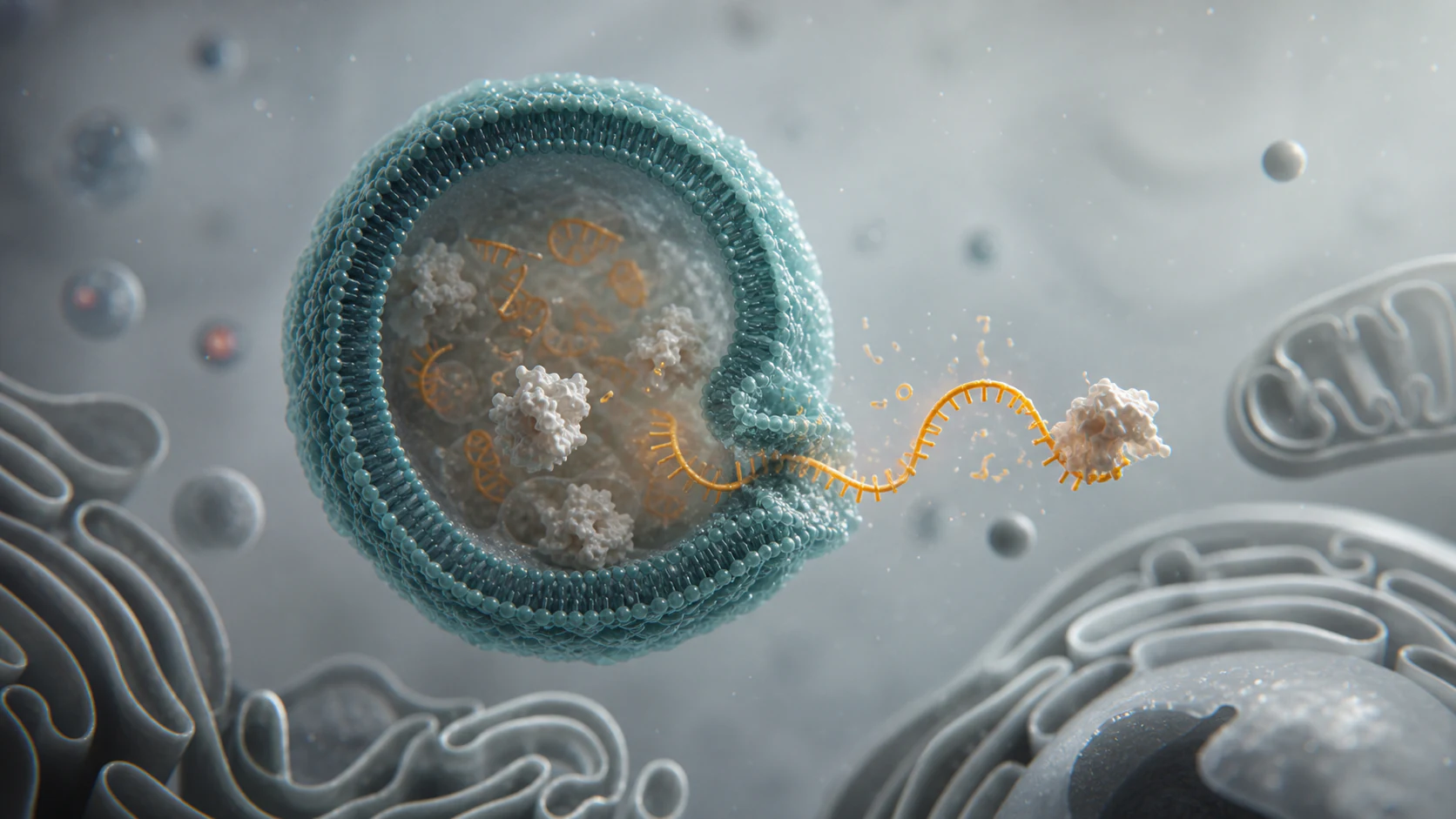
Endosomal escape is where many delivery stories become decisive. For RNA, proteins, peptides and some nanoparticle systems, reaching the endosome is not enough. The audience needs to see whether the cargo remains trapped, routes to lysosomes, recycles back to the membrane or enters the cytosol where it can act.
A premium 3D scene can make this clear without fake labels or panels. The vesicle can mature from a soft teal early endosome to a more enclosed intracellular compartment. A cargo strand or protein can separate from the vesicle membrane using a warm accent color. A few organelle silhouettes can provide context without turning the image into a busy cell atlas.
This is also where scientific review matters. The visual should not promise escape efficiency or intracellular targeting that the data does not support. A credible animation can show the proposed route, the measured route or the design hypothesis while keeping uncertainty out of the visual language unless the team chooses to address it directly.
- Distinguish uptake from functional intracellular delivery.
- Use vesicle state changes to explain trafficking and cargo fate.
- Keep claims aligned with available data and review feedback.
Deliverables For Delivery Platform Teams
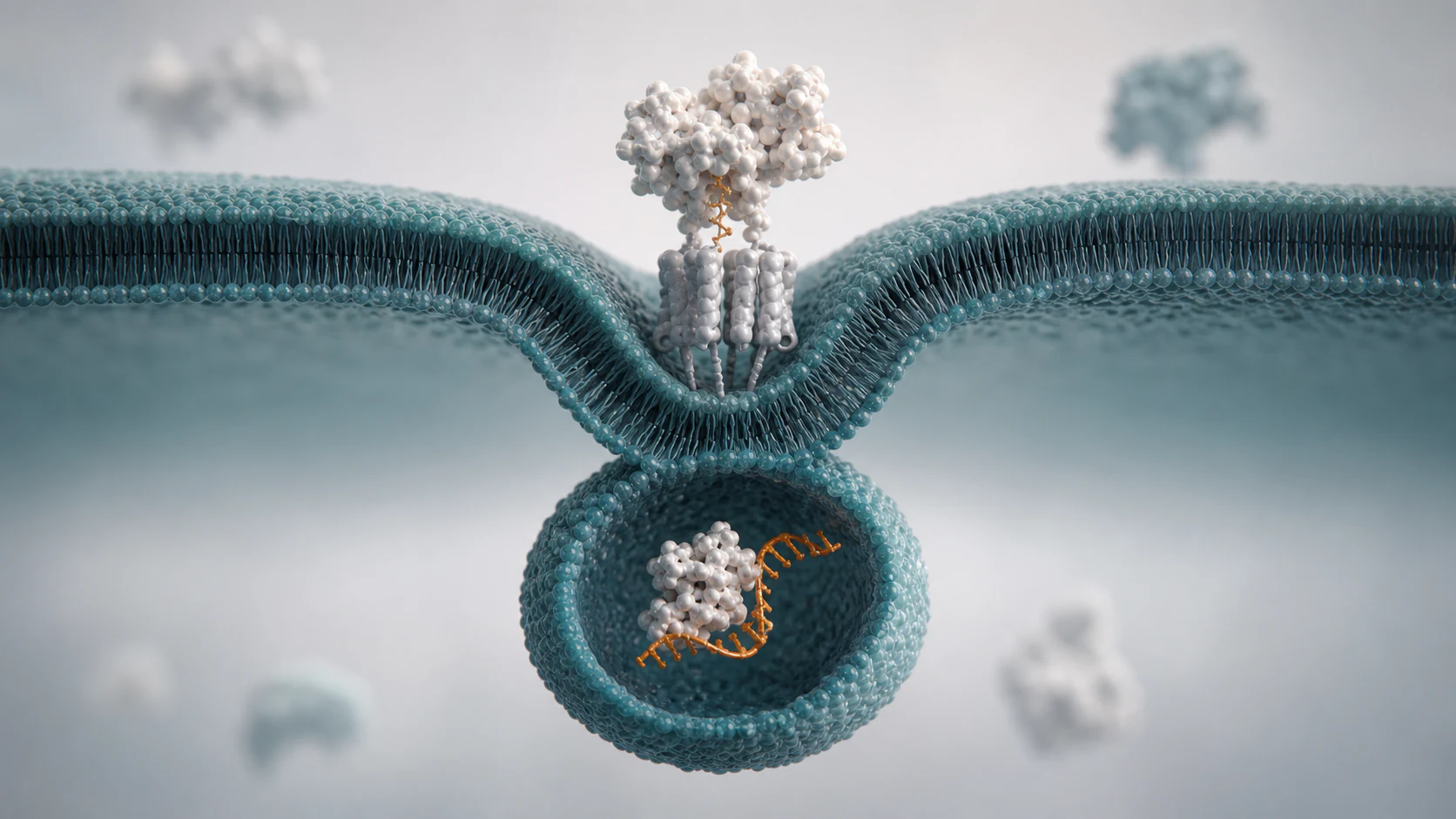
Most teams need more than a single hero render. A delivery platform may need a short uptake loop for the homepage, a mechanism animation for investor meetings, clean stills for partner decks and modular crops for campaigns. If the platform serves several payload types, the visual system should be built so receptor, cargo and vesicle variants can be swapped without rebuilding the entire style.
A practical scope often includes a mechanism brief, scientific reference collection, storyboard, membrane and vesicle scene design, premium 3D rendering, animation production, still exports and review rounds with the scientific team. The final assets should work in web, deck, conference and social contexts without losing the uptake story.
The table below maps common business needs to endocytosis visual deliverables.
| Communication need | Useful deliverable | Why it helps |
|---|---|---|
| Website platform page | Wide cellular uptake hero render | Shows delivery logic before the visitor reads dense mechanism copy |
| Investor or pharma deck | Thirty to ninety second uptake animation | Connects binding, vesicle formation and cargo fate to platform value |
| Conference booth loop | Silent membrane internalization sequence | Makes the mechanism readable from a distance |
| Program expansion | Reusable receptor and cargo variants | Keeps new indications visually consistent with the core platform |
Common Mistakes In Endocytosis Visualization
The first mistake is treating endocytosis like a generic particle entering a generic cell. That may look scientific, but it does not explain the commercial claim. The viewer needs to understand what triggers uptake, what route is proposed and what happens to the cargo after entry.
The second mistake is making the intracellular scene too busy. Full organelle maps, crowded vesicle fields and many pathway branches can hide the mechanism. A focused sequence with one membrane region and one vesicle route is usually stronger for buyer-facing communication.
The third mistake is using toy-like materials. Endocytosis visuals should feel like premium Blender or Maya scientific renders with physically plausible membranes, biomolecular surfaces and studio lighting. Glossy pastel capsules or candy-colored vesicles can make serious delivery biology feel generic.
The fourth mistake is separating visuals from claims. If the deck says receptor-mediated uptake, the animation should show receptor engagement and internalization. If the value depends on endosomal escape, the visual should show the difference between trapped cargo and released cargo.
- Do not hide the trigger for uptake.
- Do not make the cell interior a crowded collage.
- Do not use decorative particles when the mechanism needs clarity.
FAQ About Endocytosis Animation Services
What do endocytosis animation services include?
A strong scope can include scientific story planning, membrane scene design, receptor and cargo modeling, vesicle trafficking animation, endosomal escape visualization, review rounds and final exports for websites, decks, conferences and campaigns.
Can endocytosis visuals support different delivery platforms?
Yes. The same visual system can support nanoparticles, biologics, peptides, RNA therapeutics, extracellular vesicles, targeted ligands and platform variants if the core membrane and vesicle language is planned early.
How long should an endocytosis animation be?
A homepage loop may only need 10 to 20 seconds. A partner-facing mechanism explanation often works best at 45 to 90 seconds because it can show binding, internalization, trafficking and cargo fate without rushing the viewer.
What makes uptake visuals credible?
Credible visuals use a clear scientific claim, restrained color, plausible membranes, readable biomolecular surfaces, disciplined lighting and a sequence that separates uptake from functional delivery.
Ready To Make Cellular Uptake Clear
Endocytosis animation services are most useful when they turn delivery biology into a story buyers can follow. The right visual system shows the membrane trigger, the uptake event, the vesicle route and the cargo outcome while keeping the platform claim easy to evaluate.
Animiotics creates premium 3D scientific renders, mechanism animations and visual systems for biotech, pharma, platform and research teams. The work helps delivery stories move beyond abstract pathway language into visuals that support websites, decks, partner meetings and launch campaigns.
If your delivery platform, receptor targeting story, endosomal escape mechanism or intracellular trafficking claim needs to be clear, start with Animiotics and turn cellular uptake into buyer-ready scientific visuals.
- Explain uptake without crowding the cell.
- Show the difference between binding, internalization and functional delivery.
- Build reusable visuals for web, deck and partner communication.