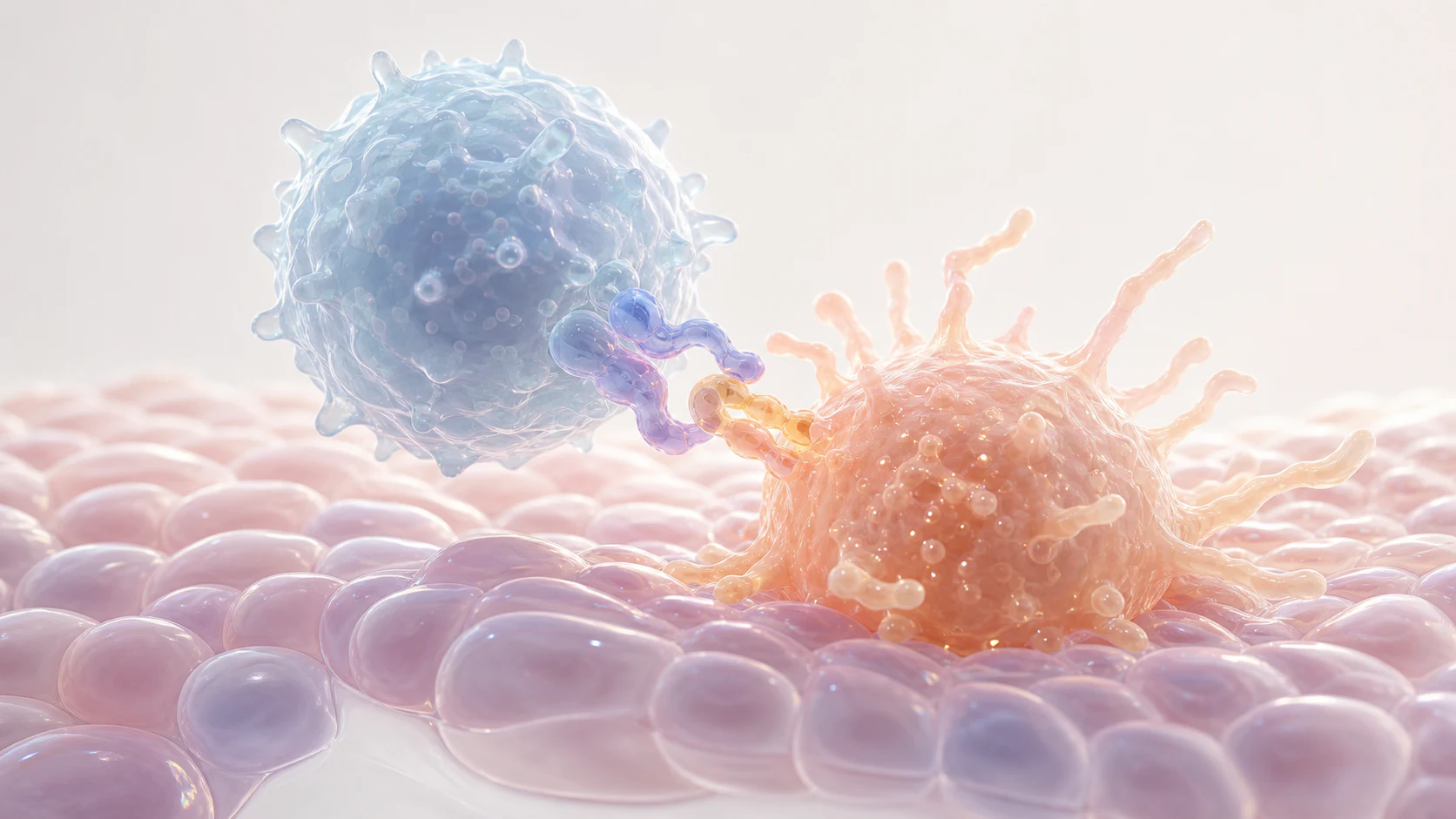
Why TCR Therapy Animation Services Matter
TCR therapy animation services matter because T cell receptor programs ask buyers to understand a different immunotherapy logic than antibody, CAR-T or checkpoint stories. The central event is not simply binding to a surface antigen. A therapeutic TCR recognizes a peptide presented by HLA on a target cell, then links that recognition event to T cell activation, cytotoxic response and platform selectivity. That biology can be powerful, but it is easy to lose in dense pathway slides.
Biotech teams often need to explain antigen selection, peptide processing, HLA restriction, TCR affinity, tumor specificity, safety boundaries and patient-selection logic in one coherent story. Investors and pharma partners may not need every residue or assay condition, but they do need to see why the recognition event is credible and why the platform can produce more than one asset. A clear animation gives that evidence a visual structure.
Animiotics builds TCR therapy animation services for biotech, platform and research teams that need website renders, pitch deck figures, scientific explainers, partnering visuals and animation-ready storyboards. The goal is to make the antigen presentation story readable without turning a cautious therapeutic claim into overstatement.
- Use TCR visuals when peptide HLA recognition is the core platform event.
- Keep tumor recognition, T cell activation and evidence boundaries visually distinct.
- Build one reusable visual language for deck, website and partnering assets.
Start With Antigen Presentation and HLA Restriction
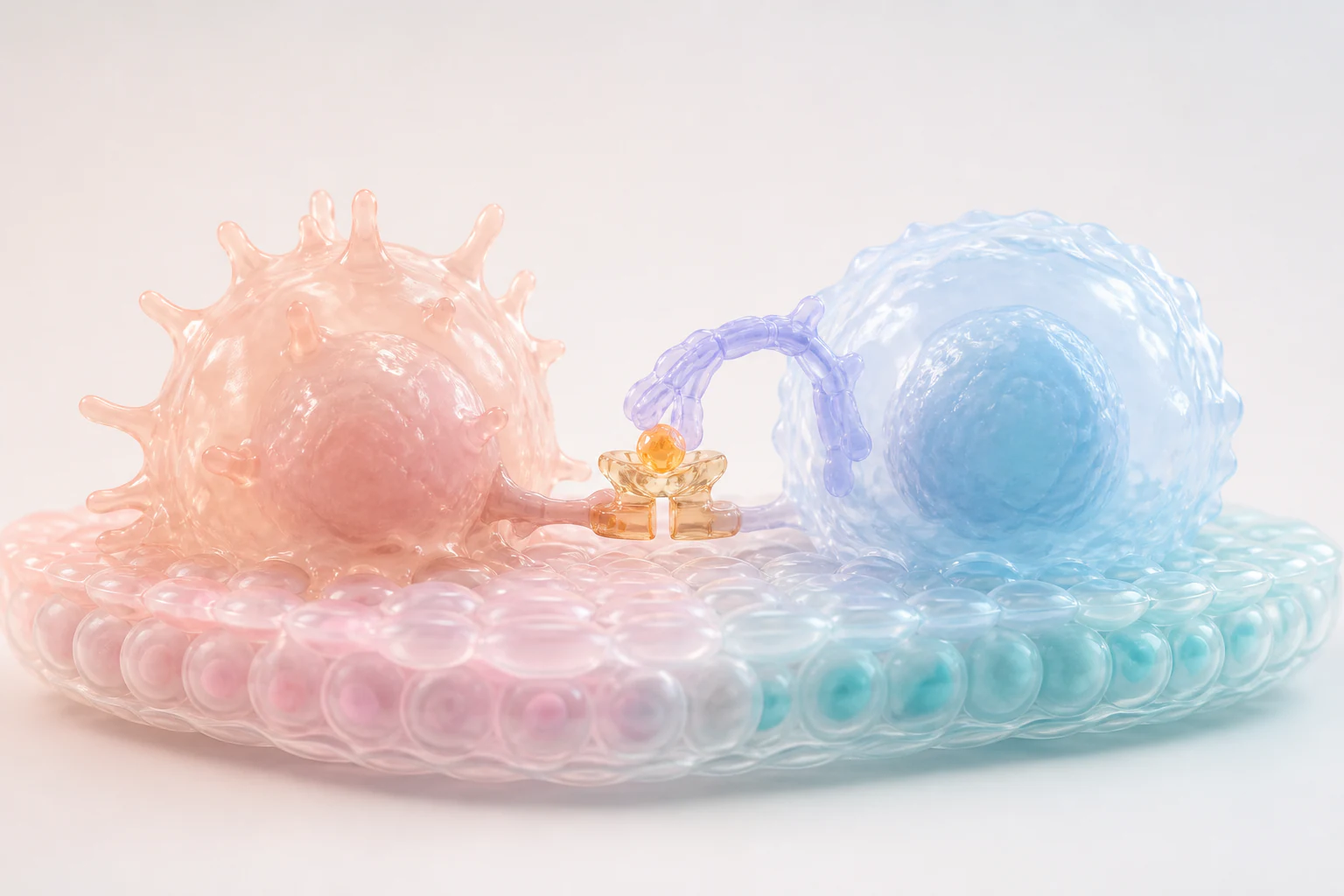
A useful TCR therapy animation usually begins before the T cell arrives. The viewer needs to understand that intracellular proteins are processed into peptides and displayed on HLA molecules at the target cell surface. That single idea separates TCR therapy from many surface-antigen stories. If the animation skips it, the program can look like a generic cell therapy concept instead of a precise recognition platform.
The scene can show a simplified tumor cell or disease-relevant cell with a glowing peptide HLA complex at the surface. A second beat can introduce the TCR-bearing T cell approaching the presented antigen. This creates a clean cause-and-effect path: antigen processing creates a displayed molecular signal, HLA context makes recognition specific and the engineered TCR reads that displayed signal.
This connects naturally with cell therapy visualization services when the broader platform also needs manufacturing, clinical workflow or patient journey visuals. The TCR-specific render should stay focused on presented antigen and recognition logic.
- Show the peptide HLA complex as the central visual anchor.
- Use HLA context to explain why patient selection matters.
- Separate recognition biology from downstream killing until the first event is clear.
Explain the Recognition Event Without Crowding the Scene
The recognition event is where many TCR therapy presentations become visually overloaded. Teams may want to show tumor antigen, peptide processing, HLA allele, TCR binding, affinity tuning, co-receptor context, signaling, cytokine release and cell killing in the same frame. That can make the science look less precise because the viewer has no hierarchy.
A better approach is to treat the recognition event as a close-up scene. The target cell carries a small highlighted peptide HLA complex. The T cell approaches with a simplified receptor arc or molecular contact. The animation can pause briefly at the interface so the audience understands that the therapeutic decision point is molecular recognition, not just cell proximity.
Once recognition is clear, the sequence can widen to show activation and cytotoxic response. That sequencing helps business development teams answer a common buyer question: what makes this TCR program selective enough to justify continued diligence? The visual does not need to prove selectivity by itself. It should make the evidence package easier to discuss.
- Give the recognition interface its own clean close-up.
- Use restrained glow or contact cues rather than dense molecular labels.
- Let assay data carry affinity and specificity values while the render explains the mechanism.
| Buyer Question | Visual Priority | Asset Use |
|---|---|---|
| What does the TCR recognize? | Peptide HLA complex presented on the target cell | Platform website or investor deck |
| Why does HLA context matter? | Recognition shown only in the matched presentation context | Partnering material or scientific talk |
| How does recognition lead to response? | Interface close-up followed by T cell activation signal | Mechanism explainer or conference screen |
| Where are the safety boundaries? | Separate panel for on-target and off-tissue risk review | Diligence package or board update |
Build a Scene-by-Scene Storyboard
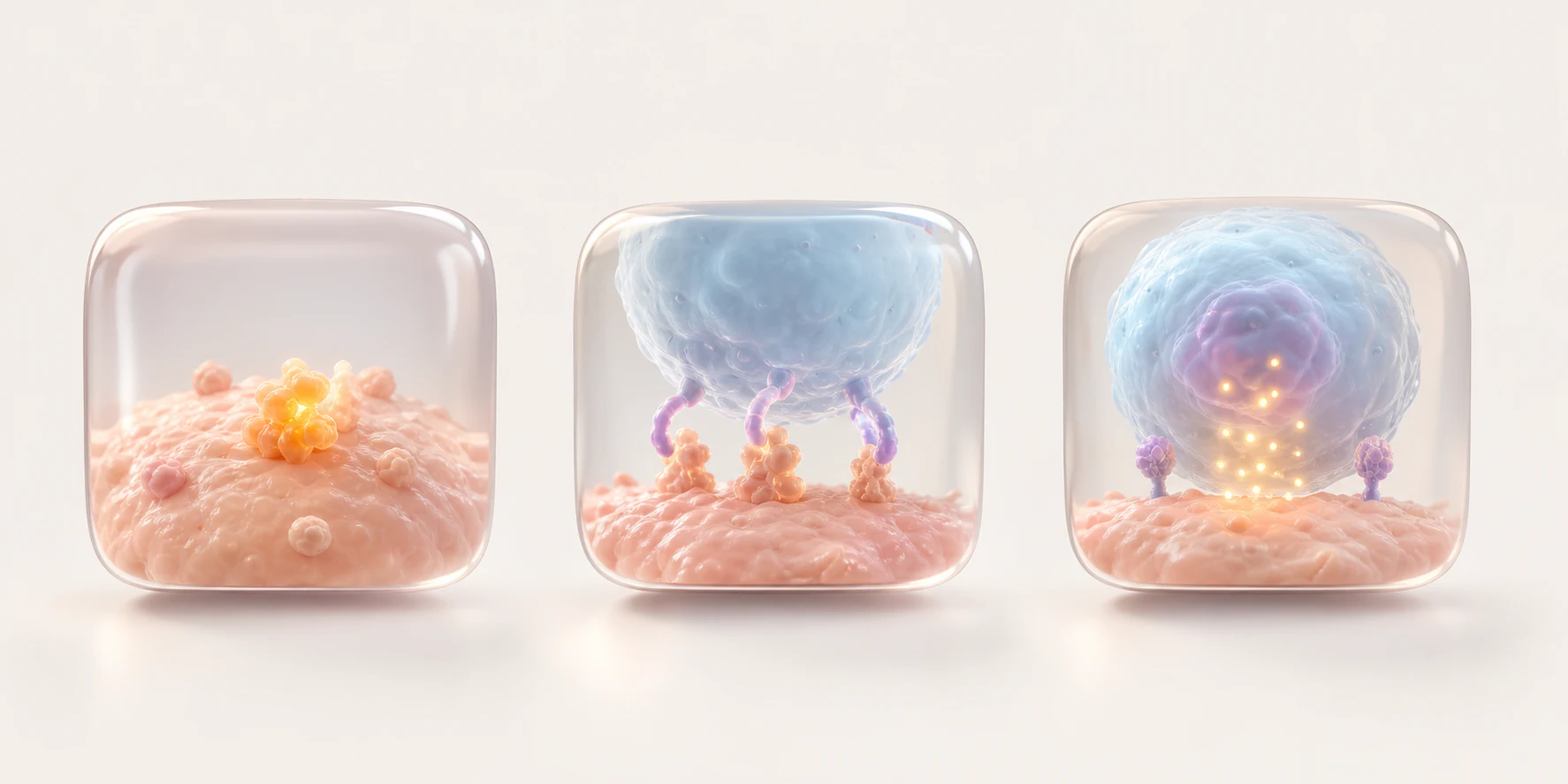
A TCR therapy animation works best when the storyboard follows the biology in a disciplined order. The opening shot can establish the tumor or diseased tissue context. The second shot can isolate antigen processing and peptide HLA display. The third shot can bring in the therapeutic T cell. The fourth shot can show TCR engagement and early signaling. The final shot can show target-cell response, platform repeatability or the next development decision.
This order keeps the audience from jumping straight to a dramatic killing scene before they understand why the T cell recognizes the target. It also gives scientific reviewers clear checkpoints. They can evaluate whether HLA restriction is stated correctly, whether the antigen cue is too broad and whether the response is represented as a conceptual outcome rather than a guaranteed clinical result.
- Storyboard the recognition sequence before choosing camera moves.
- Use one color system for target cell, T cell, peptide HLA complex and activation signal.
- Keep safety and specificity claims tied to the actual data package.
| Scene | Visual | Motion | Label | Purpose |
|---|---|---|---|---|
| 1 | Soft tissue context with target cells | Slow camera push toward one target cell | Disease-relevant target cell | Set biological context |
| 2 | Peptide HLA complex appears at the surface | Subtle amber glow at the presentation site | Presented peptide HLA | Explain antigen display |
| 3 | TCR-bearing T cell approaches | Smooth lateral drift into contact | Engineered TCR T cell | Introduce therapeutic cell |
| 4 | Receptor interface forms | Brief pause and contact highlight | TCR recognition | Make specificity readable |
| 5 | Activation signal moves through the T cell | Small gold signal points pulse inward | Activation response | Connect recognition to action |
Make Platform Value Visible for Investors and Partners
Many TCR therapy companies need to sell more than one asset. They need to show a discovery engine, antigen selection strategy, TCR engineering approach, HLA-focused patient stratification plan and translational evidence system. TCR therapy animation services can make that platform value visible by reusing the same visual grammar across multiple programs.
For example, one render can show a platform library as several matched peptide HLA and TCR pairs. Another can show a tumor antigen story for lead indication selection. A third can show safety review as a separate evidence layer that evaluates cross-reactivity and normal-tissue concerns. The visual system should help buyers understand how the company repeats the process without implying that every target is already solved.
This kind of platform story can pair well with biotech investor deck scientific visualization when the company needs mechanism, data and business value to sit together in a fundraising narrative.
- Use repeated visual modules for antigen, HLA context, receptor and response.
- Show platform repeatability through comparable scenes rather than crowded dashboards.
- Reserve claim-heavy details for captions, assay panels and reviewer notes.
Create Assets for Website Deck and Scientific Review
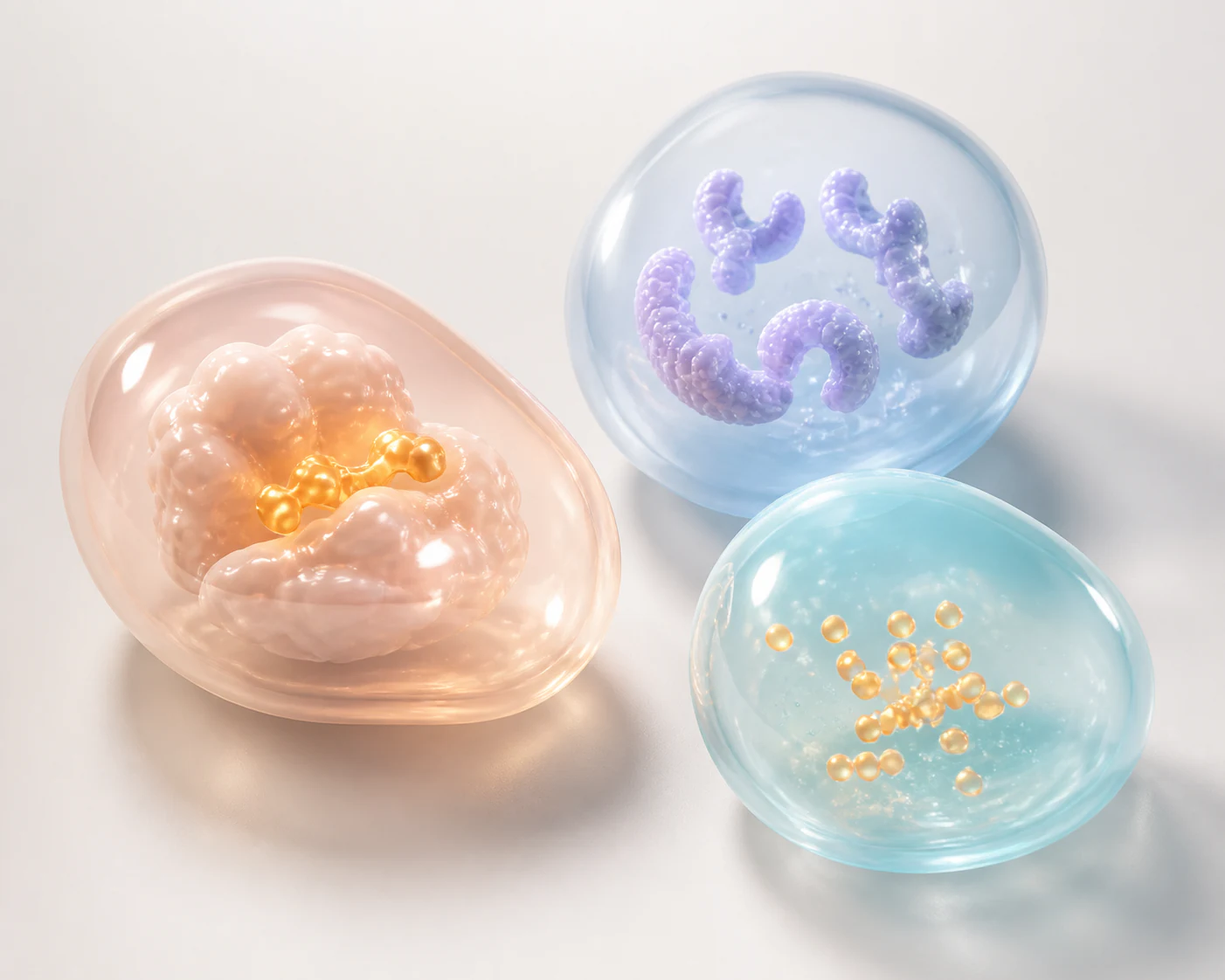
The strongest TCR therapy animation services produce an asset set, not a single hero image. A website may need a clean cover render that signals immunotherapy recognition. An investor deck may need a peptide HLA close-up, a T cell contact frame, a storyboard sequence and a platform-repeatability visual. A scientific review package may need calmer static figures that distinguish mechanism from measured evidence.
Planning these outputs together saves time and keeps the story consistent. The same T cell form, target-cell color, peptide HLA glow and activation cue can support a hero render, slide crop, conference screen, short animation and later scientific figure. That consistency helps buyers recognize the platform across touchpoints.
Animiotics usually recommends starting with one cover image and at least three supporting images for meaningful sections: antigen presentation, recognition storyboard and platform asset system. From there, the same visual language can expand into a full mechanism of action animation.
- Plan 16:9, slide and square crops before final rendering.
- Create separate renders for mechanism, platform value and evidence boundaries.
- Keep the first asset set simple enough to reuse across business development materials.
FAQ About TCR Therapy Animation Services
What are TCR therapy animation services?
They are scientific visualization services that turn peptide HLA presentation, T cell receptor recognition, activation logic, target-cell response and platform strategy into clear renders, figures and animation-ready storyboards.
Who uses TCR therapy visuals?
TCR therapy companies, immuno-oncology teams, cell therapy platforms, translational research groups and business development teams use them for websites, pitch decks, partnering packages, scientific talks and conference campaigns.
How is a TCR therapy animation different from a CAR-T animation?
A CAR-T animation often focuses on recognition of a surface antigen. A TCR therapy animation usually needs to explain intracellular antigen processing, peptide presentation by HLA and TCR recognition of that presented peptide HLA complex.
Can the visuals include real data?
Yes. The clearest projects pair conceptual mechanism scenes with evidence such as specificity assays, HLA coverage, expression data, cross-reactivity review, translational biomarkers or clinical response context. The key is to keep measured evidence visually distinct from explanatory mechanism.
- Use TCR visuals when peptide HLA biology needs to be understood quickly.
- Keep recognition, activation and safety review as separate communication beats.
- Build reusable assets when the company has multiple targets or indications.
Ready to Build TCR Therapy Visuals
TCR therapy animation services are most useful when they help buyers understand why a recognition event supports a larger therapeutic strategy. The right assets explain antigen presentation, HLA restriction, TCR engagement, activation logic, safety boundaries and platform repeatability in a way that supports commercial conversations without overstating the science.
Animiotics helps biotech, platform and research teams create TCR therapy renders, peptide HLA visuals, immunotherapy mechanism storyboards, investor deck figures, website assets and animation-ready scenes. The work can support fundraising, partnering, conference campaigns, board updates, scientific education and translational planning.
- Bring antigen, HLA context, target indication, evidence package and buyer audience into the first brief.
- Use one visual system for presented antigen, TCR contact, activation signal and platform value.
- Turn complex TCR biology into buyer-ready visuals while preserving scientific review discipline.