
Why Biotech Investor Deck Scientific Visualization Matters
Biotech investor deck scientific visualization matters because most fundraising stories are won or lost before a reader reaches the appendix. Investors, strategic partners and board members need to understand the platform thesis, the disease context, the mechanism, the evidence package and the commercial path quickly. If the deck asks them to decode dense pathway slides or raw assay panels first, the science can look less mature than it is.
A strong visual system gives the audience a clear mental model. It shows what the technology touches, what changes biologically and why that change can become a valuable therapeutic, diagnostic or research platform. The best deck visuals do not decorate the science. They organize it so a non-specialist can follow the logic while a technical reviewer still recognizes the underlying biology.
For biotech teams, this is a commercial problem as much as a design problem. A platform may include target discovery, structural biology, single-cell data, organoid models, delivery chemistry or translational biomarkers. Each part can be credible on its own, but the investor needs one coherent story. Biotech investor deck scientific visualization turns those parts into a sequence that supports fundraising, partnering, conference meetings and leadership alignment.
- Use visuals to make the platform thesis understandable before adding detailed data.
- Separate mechanism, evidence and market relevance into distinct visual beats.
- Build figures and renders that can be reused across investor decks, websites and partner updates.
Translate the Investment Claim Into Visual Architecture

Every investor deck has a claim hiding inside the science. The claim may be that a delivery system reaches a difficult tissue, that a molecule binds a target state with unusual precision, that a platform finds better targets or that a translational model predicts human response. Before commissioning figures or renders, the team should decide which claim must be remembered after one viewing.
Once the claim is clear, the visual architecture becomes easier. A platform deck can open with a simple biological context, then introduce the core technology, then show the evidence that makes the claim believable. A mechanism-heavy deck can move from molecular event to pathway effect to tissue or patient relevance. A data-heavy deck can connect assay readouts to a biological decision rather than leaving the audience with disconnected plots.
This is similar to the discipline behind single-cell multiomics visualization. The data may be layered and technical, but the deck needs a visual order that makes the business case legible. Biotech investor deck scientific visualization should make the investment claim feel inevitable without overstating the evidence.
- Name the claim before choosing a visual style.
- Use one visual hierarchy across all science slides.
- Keep the first technical figure simple enough for a fast pitch meeting.
Show Platform Value Before Technical Density
Many biotech decks become difficult because they begin with the most technical evidence. A founder may want to show deep science immediately, but the audience first needs to know what the platform does. A simple platform visual can show the input, the enabling technology, the biological output and the decision or product consequence. That frame gives the data somewhere to land.
The platform visual should not try to explain everything. It should create a stable map for the rest of the deck. If the company works in targeted delivery, the map might show payload, carrier, tissue access and intracellular release. If the company works in computational discovery, the map might show data sources, model output, experimental validation and nominated programs. If the company works in cell therapy, the map might show engineered cell state, target contact and immune effect.
The visual can be abstract as long as it is specific. Generic icons make a platform feel replaceable. A custom 3D render, mechanism figure or animation-ready asset can make the story feel owned by the company. That matters when several companies compete in adjacent biology and the deck needs to show why this platform is different.
- Start with the platform logic before drilling into assays.
- Make the company-specific differentiator visible in the first science figure.
- Use restrained detail so the visual can support live narration.
Connect Mechanism Figures to Evidence Slides
Investor deck science often fails when mechanism figures and evidence slides feel unrelated. One slide shows a beautiful pathway. The next slide shows assay bars, microscopy or survival curves. The audience has to infer how the data proves the mechanism. A better approach uses shared visual language across mechanism, experiment and outcome.
For example, a drug discovery deck can show target engagement in a 3D molecular render, then use the same target color in a cell-state figure and the same signal color in the data slide. A delivery deck can show the carrier crossing a tissue barrier, then use the same payload styling in biodistribution and efficacy figures. This continuity lowers cognitive load and helps the audience connect what they saw with what was measured.
The same principle appears in protein-ligand interaction visualization. A binding figure is stronger when it clarifies the claim the data will support. For investor decks, the figure should prepare the audience to understand why the next assay matters.
- Carry colors, forms and key objects from mechanism slides into evidence slides.
- Avoid switching visual metaphors every time the deck changes data type.
- Use captions and slide titles to state what each data slide proves.
| Deck Need | Visual Asset | Buyer Value |
|---|---|---|
| Explain a new platform | Core platform architecture render | Makes the company thesis easier to remember |
| Support a mechanism claim | Molecular or cellular mechanism figure | Links scientific action to therapeutic rationale |
| Make evidence persuasive | Matched assay and outcome graphics | Shows how data supports the visual story |
Build a Reusable Render System for Fundraising

A biotech team should rarely treat investor deck visuals as one-off slide art. The same core assets can support seed, Series A, business development, conference and website communication. A reusable render system may include a platform overview, a mechanism sequence, a cell or tissue environment, a product candidate object and several data-context figures that share one visual language.
This approach saves time because scientific narratives change. New data arrives, programs shift and partner questions sharpen. If the deck is built from modular approved assets, the team can update a disease example, add a biomarker or expand a mechanism without rebuilding the visual identity. Scientific review also becomes easier because the team can approve a core abstraction once, then reuse it with controlled changes.
A reusable system is especially valuable for platform companies. A discovery platform, delivery platform or multi-program therapeutic engine needs visuals that show both breadth and specificity. The deck must say that the platform generalizes, while each program still feels concrete. Modular 3D renders and animation-ready scenes help solve that tension.
- Create a shared asset kit for platform, mechanism, tissue and data scenes.
- Design still renders so they can become future animation frames.
- Keep scientific review notes attached to each approved visual abstraction.
Turn Data Into a Clear Mechanism Story
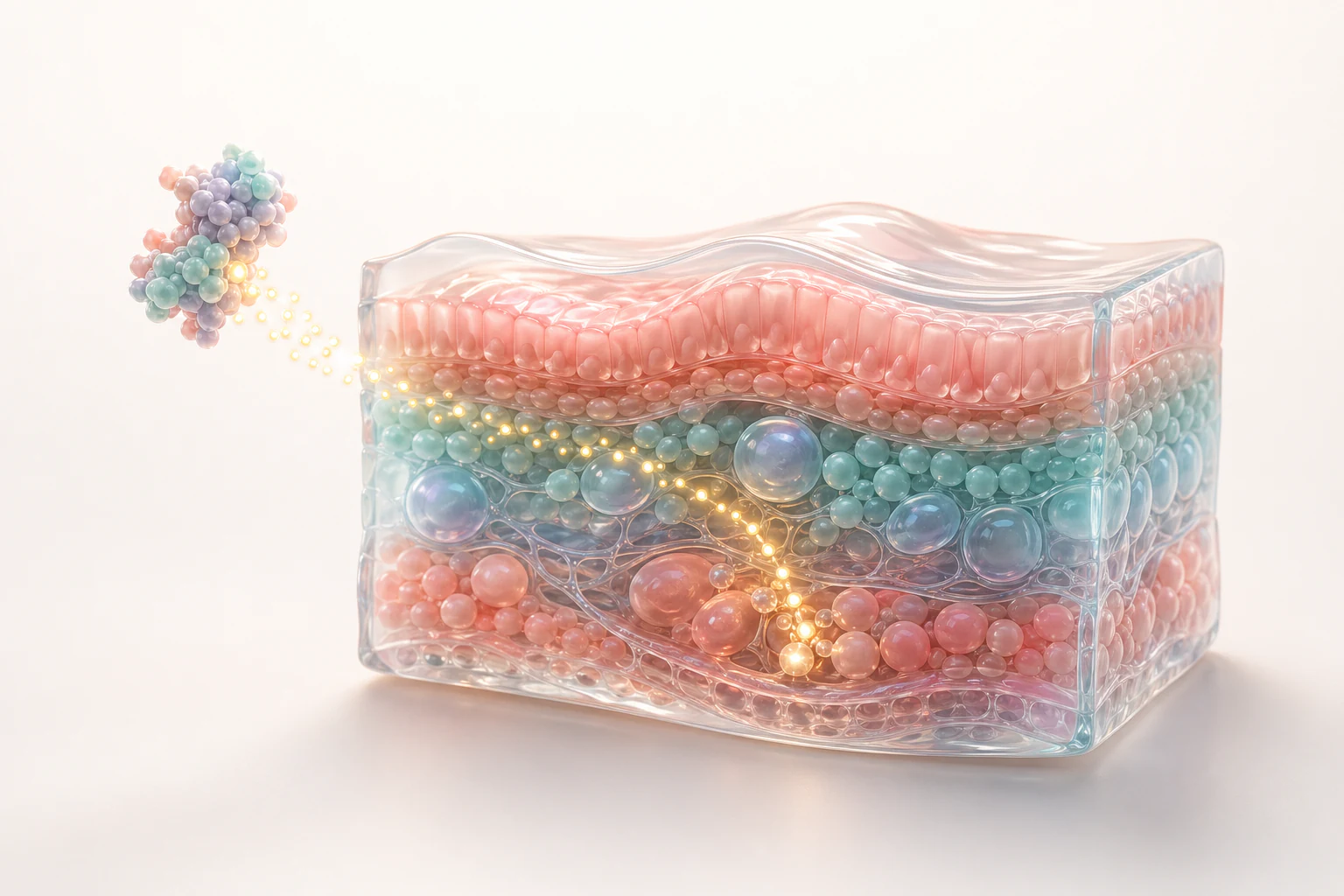
Data alone rarely carries an investor deck. The audience needs to know what the data means for the mechanism, the platform and the next business milestone. Biotech investor deck scientific visualization can bridge that gap by showing how an experimental readout connects to a biological event. The goal is not to simplify the data until it loses meaning. The goal is to make the interpretation visible.
A strong data-to-mechanism slide often pairs a restrained 3D or schematic visual with one focused result. The visual explains the expected biological event. The result shows whether the event was observed. This format works for target engagement, delivery, pathway modulation, immune activation, tissue penetration, organoid response and biomarker change.
The visual should respect uncertainty. If the evidence is early, show the proposed mechanism as a model and avoid visual certainty that the data cannot support. If the evidence is strong, the visual can be more direct. This calibration helps the deck feel credible to scientific diligence teams while still helping business audiences understand why the result matters.
- Pair each key result with the mechanism it supports.
- Use visual confidence that matches the maturity of the evidence.
- Show the biological consequence before adding secondary metrics.
Decide When to Use Static Figures, 3D Renders and Animation
Not every investor deck needs full animation, but most strong decks need more than flat diagrams. Static figures work well when the audience needs a clean map, comparison or one-frame explanation. 3D renders work well when structure, tissue context, product differentiation or platform identity carries the value. Animation works best when timing, motion, sequence or state change is essential to the story.
A delivery mechanism may need animation to show payload release. A structural biology program may need a 3D render to show binding logic. A platform overview may need a static figure that anchors the whole deck. The right choice depends on what the slide must prove. Visual polish helps, but proof comes from matching the asset type to the communication job.
This is why teams should plan deck visuals as a system. A hero render can support the cover and website. A mechanism sequence can become both an animation and still frames. A data-context figure can sit beside assay results. When assets are planned together, the deck looks coherent and the team gets more value from each production pass.
- Use static figures for maps, comparisons and summary logic.
- Use 3D renders when physical or molecular context supports differentiation.
- Use animation when sequence and state change are part of the claim.
FAQ About Biotech Investor Deck Scientific Visualization
What is biotech investor deck scientific visualization?
Biotech investor deck scientific visualization is the process of turning mechanisms, platform workflows, experimental evidence and product strategy into clear scientific figures, 3D renders and animation-ready visuals for fundraising or partnering decks.
When should a biotech company invest in custom deck visuals?
Custom visuals are useful when the platform is difficult to understand, the mechanism is central to differentiation, the company is entering fundraising or the team needs one visual system for investors, partners and conferences.
Do investor deck visuals need to be scientifically exact?
They need to be accurate for the claim being made. Some slides require structural or assay-level precision. Others work better as validated abstractions that show the core idea without unsupported detail.
Can the same visual assets support a website or conference campaign?
Yes. A well-planned render system can produce deck slides, website hero images, conference graphics, social posts and future animation frames from the same approved visual language.
Next Step: Build an Investor-Ready Scientific Visual System
Biotech investor deck scientific visualization is most valuable when it turns a difficult scientific story into a decision-ready sequence. The audience should understand what the platform does, why the mechanism matters, what the evidence supports and why the company is worth a deeper conversation.
Animiotics builds scientific figures, 3D renders and animation-ready visual systems for biotech teams preparing investor decks, partner meetings, platform launches and conference campaigns. The process starts with the claim the audience must remember, then translates mechanism, evidence and platform value into reusable visual assets.
If your team is preparing a fundraising deck or partner presentation, begin by choosing the one scientific claim that must land in the first few minutes. From there, a focused visual system can make the science clearer, more credible and more useful across the whole campaign. Open this template in Animiotics
- Define the investment claim before commissioning visuals.
- Connect mechanism figures to the evidence slides that prove them.
- Build reusable assets for decks, websites and future animation.