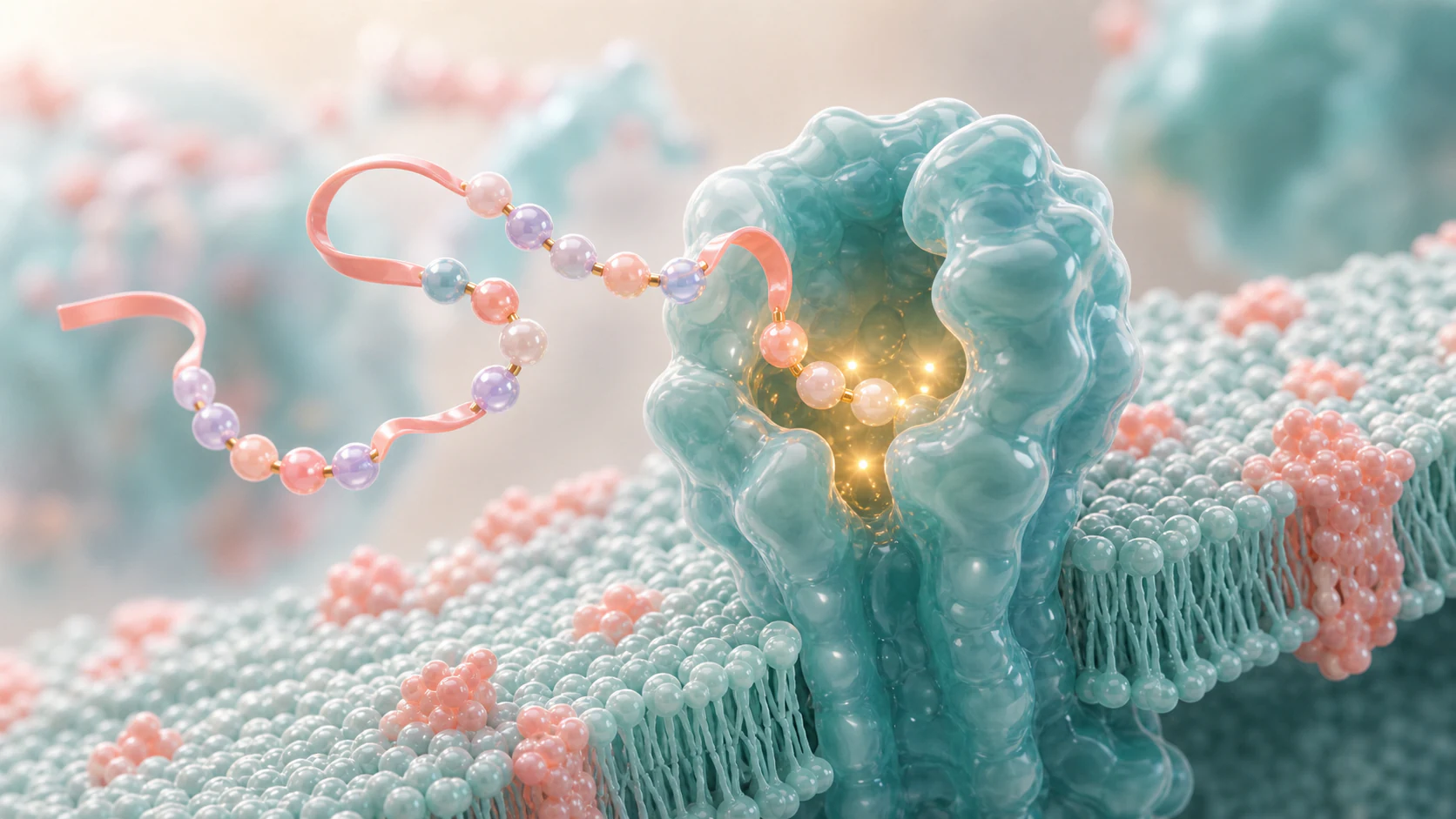
Why Peptide Therapeutic Mechanism Animation Services Matter
Peptide therapeutic mechanism animation services turn a promising modality story into a visual system that buyers, investors, partners and scientific reviewers can evaluate quickly. Peptide programs often sit between small molecules and biologics. They may use receptor agonism, receptor antagonism, protein interaction disruption, intracellular targeting, conjugation, depot release or tissue selective exposure. Without clear visuals, that positioning can sound technically attractive but commercially vague.
The challenge is that peptide value depends on several linked claims. A viewer needs to understand why the sequence or scaffold matters, how the peptide binds, why it resists degradation, how exposure is managed and which functional response proves the biology. A static pathway diagram rarely carries that full burden. A polished 3D render can make the peptide architecture recognizable. A short animation can show binding and activation. A figure sequence can connect design choices to pharmacology and product value.
For Animiotics clients, the strongest work usually starts as an asset system rather than a single hero image. The same peptide identity can appear in investor decks, partner packages, manuscript figures, conference graphics, website visuals and launch materials. That consistency helps platform teams explain multiple indications or scaffold variants while keeping the core technology easy to recognize.
- Use peptide visuals to connect molecular design with therapeutic intent.
- Separate scaffold, binding, delivery and evidence claims into readable scenes.
- Build still figures and animation scenes from one consistent peptide design.
Start With the Peptide Modality Story Map

A useful peptide visualization project begins with a story map. The team should decide whether the main message is scaffold design, target engagement, receptor signaling, improved stability, oral or injectable delivery, tissue exposure, safety differentiation or platform expansion. When this hierarchy is missing, the final animation can look premium but still fail to answer the business question in the room.
The story map usually moves from peptide identity to biological context. A linear peptide may need a clean sequence-to-shape transition. A cyclic peptide may need a clear constrained loop. A stapled helix may need a structure-first view that explains why the conformation matters. After that, the visual can move into target engagement, cellular response, pharmacokinetic behavior or disease-relevant tissue context.
This approach makes peptide therapeutic mechanism animation services commercially useful. A partner diligence deck may need a peptide scaffold comparison and a receptor binding still. A website may need a clean hero render and a short loop. A scientific presentation may need a deeper sequence that compares peptide logic with adjacent modalities such as protein-ligand interaction visualization or kinase inhibitor mechanism of action animation.
- Define the one claim each peptide scene should support.
- Keep scaffold identity consistent across deck, web and animation uses.
- Avoid forcing sequence, target, stability and assay data into one crowded frame.
Make Peptide Architecture Easy to Read
Peptide drug visualization needs a clear structural language. A viewer should quickly understand whether the program uses a linear peptide, cyclic peptide, constrained helix, macrocycle, conjugated peptide or multi-domain construct. That does not require atom-by-atom rendering in every scene. It requires a controlled visual identity that shows shape, flexibility and relevant chemical modifications without visual noise.
Design features should be simplified according to their role in the claim. A cyclic constraint can be shown as a clean loop. A stapled peptide can be shown as a stabilized helix. A lipidated or conjugated peptide can use a restrained attachment cue when exposure or tissue distribution is central. The goal is to explain the design logic, not to decorate the molecule with every detail from a chemical structure.
Consistency is especially important for platform teams. If one image shows a glossy pastel loop and another uses a flat pathway symbol, the story feels fragmented. A planned 3D material system lets the same peptide appear in scaffold, binding, formulation and tissue scenes while still reading as one technology.
- Give each peptide class a recognizable shape and scale cue.
- Show chemical modifications only when they support a scientific claim.
- Use color to separate function rather than decorate the asset.
Explain Binding Selectivity and Functional Response

Peptide therapeutics are often sold through target engagement. The visual needs to show how the peptide contacts the receptor, enzyme, channel or protein interface and why that interaction changes biology. A good mechanism animation can move from free peptide to binding site, then from binding event to downstream response without relying on dense arrows or overfilled pathway maps.
For receptor programs, the animation can show a peptide docking into a clean binding pocket followed by subtle conformational change and signal activation. For antagonist or inhibitor programs, it can show blockade of an interaction surface. For intracellular targets, it can show delivery context first so the viewer understands how the peptide reaches the relevant compartment.
Selectivity should be handled carefully. If the evidence supports a binding mode, show the key contact logic with restraint. If the program is earlier, use a conceptual target engagement scene that avoids unsupported atomic precision. This keeps the visual persuasive while preserving scientific credibility for reviewers and partners.
- Show target engagement before showing broad pathway effects.
- Use motion to connect binding with functional response.
- Keep uncertain structural details visually modest until evidence supports them.
Show Stability Formulation and Delivery Without Clutter

Peptide stability and delivery are frequent buyer questions. Teams need to explain protease resistance, half-life extension, depot release, permeability, conjugation, local exposure or formulation strategy without turning the image into a process diagram. A clean visual can show the stability concept and the delivery environment while leaving detailed assay numbers for companion figures.
For injectable or depot strategies, a soft tissue or gel-like environment can show controlled release and local exposure. For oral or intracellular strategies, the visual may need to show barriers, degradation risk or compartment access. The key is to make the delivery obstacle visible before showing the therapeutic effect. Otherwise the audience may understand the target but miss the product challenge.
This logic is similar to siRNA therapeutic mechanism of action animation. The mechanism is only convincing when delivery is understandable. For peptide programs, a visual system can connect scaffold design to exposure, tissue context and pharmacology without overloading one frame.
- Use delivery visuals to show the barrier or exposure problem clearly.
- Connect formulation choices to stability and pharmacology claims.
- Separate formulation scenes from receptor scenes so each asset has one job.
Turn Peptide Evidence Into Investor and Partner Assets
Investors and partners need peptide visuals that bridge design, evidence and value. A scaffold render explains what the product is. A binding scene explains how it works. A stability or delivery scene explains why it can become a product. A pharmacology figure explains what data supports the claim. Together, those assets make the program easier to discuss in fundraising, diligence and collaboration meetings.
The strongest commercial visuals do not hide complexity. They organize it. A partner should be able to see which claims are supported by structural biology, which are supported by binding assays, which are supported by in vivo exposure and which remain development risk. That is where a polished figure system improves the conversation: each asset narrows one scientific claim and makes the evidence easier to inspect.
This workflow aligns with biotech investor deck scientific visualization. A peptide platform deck should not depend on one master diagram. It should use a small sequence of reusable visuals that clarify scaffold, target engagement, differentiation and next milestones.
- Use one visual per claim instead of one overloaded platform diagram.
- Pair mechanism scenes with binding, stability and pharmacology evidence.
- Create short meeting assets plus deeper scientific review versions.
Storyboard Peptide Therapeutic Figures and Animation
A storyboard keeps peptide therapeutic mechanism animation services focused on decision-making rather than decoration. Each scene should have a biological purpose, a commercial use and a defined scientific boundary. That structure also makes review faster because scientists can approve the intended claim before rendering detail increases.
The table below is a practical starting point for biotech teams planning peptide figures, 3D renders or a short mechanism animation.
| Scene | Visual focus | Motion or change | Business purpose |
|---|---|---|---|
| Peptide identity | Linear, cyclic or constrained peptide shape with restrained material detail | Sequence resolves into a clean scaffold view | Show what the product is |
| Target engagement | Peptide contacts a receptor, enzyme or protein interface | Binding site closes or signal points activate | Explain mechanism and differentiation |
| Stability design | Constraint, conjugation or formulation cue shown beside the peptide | Peptide remains intact in a simplified exposure context | Build confidence in developability |
| Delivery context | Depot, tissue layer, cellular barrier or compartment access | Peptide moves from formulation context toward target tissue | Explain exposure and route assumptions |
| Functional response | Cellular or tissue state changes in a restrained way | Signal or phenotype changes after target engagement | Link mechanism to evidence and product value |
FAQ About Peptide Therapeutic Mechanism Animation Services
What should peptide therapeutic mechanism animation services include?
A useful project should include peptide identity, scaffold logic, target engagement, stability strategy, delivery context, pharmacology evidence and the functional response that supports the therapeutic claim.
How long should a peptide mechanism animation be?
Many commercial uses work well as a 45 to 90 second mechanism sequence plus still renders for decks and websites. Scientific conferences or partner diligence packages may need a longer narrated version with clearer evidence boundaries.
Can the same asset set support multiple peptide variants?
Yes. A planned visual system can keep lighting, materials and scale consistent while changing sequence, scaffold, modification or target context for different programs.
How detailed should receptor binding be?
Detail should match the evidence. If structural data supports the binding mode, show it clearly. If not, a conceptual binding scene is usually more credible than an overprecise atomic model.
CTA: Plan Peptide Visuals With Animiotics
Animiotics helps biotech, platform and research teams turn peptide therapeutic science into clear scientific figures, polished 3D renders and mechanism animation assets. The best starting point is a focused visual plan that covers scaffold identity, binding, stability, delivery, evidence and commercial use cases.
If your team is preparing an investor deck, partner package, conference visual system, manuscript figure set or launch page, Animiotics can help translate the peptide program into a coherent asset set that looks premium without losing scientific credibility.
- Use this workflow when peptide design, target engagement or delivery needs to be explained clearly.
- Bring scaffold claims, assay evidence and intended use cases into the first visual planning pass.