
Why ASO Stories Need Clear Visuals
Antisense oligonucleotide animation services matter because ASO programs often sit at the intersection of chemistry, RNA biology, delivery, pharmacology and clinical translation. A buyer, investor, partner or patient advocacy audience may understand nucleic acids in general, yet still miss why a specific backbone, gapmer design, splice-switching strategy or tissue exposure profile creates value. If the mechanism is explained only with dense pathway diagrams, the story can feel narrow, technical or incomplete.
The strongest ASO visuals show the therapeutic logic in one controlled sequence. The viewer sees an oligonucleotide enter the relevant cellular context, find a transcript, bind with sequence specificity then trigger the intended outcome. That outcome may be RNase H-mediated degradation, splice correction, exon skipping, translation blocking or microRNA modulation. A polished animation gives each step visual hierarchy so the audience understands what the molecule does, why the design matters and where the platform creates leverage.
For biotech teams, the commercial value is practical. A clean ASO mechanism render can support a website hero, fundraising deck, conference booth, disease education page, partnership meeting or scientific presentation. The visual does not replace data. It frames the data so a buyer can connect chemistry choices, biological action and program value faster.
- Use ASO visuals when target biology, chemistry or delivery language slows buyer understanding.
- Show one mechanism at a time so RNase H, splice modulation or delivery evidence does not compete for attention.
- Keep the scene biologically grounded but visually simple enough for non-specialist stakeholders.
What An ASO Animation Should Explain First
A useful ASO animation starts with the central question your audience needs answered. For an investor, that may be why the transcript target is tractable and clinically meaningful. For a pharma partner, it may be why the chemistry, dosing route or tissue exposure creates a practical advantage. For a platform buyer, it may be how the same design engine can be reused across targets without pretending every program behaves the same way.
The opening scene should avoid a generic helix floating in space. It should place the ASO near the relevant target RNA, cellular compartment or tissue context. From there, the animation can move from recognition to mechanism, then from mechanism to evidence. This order gives the viewer a mental map before you show details like gapmer wings, phosphorothioate backbones, conjugates, RNase H recruitment or splice junction changes.
This is also where visual restraint matters. A crowded scene with every protein, receptor and pathway marker looks impressive at first glance but often weakens comprehension. One target RNA, one ASO and one mechanism cue can do more for buyer confidence than a busy collage of molecular forms.
- Lead with the target RNA and intended biological outcome.
- Introduce chemistry only after the viewer understands what the molecule must accomplish.
- Use sequence specificity, cell context and outcome as the three anchors of the story.
| ASO visual question | Best visual answer |
|---|---|
| What does the ASO bind? | A clean ASO-target RNA duplex with the target region clearly staged |
| What happens after binding? | A focused RNase H, splice or translation outcome scene |
| Why does the design matter? | A simple chemistry or delivery comparison tied to platform value |
RNase H Gapmer Animation

Gapmer ASOs need especially careful visualization because the therapeutic idea is easy to oversimplify. The ASO does not merely stick to RNA. It forms a DNA-like central region within the duplex that can recruit RNase H, which then cleaves the target RNA strand. If this is shown too quickly, audiences may remember the ASO as a generic blocker rather than a catalytic transcript knockdown strategy.
A strong RNase H animation shows the ASO and target RNA in a stable hybrid, then brings the protein surface into the scene with restrained motion. The cleaved RNA can separate in a controlled way while the ASO remains visually distinct. This avoids the impression that the oligonucleotide is consumed in the reaction or that all RNA around it disappears. The goal is not to show every atom. The goal is to make the specificity and outcome unmistakable.
This type of visual pairs well with Animiotics pages on related RNA and delivery mechanisms, such as https://animiotics.com/blog/sirna-therapeutic-mechanism-of-action-animation-how-to-explain-delivery-risc-loading-and-target-knockdown-clearly/ and https://animiotics.com/blog/rna-editing-animation-services-how-to-explain-adar-editing-delivery-specificity-and-platform-value-clearly/. Internal comparisons help buyers see how ASO, siRNA and RNA editing stories differ.
- Show the ASO-target RNA duplex before RNase H enters the scene.
- Keep the RNase H surface readable with a single active-site cue.
- Use motion to explain cleavage without implying nonspecific RNA destruction.
Splice Switching And Exon Modulation
Not every ASO story is a knockdown story. Splice switching, exon skipping and splice restoration programs often require a different visual grammar. Instead of focusing on RNA cleavage, the animation should show how the ASO masks or redirects a splice signal so the transcript matures in a different way. This is more abstract than target degradation, which is why many teams struggle to explain it in one slide.
The best splice visuals separate the pre-mRNA, splice-site logic and final transcript outcome into a clear sequence. The ASO can appear as a targeted mask at the relevant splice junction or regulatory motif. The spliceosome does not need to become a huge machine with dozens of moving parts unless the audience is highly technical. For commercial communication, the key is to show that a short oligonucleotide changes transcript processing with precision.
A practical ASO animation can include before-and-after transcript states. One side shows the disease-relevant splice pattern, while the sequence resolves into the intended exon inclusion or exclusion result. The visual should still avoid infographic panels and labels in the render itself. Captions, voiceover and page copy can carry the terminology while the render carries the mechanism.
- Use transcript architecture, splice-site masking and final mRNA outcome as the main beats.
- Do not overbuild the spliceosome when the sales story is transcript correction.
- Connect the molecular change to functional protein restoration or harmful isoform reduction.
Chemistry, Conjugates And Delivery Evidence
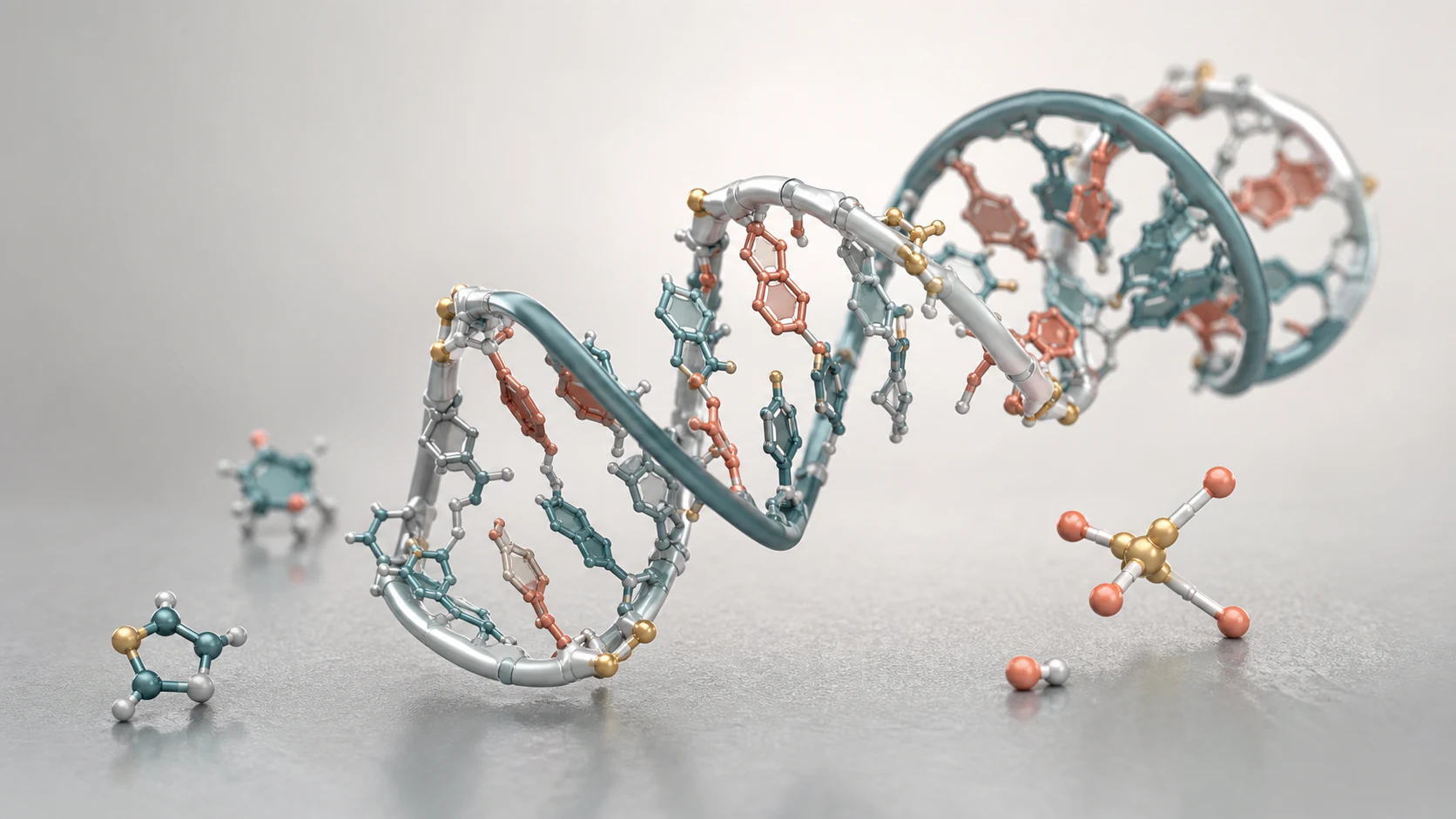
ASO buyers often want to know why a program can reach the right tissue at the right exposure with the right tolerability profile. Animation can help by translating chemistry and delivery decisions into visual evidence. A phosphorothioate backbone, sugar modification, ligand conjugate or local administration route should not be shown as decoration. It should be tied to stability, uptake, tissue tropism, dosing burden or therapeutic window.
For example, a liver-directed ASO may need a different visual focus than a CNS program delivered intrathecally or a local program targeting eye, ear or muscle biology. A good visual system can keep the ASO molecular design consistent while changing the surrounding biological context. That makes the platform feel coherent without flattening meaningful differences across programs.
This is where a premium 3D render can outperform a flat diagram. Materials, lighting and scale can distinguish oligonucleotide chemistry from proteins, membranes and tissue environments. The viewer can immediately sense that the molecule is engineered, compact and designed for a specific biological journey.
- Tie each chemistry cue to a buyer-relevant reason like stability, uptake or tissue exposure.
- Show delivery context only when it affects the program story.
- Keep platform visuals reusable by maintaining consistent ASO materials across scenes.
| Evidence area | Animation opportunity |
|---|---|
| Chemistry optimization | Show modified backbone and sugar design as controlled molecular material choices |
| Tissue exposure | Place the ASO in the relevant cellular or tissue context with restrained scale cues |
| Platform repeatability | Reuse visual rules across targets while changing the transcript and disease context |
Where ASO Visuals Create Commercial Leverage

Antisense oligonucleotide animation services are not only useful for a single mechanism video. The same visual strategy can support a full commercial content system. A short homepage loop can explain the core mechanism in seconds. A longer investor sequence can connect target biology, chemistry choices, delivery path and clinical rationale. A conference visual can attract attention without turning the science into a generic RNA medicine graphic.
For platform companies, the goal is to make repeated messages feel consistent. Every program may target a different RNA or tissue, yet the audience should recognize the same scientific design language. That consistency helps the company look focused, technically mature and prepared for diligence. It also helps sales and business development teams avoid rebuilding the story for every meeting.
Animiotics often treats ASO visuals as modular assets. A hero render, mechanism loop, deck figure and website section can share the same molecular materials and camera language. That approach gives teams more mileage from one visual system while keeping each asset tailored to the channel.
- Use a homepage render for instant category recognition.
- Use mechanism animation for investor, partner and scientific meetings.
- Use modular visual assets across decks, landing pages and conference materials.
FAQ About ASO Animation Services
What should an ASO animation include?
It should include the target RNA, the ASO design, the intended mechanism and the biological outcome. Depending on the program, that may mean RNase H cleavage, splice switching, translation blocking or microRNA modulation. The best version keeps the sequence focused so the audience does not confuse ASO action with siRNA, mRNA vaccine or gene editing mechanisms.
How technical should the visuals be?
The answer depends on the audience. A scientific advisory board may need more structural detail and careful terminology. A business development page may need fewer moving parts and stronger outcome cues. In both cases, the scene should be accurate enough for scientists and clear enough for decision makers who are evaluating platform fit.
Can one ASO visual system cover multiple programs?
Yes, if the core design rules are established early. A consistent ASO material, RNA style, protein surface language and tissue environment system can adapt across targets. The visual system should show differences in target, mechanism and delivery without forcing every program into the same template.
- ASO animations should distinguish knockdown, splice modulation and delivery stories.
- Scientific accuracy and commercial clarity need to work together.
- A reusable visual system helps platform companies scale communication across programs.
Ready To Build ASO Visuals For Your Platform
If your ASO program is difficult to explain in a deck, website or partner meeting, the problem may not be the science. The problem may be that the mechanism has not been staged visually. Antisense oligonucleotide animation services turn target engagement, RNase H recruitment, splice modulation, chemistry design and delivery evidence into a visual story that buyers can follow.
Animiotics builds scientific renders, mechanism animations and biotech visual systems for teams that need complex biology to feel clear, credible and commercially useful. For related platform storytelling, see https://animiotics.com/blog/lipid-nanoparticle-animation-services-how-to-explain-formulation-delivery-endosomal-escape-and-platform-value-clearly/ and https://animiotics.com/blog/biotech-3d-rendering-services-how-to-turn-platform-science-into-buyer-ready-visual-assets/. To discuss an ASO visual package, start at / and bring the mechanism, target biology or deck section that needs to become clearer.
- Use ASO animation to clarify mechanism before a key investor, partner or launch moment.
- Build one visual language for molecular action, delivery and platform value.
- Start with the hardest explanation in your current deck or website.