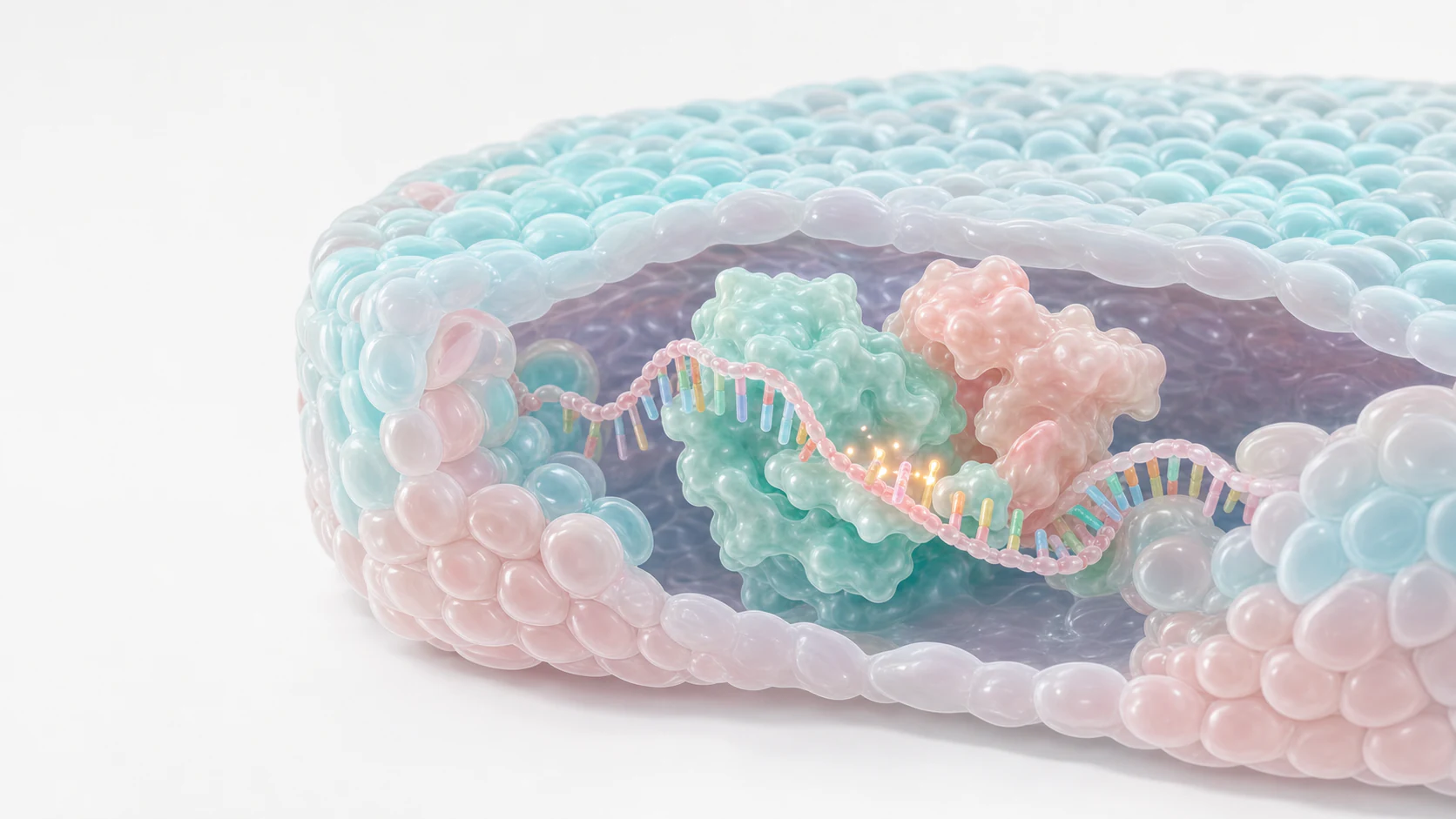
Why RNA Editing Animation Services Matter
RNA editing animation services matter because RNA editing platforms ask buyers to understand a therapeutic logic that is different from permanent DNA editing, conventional mRNA delivery or oligonucleotide knockdown. The story often starts with a designed guide RNA, an endogenous or engineered editor such as ADAR, a target transcript and a controlled base change at the RNA level. That logic can be commercially attractive because the edit is potentially reversible, tunable and repeatable across targets, but those advantages are easy to flatten in a dense platform slide.
Biotech teams need to explain guide design, delivery format, tissue exposure, editing efficiency, off-target review, duration of effect and program repeatability without making the mechanism feel like a generic gene therapy story. Investors, pharma partners and scientific reviewers need to see what is being edited, why the selected transcript matters, how the editor reaches the target cell and where the evidence boundaries sit.
Animiotics builds RNA editing animation services for biotech, platform and research teams that need website renders, investor deck figures, conference visuals, mechanism explainers and animation-ready storyboards. The goal is to make RNA editing feel precise, useful and reviewable while preserving the scientific caution that buyers expect.
- Use RNA editing visuals when transcript-level correction or modulation is the core value.
- Keep guide RNA, editor protein, target transcript and delivery vehicle visually distinct.
- Build a reusable visual system that supports both platform and asset-specific conversations.
Start With the Editing Event
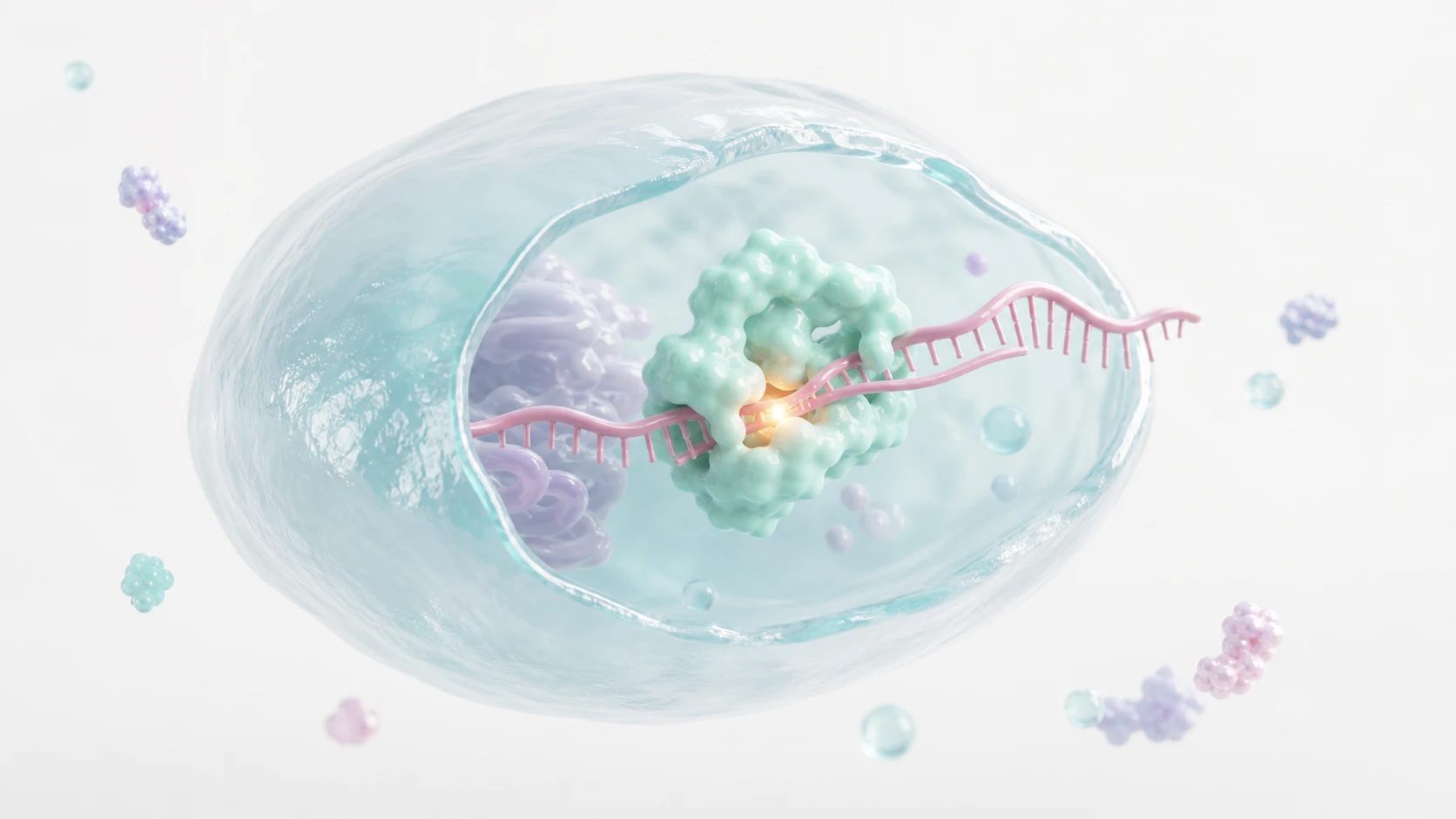
A strong RNA editing animation usually begins with the molecular event rather than a broad disease overview. The viewer needs to understand that the therapeutic cue is a targeted change on an RNA transcript. A clear close-up can show a guide RNA bringing the target site into position, an editor complex forming around the transcript and a small edit-site glow that signals the intended base change.
This scene should not try to display every chemical detail at once. The most useful first beat is hierarchy: the target transcript is the path, the guide RNA is the navigator, the editor is the active machinery and the edit site is the decision point. Once that hierarchy is visible, later sections can talk about chemistry, sequence rules, delivery and assay evidence with much less explanation.
This mechanism-first approach connects naturally with oligonucleotide therapy visualization services when a team also needs to explain RNA binding, splice switching or transcript modulation. For RNA editing, the key difference is that the visual must make the edit event itself feel specific and controlled.
- Give the transcript and edit site a clean close-up before showing tissue context.
- Use one restrained glow cue for the intended edit rather than many competing effects.
- Avoid implying permanent genome change when the platform acts at the RNA level.
Explain Delivery Without Losing the Mechanism
Delivery is often where RNA editing presentations become too broad. A company may need to show lipid nanoparticle delivery, conjugated oligonucleotide delivery, viral delivery, local administration or cell-specific uptake depending on the platform. If that delivery story is placed in the same frame as editing efficiency, transcript selectivity, disease biology and platform expansion, the central mechanism becomes hard to read.
A better storyboard separates transport from editing. One shot can show the delivery vehicle approaching a target tissue or cell type. A second shot can show release of the guide or editor payload. A third shot can move inside the cell to show the RNA editing event. This keeps the viewer oriented and gives scientific reviewers a chance to confirm that the delivery claim is represented at the right level of confidence.
For teams that already have an LNP or nucleic acid delivery narrative, the RNA editing asset can reuse delivery language from lipid nanoparticle animation services while keeping the RNA editing frame focused on transcript-level correction.
- Separate delivery, release and editing into distinct visual beats.
- Show cell or tissue tropism only where the evidence supports it.
- Use delivery visuals to support the mechanism rather than replacing it.
| Buyer Question | Visual Priority | Asset Use |
|---|---|---|
| What is being edited? | Target RNA transcript with one highlighted edit site | Platform website or investor deck |
| How does the payload reach cells? | Delivery vehicle, uptake and release as separate scenes | Partnering material or conference visual |
| Why is the edit specific? | Guide RNA alignment and editor contact shown without clutter | Scientific review or diligence package |
| Can the platform repeat? | Comparable modules for multiple transcripts or indications | Fundraising deck or business development package |
Make Specificity and Safety Review Visible
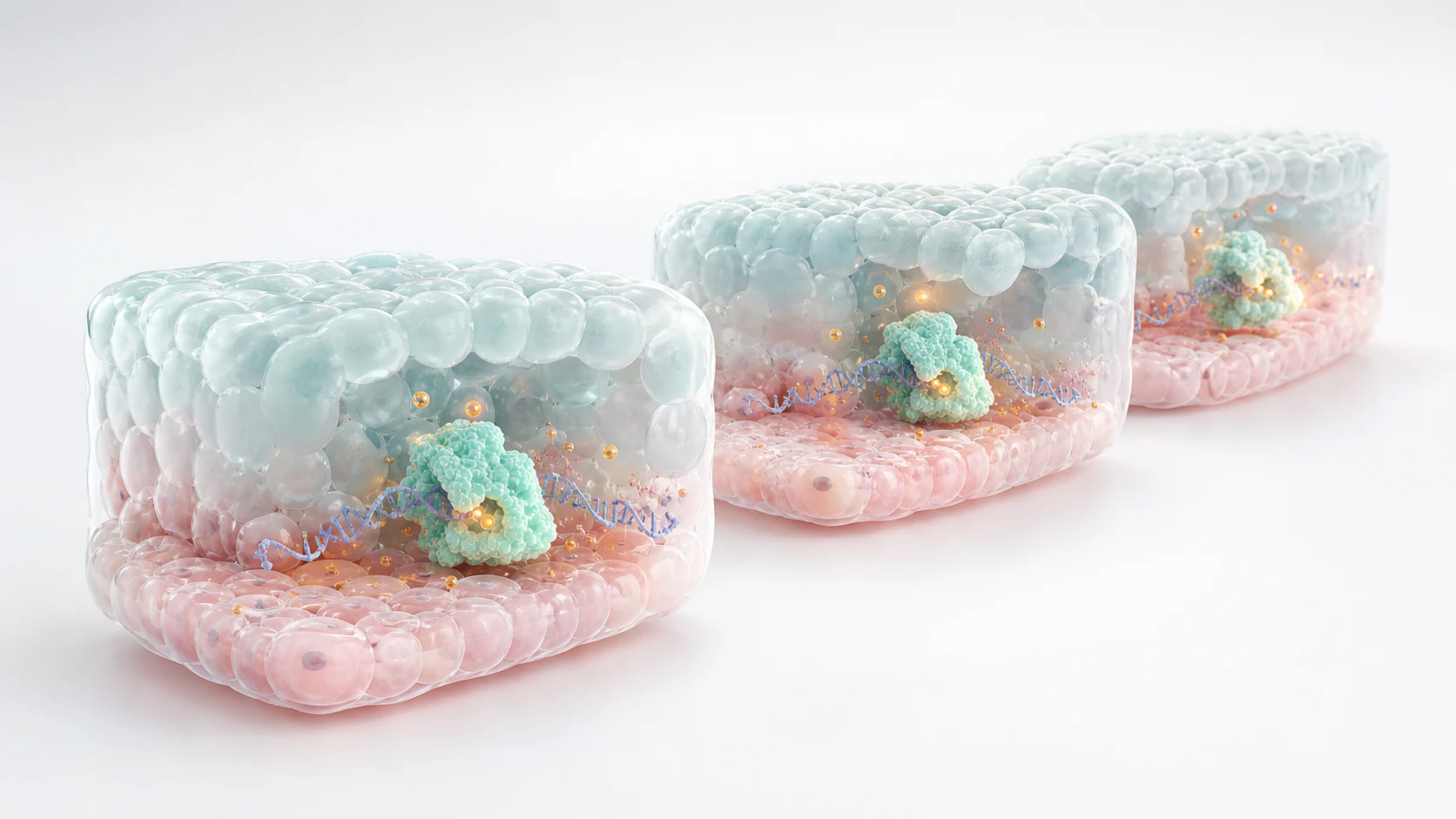
RNA editing buyers will ask how the platform manages specificity. The animation does not need to replace assay data, but it should make the specificity logic easier to discuss. A useful figure can show a matched guide RNA and target transcript pairing cleanly at the intended site while unmatched transcripts remain visually separate. This creates a frame for talking about sequence design, transcript context and off-target screening.
Safety review should be handled as its own communication layer. A calm supporting render can show intended target editing, nearby transcript review and broader transcriptome screening as separate evidence zones. That structure helps teams avoid the common mistake of using a beautiful mechanism render to imply a stronger safety conclusion than the data supports.
This is especially useful for platform companies that need to show why one editing architecture can support multiple programs. The same visual language can support a lead asset, a backup transcript and a future indication without implying that each program has the same data maturity.
- Use visual separation to distinguish intended editing from off-target review.
- Let assay panels carry quantitative specificity claims.
- Keep safety, duration and reversibility claims tied to the actual evidence package.
Build a Scene-by-Scene RNA Editing Storyboard
RNA editing animation services work best when the storyboard follows the buyer's learning path. The opening shot can establish the target tissue or cell type. The second shot can show delivery and payload release. The third shot can isolate the guide RNA and target transcript. The fourth shot can show editor recruitment and the edit event. The fifth shot can connect the edited transcript to restored, reduced or modified protein output depending on the therapeutic goal.
This order prevents the story from jumping straight to clinical promise before the mechanism is understood. It also gives internal teams a practical review process. Delivery experts can review the transport scenes, RNA biologists can review the transcript and editor scenes, translational teams can review the evidence layer and business development can review whether the platform value is visible.
The storyboard should avoid heavy labels in the render itself. Captions, slide text and narration can explain ADAR editing, guide design or assay terms while the visuals keep the biology readable. This makes the same asset set useful across a website hero, investor deck, conference screen and short animation.
- Storyboard delivery before editing so the viewer understands how payload reaches the cell.
- Keep the edit site as the visual anchor across mechanism scenes.
- Design static renders so they can later become animation keyframes.
| Scene | Visual | Motion | Purpose |
|---|---|---|---|
| 1 | Soft target tissue or cell context | Slow camera push toward one target cell | Set biological context |
| 2 | Delivery vehicle releases RNA payload | Gentle opening and payload drift | Explain access to the editing site |
| 3 | Guide RNA aligns with target transcript | Subtle pairing motion | Make specificity readable |
| 4 | Editor complex forms around the transcript | Small amber pulse at the edit site | Show the core mechanism |
| 5 | Edited transcript connects to downstream output | Calm transition to protein or cellular response | Connect mechanism to therapeutic logic |
Turn Platform Value Into Buyer-Ready Assets
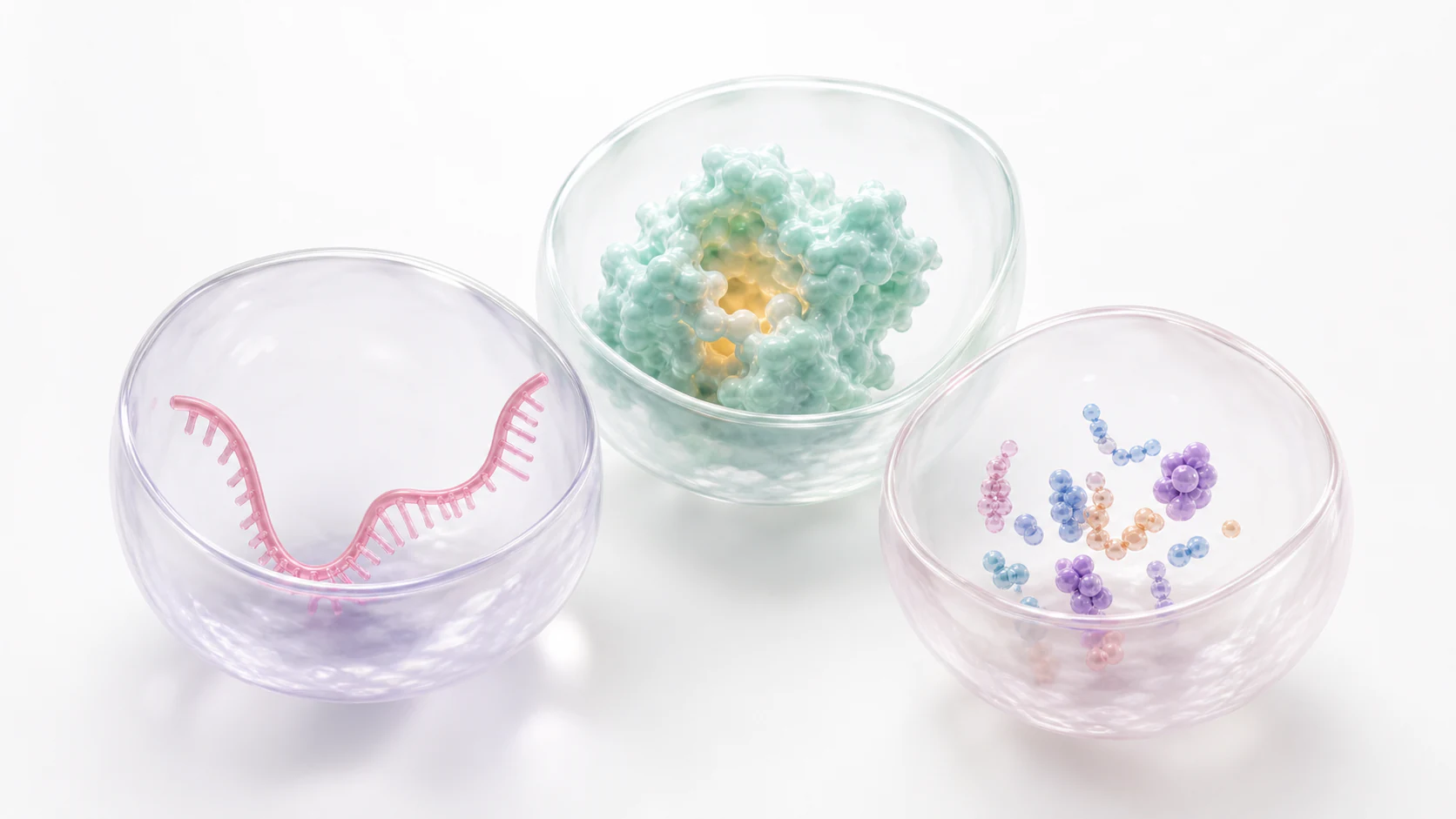
Many RNA editing companies need more than one hero render. They need a visual system that can explain a lead program, a repeatable guide design process, a delivery strategy, a specificity package and a pipeline expansion story. RNA editing animation services can make that platform value tangible by using consistent forms for transcript, guide RNA, editor, delivery vehicle and evidence layers.
For example, a website cover image can establish the editor and RNA transcript in a clean tissue setting. A deck figure can zoom into guide-target pairing. A scientific review image can separate intended editing from off-target screening. A platform slide can show three comparable modules for different transcripts or indications. The buyer sees one coherent platform rather than a pile of unrelated visuals.
This approach also supports later production. The same models, colors and camera language can become a short mechanism animation, conference loop, partnering video or figure series. When the first asset set is built with reuse in mind, the company avoids remaking the mechanism every time the story moves to a new audience.
- Plan cover, section, deck and animation crops before final rendering.
- Use consistent colors for transcript, guide RNA, editor, delivery vehicle and evidence.
- Create assets that can expand from static figures into a full mechanism animation.
FAQ About RNA Editing Animation Services
What are RNA editing animation services?
They are scientific visualization services that turn guide RNA design, editor recruitment, RNA transcript targeting, delivery strategy, specificity review and platform value into clear renders, figures and animation-ready storyboards.
Who uses RNA editing visuals?
RNA therapeutics companies, gene modulation platforms, discovery teams, translational groups and business development teams use them for websites, pitch decks, partnering packages, scientific talks, conference campaigns and investor education.
How is RNA editing animation different from gene editing animation?
Gene editing animation often focuses on permanent DNA-level change. RNA editing animation should make transcript-level editing, duration of effect, guide RNA logic and reversibility easier to understand without implying a DNA edit.
Can the visuals include real data?
Yes. The clearest projects pair conceptual mechanism scenes with evidence such as editing efficiency, transcript selectivity, duration, tissue exposure, off-target screening and translational biomarkers. The measured evidence should remain visually distinct from explanatory mechanism scenes.
- Use RNA editing visuals when the edit event and platform repeatability need fast explanation.
- Keep mechanism, delivery and evidence boundaries as separate communication beats.
- Build a reusable visual system if the company has multiple targets or indications.
Ready to Build RNA Editing Visuals
RNA editing animation services are most useful when they help buyers understand why a transcript-level edit supports a larger therapeutic strategy. The right assets explain guide RNA design, ADAR editing, delivery, specificity, evidence boundaries and platform repeatability in a way that supports commercial conversations without overstating the science.
Animiotics helps biotech, platform and research teams create RNA editing renders, ADAR editing visuals, guide RNA mechanism storyboards, investor deck figures, website assets and animation-ready scenes. The work can support fundraising, partnering, conference campaigns, board updates, scientific education and translational planning.
- Bring target transcript, delivery format, editor strategy, evidence package and buyer audience into the first brief.
- Use one visual system for guide RNA, target transcript, editor complex and platform value.
- Turn complex RNA editing biology into buyer-ready visuals while preserving scientific review discipline.