Antibody Drug Conjugate Animation Services: How to Explain Linkers Payload Release and Platform Value Clearly
Antibody drug conjugate animation services help biotech, pharma and platform teams turn ADC targeting, linker chemistry and payload release into buyer-ready visuals.
Why Antibody Drug Conjugate Animation Services Matter
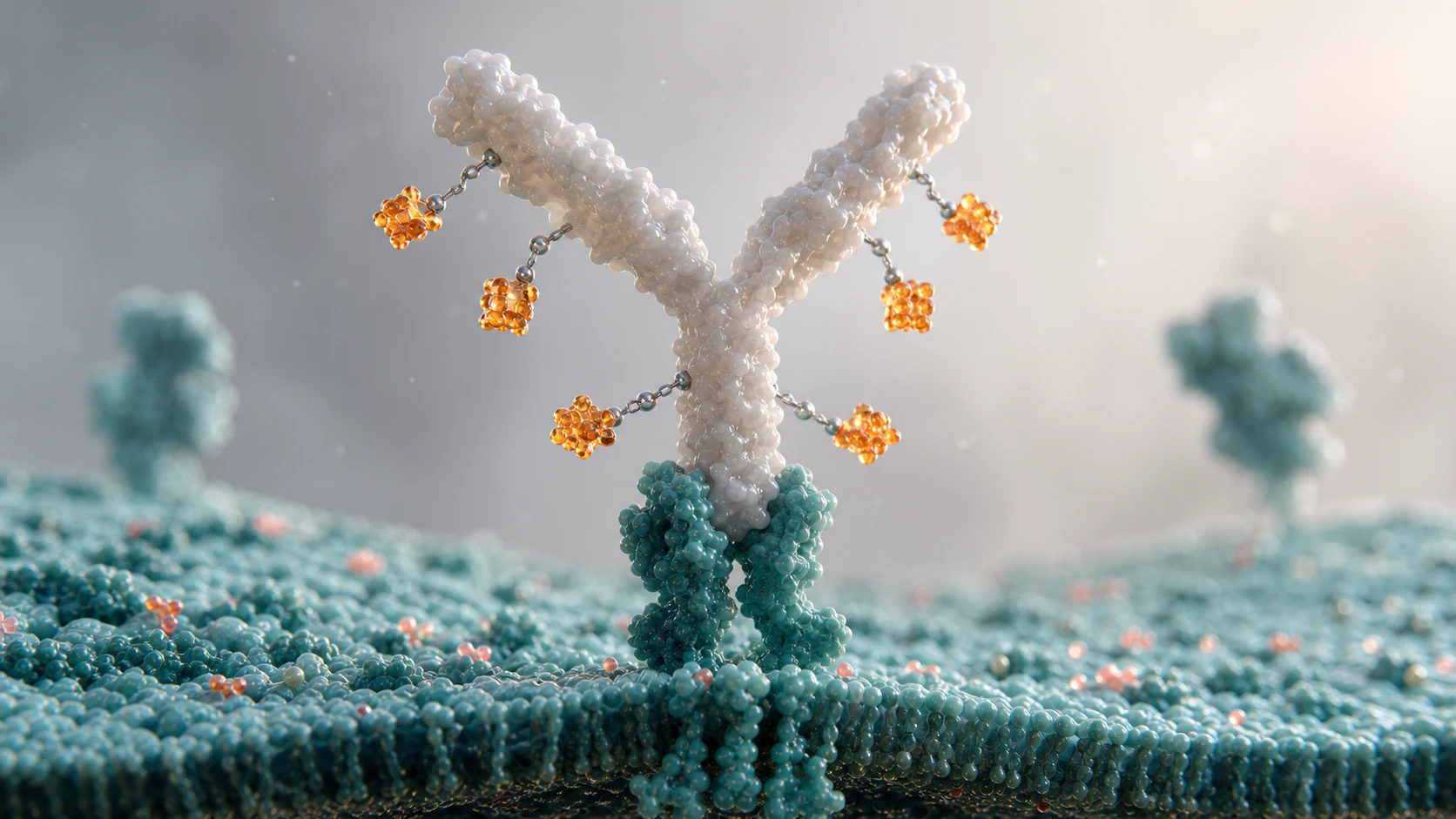
Antibody drug conjugate animation services help ADC teams explain why a molecule is more than an antibody with a toxic payload attached. A strong ADC story has to show antigen selection, binding specificity, internalization, linker stability, payload release, tumor cell killing and therapeutic window in a way that feels credible to scientific reviewers and clear to commercial buyers.
That is difficult because ADC value is distributed across several design choices. The antibody must find the right antigen. The linker must stay stable in circulation but release payload in the correct compartment. The payload must be potent enough to kill the target cell while the platform manages bystander effect, resistance risk and tolerability. When those ideas are shown as a dense diagram, the audience often remembers the complexity instead of the advantage.
Animiotics builds ADC mechanism visuals for biotech, pharma, platform and research teams that need mechanism clarity for websites, investor decks, BD meetings, conference talks and scientific presentations. The goal is to make the design logic visible. A buyer should understand what the ADC binds, what enters the cell, what changes after internalization and why the platform could support a differentiated oncology story.
- Make antibody binding and antigen context visible in the first frame.
- Show linker and payload choices as platform logic rather than chemical clutter.
- Connect molecular mechanism to tumor selectivity, safety and buyer confidence.
Start With The ADC Buyer Question
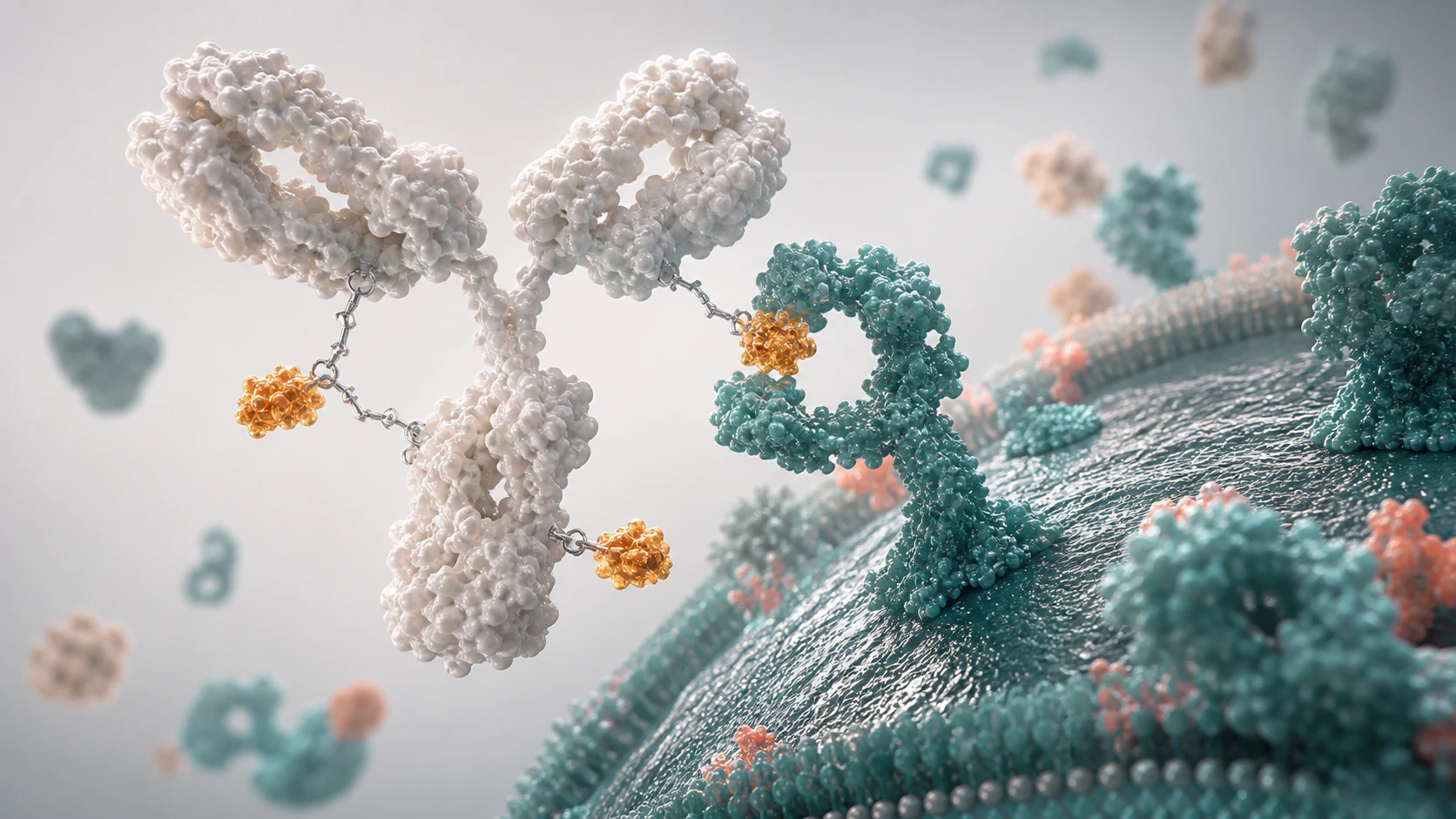
The best ADC animation starts with the question the viewer needs answered. An investor may ask why this target and payload pair deserves capital. A pharma partner may ask whether the platform can support multiple antigens. A clinical audience may ask how internalization and payload release explain efficacy or toxicity. Each question requires a different visual hierarchy.
For a platform company, the hero asset should usually make modularity obvious. The antibody, linker and payload should read as distinct but integrated elements. For a program-specific story, the antigen and tumor cell context may be more important than broad platform flexibility. For a scientific presentation, the sequence may need to include receptor binding, endocytosis, lysosomal processing, payload release and microtubule or DNA damage effect.
This post complements related Animiotics guidance on https://animiotics.com/blog/antibody-engineering-visualization-services-how-to-explain-affinity-fc-function-developability-and-platform-value-clearly/ and https://animiotics.com/blog/immuno-oncology-animation-services-how-to-explain-tumor-immune-biology-checkpoint-response-and-platform-value-clearly/. ADC animation services sit between those stories because they must communicate biologic targeting, drug chemistry and oncology mechanism in one coherent visual path.
- Define the commercial decision before choosing the scene list.
- Pick one ADC advantage for the hero render.
- Separate platform claims from program-specific evidence.
What To Visualize In An ADC Mechanism
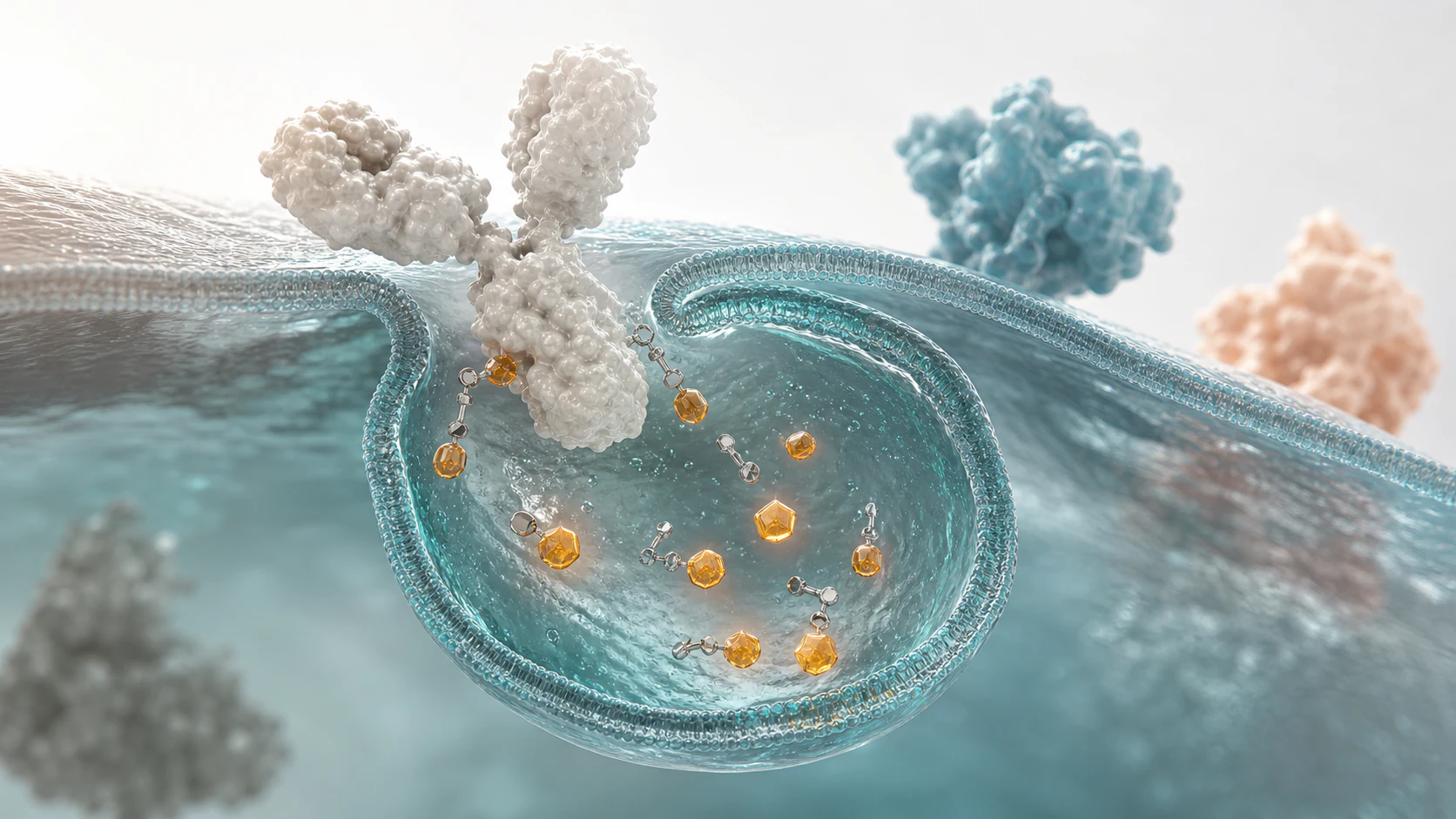
Most ADC stories work best as a sequence from surface recognition to intracellular payload activity. The opening view can show the antibody engaging a tumor antigen on a clean membrane surface. The second view can move into receptor-mediated internalization. The third view can show linker processing and payload release inside an endosomal or lysosomal compartment. The final view can show the payload effect in a simplified intracellular target scene.
The visual language should stay focused. A polished 3D antibody, a few receptor forms, a membrane surface and restrained payload geometry usually communicate more than a crowded molecular collage. Linkers should be visible enough to explain stability or release strategy but not so detailed that the image becomes a chemistry poster. Payload molecules can be warm focal accents that guide the eye through the mechanism.
Good ADC visuals also explain what should not happen. Off-target uptake, premature payload release, weak antigen density and poor internalization are common buyer concerns. A useful animation can contrast desired and undesired states without turning into a risk table. The viewer should see why the molecule is selective, where the payload becomes active and how the design supports the therapeutic window.
For teams with multiple candidates, the same visual framework can compare programs without making every scene feel new. The antibody surface can stay consistent while the antigen, linker or payload changes. That approach helps BD and internal teams discuss platform breadth with one familiar visual grammar instead of a separate explanation for each asset.
- Antigen binding for specificity and target rationale.
- Internalization for delivery into the right cellular compartment.
- Payload release for mechanism, potency and safety context.
Useful Deliverables For ADC Teams
ADC teams usually need more than one render. A website hero needs one elegant image that makes targeting and payload value obvious in seconds. A pitch deck may need a four-step sequence from antigen binding to cell killing. A partnering deck may need modular visuals that compare linkers, payloads, antigens and tumor biology without rebuilding the visual system each time.
A practical package often includes a cover render, section figures for mechanism details, a short looping animation and a reusable asset system. Reusability matters because ADC programs evolve. Target expression data changes, payload strategy matures, linker chemistry is refined and clinical positioning shifts. If the core antibody, membrane, payload and compartment style stays consistent, teams can update the story without losing brand and scientific continuity.
The table below maps common ADC communication needs to visual assets that usually support them.
| Need | Best visual asset | Why it works |
|---|---|---|
| Explain target specificity | Antibody binding render on tumor membrane | Shows antigen context before the mechanism gets complex |
| Show linker value | Close 3D view of antibody, linker and payload | Makes stability and release strategy easier to discuss |
| Clarify intracellular release | Endosome or lysosome mechanism scene | Connects uptake to payload activation |
| Pitch the ADC platform | Reusable modular ADC visual system | Supports multiple programs while keeping one visual language |
How To Keep ADC Visuals Scientific And Buyer-Ready
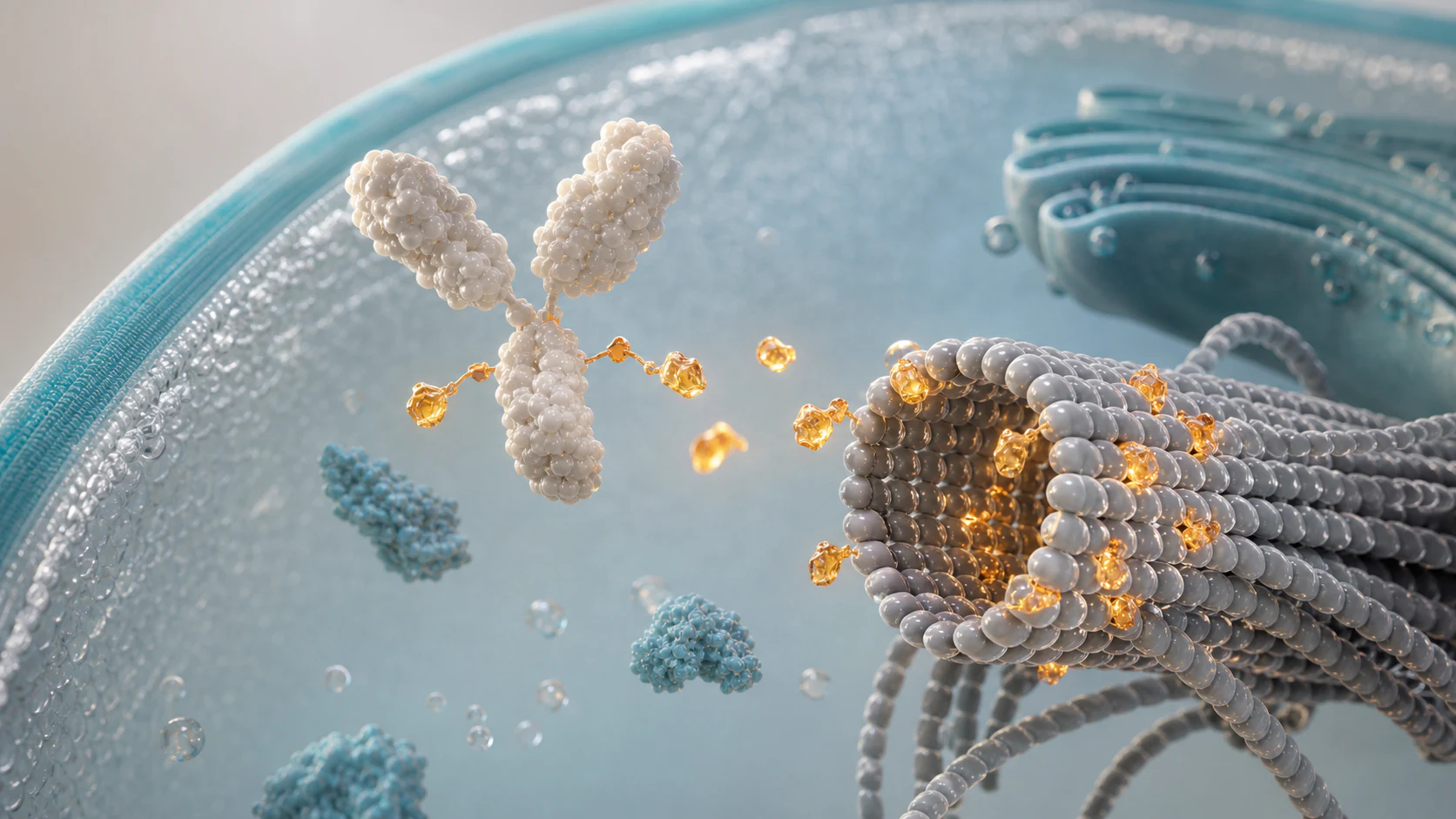
ADC visuals should look premium without becoming decorative fantasy. Scientific buyers notice when an antibody shape is confusing, a membrane looks like a toy surface or payload molecules feel like generic beads. The render does not need atomic perfection in every scene, but it should respect the biological relationship between antibody, antigen, linker, payload and cell compartment.
The clearest ADC images use restrained materials and a limited palette. Pearl antibody surfaces, muted teal membranes, silver linkers and warm amber payloads create enough contrast for instant reading. Depth of field can separate the hero action from supporting biology. Lighting should make the mechanism feel precise and lab-grade instead of soft, pastel or cartoonish.
This is especially important for teams using ADC visuals in high-stakes materials. A buyer reviewing an oncology platform deck is not only judging the science. They are also judging whether the company can explain complex modality value with discipline. Professional mechanism visuals can make an early conversation more efficient by answering basic questions before the technical deep dive begins.
The same discipline applies to captions and alt text once the assets are published. A caption should name the mechanism moment rather than repeat marketing language. Alt text should describe the visible ADC scene in plain language. Those small details support accessibility, search visibility and reuse across web pages, decks and scientific handouts.
- Use one central mechanism subject per scene.
- Keep supporting forms sparse so the ADC remains readable.
- Avoid fake UI, labels, crowded diagrams and generic glossy shapes.
FAQ About Antibody Drug Conjugate Animation Services
Q
What should an ADC animation include?
AA useful ADC animation usually includes target binding, internalization, linker processing, payload release and the downstream payload effect. Some teams also include antigen density, bystander effect, resistance biology or safety context when those ideas are central to the commercial claim.
Q
How long should an ADC mechanism animation be?
AFor a website or investor deck, a 20 to 45 second loop is often enough to make the mechanism clear. For a scientific presentation or partner meeting, a longer narrated sequence can work if each scene answers a specific question rather than adding detail for its own sake.
Q
Can ADC animation support business development?
AYes. ADC animation is often useful in BD because it can show why a target, linker, payload or platform architecture is differentiated before the audience studies assay tables. It helps non-specialist stakeholders follow the program logic and gives scientific reviewers a visual map for deeper discussion.
Q
How is this different from a static ADC figure?
AA static figure can explain the architecture of the molecule. Animation can show timing, compartment transitions and cause-effect relationships. That matters when the value depends on what stays stable in circulation, what releases inside the cell and what the payload does after release.
Ready To Build ADC Visuals That Buyers Understand
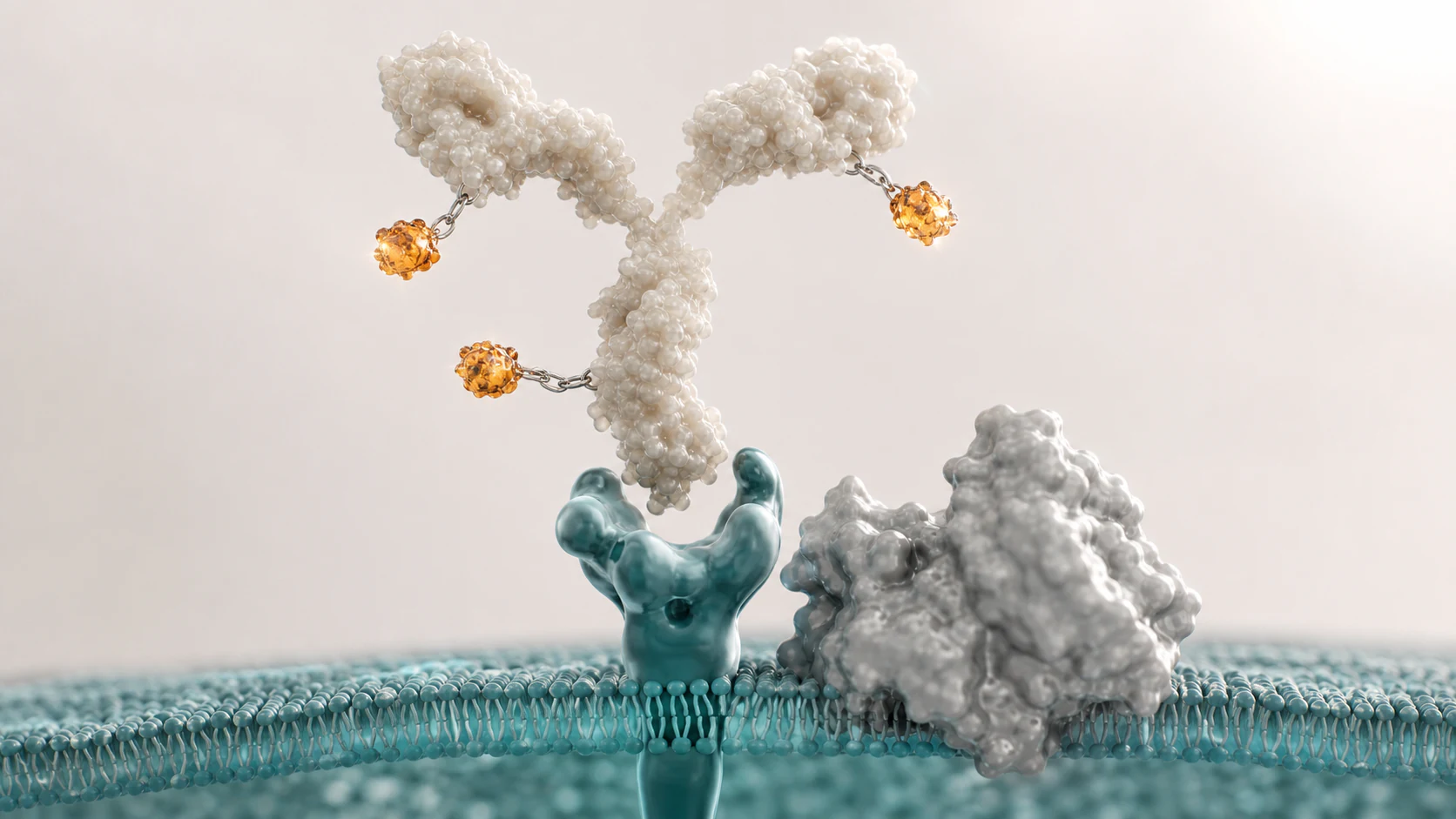
Antibody drug conjugate animation services are most valuable when they turn molecular design into a guided commercial story. The right visual system can help a biotech team explain target rationale, linker strategy, payload effect and platform extensibility without overwhelming the audience with disconnected technical pieces.
Animiotics creates premium 3D scientific renders and animation systems for ADC, biologics, oncology and platform teams that need buyer-ready visual communication. Start with the claim your audience must understand, then build the antibody, membrane, linker, payload and cell-compartment scenes around that claim. For related mechanism planning, see https://animiotics.com/blog/mechanism-of-action-animation-services-how-biotech-teams-explain-complex-biology-clearly/.
If your ADC story needs to work in a deck, on a website or in a partner meeting, start with Animiotics and turn the mechanism into a clear visual sequence.
- Use one visual hierarchy across website, pitch and scientific materials.
- Build reusable scenes for target, linker, payload and platform updates.
- Make the first ten seconds clear enough for a non-specialist buyer.