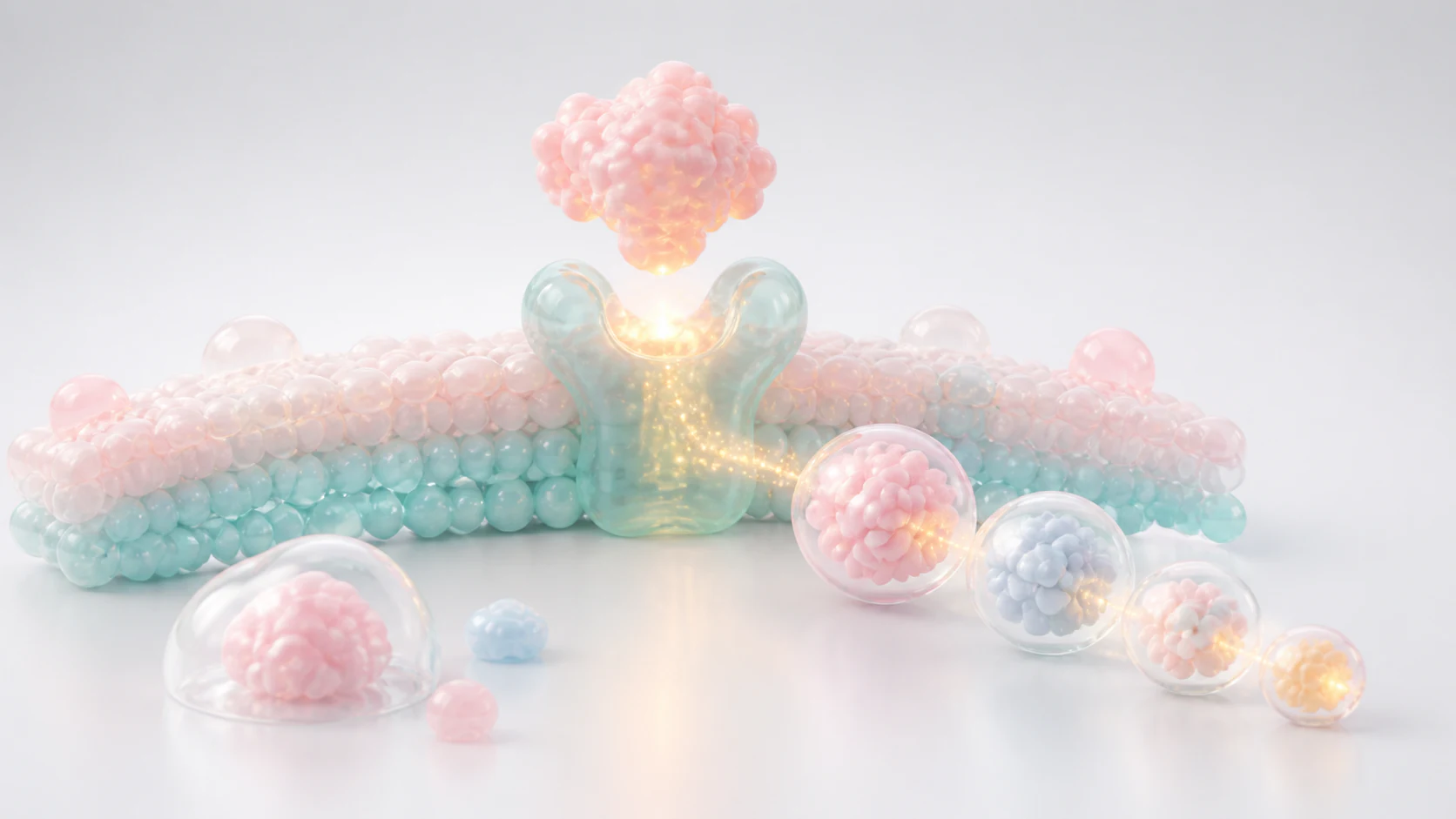
Mechanism of Action Animation Services for Biotech Teams
Mechanism of action animation services help biotech teams explain what a therapeutic does, where it acts and why the underlying biology should matter to investors, partners, clinicians and research buyers. A strong MOA animation is not a decorative molecule movie. It is a structured explanation that turns target engagement, pathway behavior, delivery logic and evidence into a visual story people can remember.
The commercial need is simple. Platform companies often have sophisticated science but limited time to make that science legible. A website visitor may only scan one section. A venture partner may see a deck once before a diligence call. A pharma business development team may compare several programs in the same week. If the mechanism is unclear, the opportunity feels harder to evaluate.
Animiotics builds mechanism visuals for teams that need the science to stay accurate while becoming easier to inspect. The goal is to make biology visible at the right level of detail, from molecule and receptor scenes to tissue context, platform logic and presentation-ready visual systems.
Why MOA Stories Break Down in Biotech Communication
A mechanism story usually crosses several scales. It may begin with a therapeutic molecule, move into receptor binding, continue through intracellular signaling and end with a disease-relevant tissue outcome. Scientists can hold those layers in memory because they work with the data every day. External audiences often cannot. They need a guided visual sequence that shows what is known, what is inferred and what the next claim depends on.
Many biotech decks try to solve this with a single pathway diagram. That can work for a narrow technical audience, but it often fails when the same visual must support fundraising, partnering, recruiting and web education. The result is either too sparse to be useful or too crowded to read. A mechanism animation can solve that problem by revealing one decision at a time.
The strongest MOA assets also avoid false certainty. If a structure is known, the scene can use that detail. If the team has assay evidence but not a solved complex, the animation can use abstract molecular forms that communicate the mechanism without pretending to be a structural proof. Related Animiotics posts on protein-ligand interaction visualization and drug discovery animation services show how visual clarity helps when target evidence and discovery logic need to travel beyond the lab.
What to Define Before Production Starts

A useful mechanism of action animation starts with story architecture. Before rendering begins, the team should define the main audience, the core claim, the evidence hierarchy and the exact level of biological resolution. That planning step prevents a common failure mode: a beautiful animation that still leaves viewers unsure what the therapeutic is supposed to prove.
The first question is not which software to use. It is what the audience needs to understand after sixty seconds. For an investor, the answer may be platform repeatability. For a pharma partner, it may be target rationale and differentiation. For a scientific advisory board, it may be mechanistic plausibility and data boundaries. Each audience can use the same visual language, but the sequence and emphasis may change.
Animiotics typically maps the mechanism as a set of reusable scenes. A receptor engagement scene can support the website hero. A tissue-context scene can support a partnering deck. A simplified pathway sequence can become a short looping animation for conference use. This approach turns one production cycle into a visual system instead of a single asset.
- Define the therapeutic actor before showing pathway consequence.
- Separate measured evidence from inferred mechanism.
- Choose the biological scale before visual style decisions.
- Plan reusable scenes for web, deck and conference formats.
Target Engagement and Biological Consequence

Target engagement is often the most important scene in a mechanism animation because it connects molecule design to biological consequence. The viewer needs to understand where the therapeutic binds, what changes after binding and why that change matters in the disease context. A static receptor render may look polished, but it is rarely enough on its own.
A stronger sequence shows context first. The target appears in a membrane, extracellular matrix, organelle, immune interface or tissue microenvironment. The therapeutic approaches with enough spatial clarity to show specificity. The animation then reveals the downstream consequence: receptor clustering, pathway inhibition, cargo release, degradation, immune activation or signal restoration.
This structure is especially valuable for advanced modalities. A biologic, RNA medicine, cell therapy, viral vector or targeted degrader may need different visual grammar, but the communication problem is similar. The mechanism has to move from molecular action to biological meaning without forcing the audience to decode every technical detail at once.
Choosing the Right Visual Depth for Each Audience
Not every MOA animation needs atomic detail. In many commercial contexts, excessive structural detail can reduce clarity because the audience starts inspecting the wrong thing. The right visual depth depends on the decision the asset needs to support. A homepage animation may need broad intuition. A partnering deck may need more mechanistic specificity. A scientific conference video may need tighter alignment with assays and model systems.
The key is to avoid mixing every level of detail in the same moment. Molecular geometry, cell behavior, tissue distribution and clinical rationale can all appear in one animation, but they should not compete in one crowded frame. A clear sequence lets the viewer build understanding step by step.
This is why mechanism visuals should be scoped as communication tools, not just production deliverables. The team should decide where to simplify, where to show uncertainty and where to reserve detail for supporting figures. That choice makes the final animation more useful in real sales, fundraising and research conversations.
| Audience | Best visual depth | Asset value |
|---|---|---|
| Investors | Clear therapeutic logic with platform-level repeatability | Makes the opportunity easier to evaluate quickly. |
| Pharma partners | Target engagement, differentiation and evidence boundaries | Supports diligence conversations with less explanation overhead. |
| Scientific teams | Mechanistic steps tied to assays and model systems | Aligns internal experts around a shared visual reference. |
| Website visitors | Simple visual sequence with memorable biological consequence | Turns complex science into a stronger first impression. |
From One Animation to a Reusable Visual System
The best mechanism of action animation services do more than produce one video. They create a library of visual assets that can be reused across the company. A single mechanism story may become a cover render, a short homepage loop, a scientific explainer, a slide sequence and still figures for business development. That reuse matters because biotech teams need visual consistency across many high-stakes moments.
A reusable system starts with consistent visual rules. Molecules keep the same color logic across assets. Cell surfaces, receptors, tissue forms and signaling cues appear in the same style. The viewer learns the visual language once and can apply it across multiple programs. This is especially useful for platform companies that need to show how one discovery engine can produce many therapeutic opportunities.
Animiotics uses this system-level approach for related formats such as antibody engineering visualization services and cell therapy visualization services. The same principle applies to any mechanism animation: the visual language should make the company easier to recognize and the science easier to trust.
- Build hero renders and still figures from the same scene library.
- Keep molecule colors consistent across web, slides and video.
- Use motion to reveal mechanism sequence, not to add distraction.
- Design assets so future programs can inherit the same visual grammar.
How Animiotics Builds MOA Animation Assets

A mechanism animation project starts with technical intake. Animiotics reviews the target biology, therapeutic modality, evidence package, intended audience, existing figures and the claims the asset must support. This step turns a broad request like explain our mechanism into a concrete scene list with clear scientific boundaries.
The next phase is visual planning. We define the order of scenes, the visual metaphor for each biological step and the level of abstraction that fits the evidence. Then we build polished still frames and motion-ready assets so the team can review the story before full animation production. This keeps the project aligned before the most expensive work begins.
Final outputs can include a main mechanism video, cropped social loops, still renders, slide figures and website-ready assets. The asset set can also extend into adjacent topics such as platform overview, target validation, delivery technology, biomarker rationale and competitive differentiation. The result is a practical communication system that helps the science work harder across the business.
FAQ About Mechanism of Action Animation Services
What should a mechanism of action animation include?
It should include the therapeutic actor, target context, key interaction, biological consequence and evidence boundary. The exact sequence depends on the modality and the audience, but the viewer should always understand what changes because the therapy acts.
How long should a biotech MOA animation be?
Many commercial mechanism animations work best between forty-five and ninety seconds. A shorter website loop can communicate the core idea, while a longer scientific explainer can include more context and evidence detail.
Do MOA animations need solved molecular structures?
Solved structures help when they exist, but they are not required for every project. If structure data is not available, a responsible visual can use abstract biomolecular forms that explain the concept without implying unsupported precision.
Can one animation support both investors and scientists?
Yes, but the project should separate the core mechanism from optional depth. A clear main animation can serve broad audiences while supporting stills, captions and slide figures add the detail expert viewers need.
Ready to Build a Clear Mechanism Animation
Mechanism of action animation services are most valuable when they turn complicated biology into a story that supports real decisions. The right asset set can help a biotech team explain target engagement, therapeutic design, platform value and evidence with less friction.
If your team needs a polished MOA animation, scientific figure set or visual system for a website, investor deck, partnering meeting or product launch, Animiotics can help translate the mechanism into clear biotech visuals. Start with Animiotics or use /pricing?from=blog to scope the right asset set for your next mechanism story.