
Why Viral Vector Animation Services Matter
Viral vector animation services matter because gene therapy and cell therapy platforms often ask buyers to understand several layers of biology at the same time. A vector story can include capsid or envelope design, payload packaging, tissue exposure, cell entry, nuclear delivery, expression, durability, safety review and manufacturing constraints. When those ideas are compressed into one dense slide, the platform can look less precise than it really is.
Biotech teams need visuals that make viral vector delivery feel engineered rather than vague. Investors, pharma partners, clinicians and scientific reviewers want to know what the vector carries, how it reaches the right cells, how the payload becomes active and which claims are supported by data. A good animation gives each layer a clear visual job instead of asking one render to explain everything.
Animiotics builds viral vector animation services for biotech, platform and research teams that need website renders, investor deck figures, partnering visuals, conference loops and mechanism explainers. The goal is to make vector biology commercially useful while preserving the evidence boundaries that serious buyers expect.
- Use viral vector visuals when capsid design, payload delivery and platform repeatability need fast explanation.
- Keep capsid, payload, target tissue, cell entry and expression visually distinct.
- Build assets that can support AAV, lentiviral, adenoviral and engineered vector programs without mixing their biology.
Start With Vector Architecture
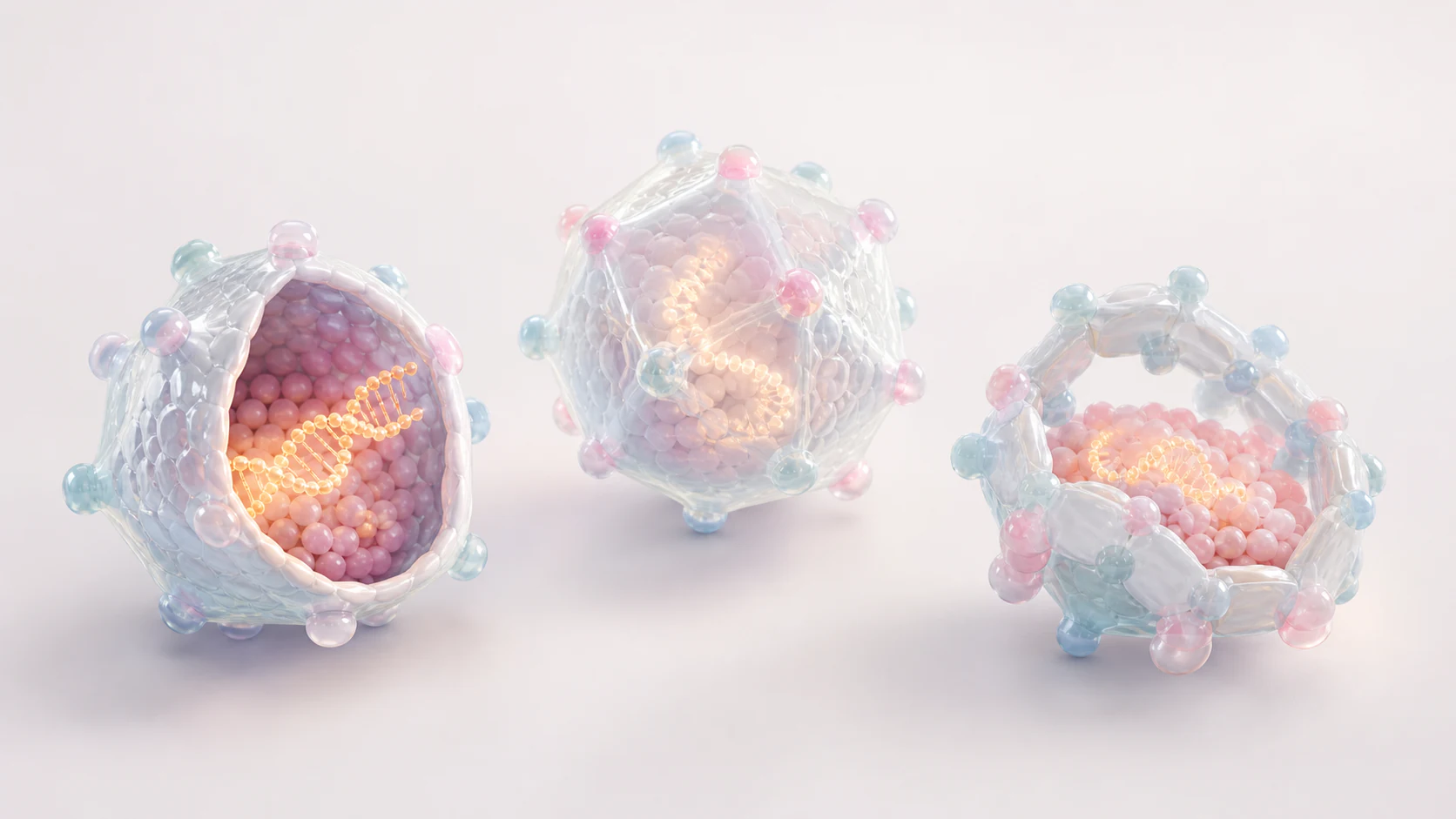
A strong viral vector animation usually starts with architecture. Viewers need a quick mental model of the particle before they can understand tropism, dosing, expression or safety review. A clean close-up can show the outer capsid or envelope, packaged genetic payload and any engineered surface feature that matters for the platform. This first scene should be simple enough that non-specialist buyers can remember it after one pass.
The key is hierarchy. The capsid or envelope is the vehicle, the payload is the message, surface features guide interaction and the target cell provides biological context. The render should not become a literal molecular inventory. It should make the platform logic readable so the narration, slide copy or caption can handle the precise biology.
This architecture-first approach complements the AAV-specific story in AAV gene therapy vector animation while giving broader viral vector platforms room to explain lentiviral integration logic, adenoviral immunogenicity considerations, capsid engineering or ex vivo delivery workflows.
- Show the vector particle as a designed delivery object before moving into tissue context.
- Represent payload format with one clear visual language rather than many competing symbols.
- Avoid implying that all viral vector platforms behave like AAV.
Explain Tropism and Delivery Without Overclaiming
Tropism is often the commercial center of a viral vector story. A team may need to show why a capsid, promoter, route of administration or engineered surface feature supports delivery to a specific tissue or cell population. The visual challenge is that tropism is both a mechanism and an evidence claim. The animation should make the delivery hypothesis clear without making it look proven beyond the data.
A useful sequence separates the path into visual beats. First, the vector enters a tissue context. Second, it approaches the relevant cell population. Third, cell entry is shown with a restrained receptor or membrane interaction. Fourth, payload delivery moves the story inside the cell. This keeps the viewer oriented and lets scientific reviewers confirm that each claim is represented at the right level of confidence.
For platform companies, the same visual system can compare multiple routes or tissue contexts without turning the asset into an infographic. The render can show three clean tissue modules, each using the same vector form and a different target-cell environment. Captions can then explain biodistribution, cell specificity or preclinical evidence while the image remains clean.
- Separate tissue exposure, target-cell interaction and payload delivery into distinct visual beats.
- Use glow or focus cues for target engagement without implying quantitative biodistribution.
- Reserve measured claims for charts, captions or assay panels.
| Buyer Question | Visual Priority | Asset Use |
|---|---|---|
| What is the vector? | Capsid or envelope with packaged payload shown in a clean cutaway | Website hero or investor overview |
| Where does it go? | Target tissue context with restrained tropism cues | Partnering deck or conference visual |
| How does payload become active? | Cell entry, trafficking and expression as separate scenes | Mechanism explainer or scientific talk |
| Can the platform repeat? | Comparable modules for different payloads or indications | Business development package |
Show Payload Delivery and Expression as Separate Scenes

Many viral vector presentations blur delivery and expression into one visual. That can make the mechanism feel magical. A clearer animation separates the journey from the outcome. The vector enters the cell, releases or traffics its payload, the payload reaches the relevant cellular compartment and expression or editing activity is shown only after that sequence is understood.
This order is especially important when comparing modalities. AAV often needs a nuclear episome and transgene expression frame. Lentiviral vectors may require integration logic in an ex vivo or engineered-cell context. Adenoviral vectors may emphasize transient expression, high payload capacity or immune review. The visual system should adapt to these differences instead of forcing every vector into one generic gene therapy scene.
Animiotics typically designs static renders so they can later become animation keyframes. The delivery scene, intracellular trafficking scene and expression scene can each work as standalone figures. Together they become a complete mechanism animation with a stable color language for vector shell, payload, target cell, expression signal and evidence layer.
- Give payload trafficking its own scene before showing protein expression or functional output.
- Use different camera distances for tissue delivery, cell entry and intracellular mechanism.
- Avoid showing clinical benefit before the vector mechanism is clear.
Build a Scene-by-Scene Viral Vector Storyboard
Viral vector animation services work best when the storyboard follows how a buyer evaluates the platform. The first scene establishes the vector particle and payload. The second scene places the vector in a relevant tissue or manufacturing context. The third scene shows entry into the target cell. The fourth scene follows payload trafficking. The fifth scene shows expression, editing, knockdown or another intended output. The sixth scene connects the output to evidence and platform repeatability.
This sequence gives internal teams a practical review process. Vector engineers can review the particle and packaging scenes. Translational teams can review tissue and biodistribution framing. Molecular biologists can review payload activity. Business development can check whether the platform value is visible without turning the piece into a sales graphic.
The storyboard should avoid heavy labels inside the render itself. Labels, captions and narration can carry technical language such as capsid engineering, promoter selection, episomal expression or integration. The visual should keep the mechanism readable across a website, deck, booth screen or short animation.
- Storyboard the vector as a delivery system, not just a particle.
- Keep each scene reviewable by the internal scientific owner.
- Design image crops before rendering so the same asset set works across website and deck formats.
| Scene | Visual | Motion | Purpose |
|---|---|---|---|
| 1 | Vector capsid or envelope with packaged payload | Slow turntable and gentle cutaway reveal | Establish architecture |
| 2 | Vector approaching target tissue | Camera push toward one cell zone | Set delivery context |
| 3 | Membrane interaction or uptake | Subtle contact, entry and release | Explain access to the cell |
| 4 | Payload trafficking inside the cell | Guided drift toward compartment of interest | Make the intracellular step visible |
| 5 | Expression or functional activity | Soft signal emerging from the payload destination | Connect delivery to biological output |
| 6 | Reusable platform modules | Three comparable modules appear in sequence | Show repeatability across programs |
Make Safety and Manufacturability Review Visible

Viral vector buyers will ask about immunogenicity, durability, payload size, dose, off-target biodistribution and manufacturing feasibility. The animation does not need to answer every question with measured data, but it should make the review framework visible. A good figure can separate intended delivery, payload activity and safety review into different visual zones so each claim can be discussed cleanly.
This is where many assets become too decorative. A beautiful vector render is not enough if the business question is whether the platform can support multiple programs. The visual system should make constraints visible in a disciplined way: vector shell, payload capacity, target tissue, expression output and evidence modules should remain recognizable from one slide to the next.
The same approach supports adjacent service pages such as preclinical pharmacology animation services when a team needs to connect vector exposure, biodistribution, dose response and safety signals into a coherent translational story.
- Represent safety review as a separate evidence layer rather than a hidden afterthought.
- Use consistent visual forms for vector shell, payload, tissue and response.
- Let charts and assay panels carry quantitative immunogenicity or biodistribution claims.
Turn Vector Science Into Buyer-Ready Assets
A viral vector program usually needs more than one hero image. The same team may need a homepage render, investor-deck mechanism figure, partnering image, scientific review slide, conference loop and animation storyboard. Viral vector animation services are most valuable when those assets come from one coherent model system rather than unrelated visuals produced one request at a time.
For example, a cover image can establish the vector platform in a polished tissue context. A section render can explain capsid or envelope architecture. A delivery image can show target tissue and entry. A platform image can show how payload, expression and review modules repeat across programs. Buyers see one mature communication system instead of a collection of isolated art pieces.
This matters commercially because viral vector platforms often sell repeatability. If the visual language changes every time the team talks about a new payload or indication, the platform story feels fragmented. Consistent assets help the company explain why its vector design, delivery strategy, manufacturing process and evidence package belong together.
- Plan cover, website, deck and animation crops at the start of the project.
- Use one material language for capsid, envelope, payload, tissue and evidence modules.
- Create static renders that can expand into a complete mechanism animation later.
FAQ About Viral Vector Animation Services
What are viral vector animation services?
They are scientific visualization services that turn vector architecture, payload packaging, tissue tropism, cell entry, expression, durability and safety review into clear renders, figures and animation-ready storyboards.
Who uses viral vector visuals?
Gene therapy companies, cell therapy teams, viral vector platform companies, translational groups, business development teams and academic spinouts use them for websites, pitch decks, partnering packages, scientific talks and conference campaigns.
How are viral vector animation services different from a single AAV animation?
A single AAV animation focuses on one vector class. Viral vector animation services can build a broader visual system that supports AAV, lentiviral, adenoviral or engineered vector stories while keeping each mechanism scientifically distinct.
Can the visuals include real data?
Yes. The clearest projects combine conceptual mechanism scenes with evidence such as biodistribution, expression durability, immune markers, payload capacity, dose response or manufacturing quality metrics. The measured evidence should stay visually separate from explanatory scenes.
- Use viral vector visuals when delivery, expression and platform repeatability need clear explanation.
- Keep modality-specific biology distinct across AAV, lentiviral and adenoviral programs.
- Build one asset system if the company has multiple payloads, tissues or indications.
Ready to Build Viral Vector Visuals
Viral vector animation services are most useful when they help buyers understand why a delivery platform can support real therapeutic programs. The right assets explain capsid or envelope design, payload delivery, tropism, cell entry, expression, safety review and platform repeatability in a way that supports commercial conversations without overstating the science.
Animiotics helps biotech, platform and research teams create viral vector renders, gene therapy mechanism visuals, capsid animation storyboards, investor deck figures, website assets and animation-ready scenes. The work can support fundraising, partnering, conference campaigns, board updates, scientific education and translational planning.
- Bring vector class, payload format, target tissue, evidence package and buyer audience into the first brief.
- Use one visual system for vector architecture, delivery, expression and platform value.
- Turn complex vector biology into buyer-ready visuals while keeping scientific review discipline intact.