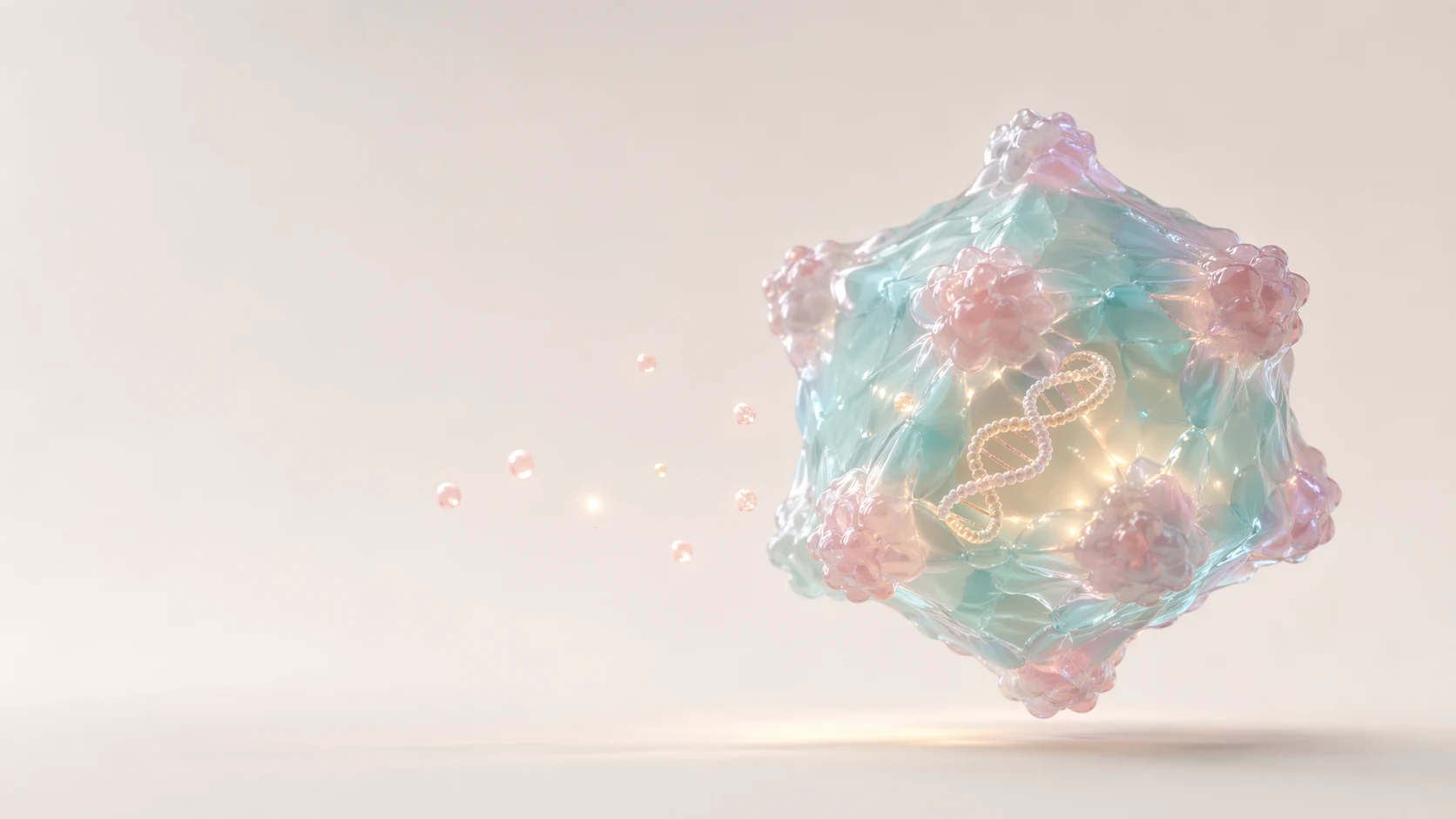
Why AAV Gene Therapy Vector Animation Matters for Buyers
AAV gene therapy vector animation matters because many gene therapy stories are visually invisible at the scale where business decisions happen. The audience needs to understand a capsid shell, genetic payload, tissue targeting, cellular entry, nuclear delivery and expression logic. Yet most of those events are too small, too sequential and too conditional to explain well with one static diagram.
For biotech teams, the communication problem is rarely a lack of science. It is a lack of visual order. A platform deck may include capsid engineering data, biodistribution claims, preclinical expression results and manufacturing quality notes. If those pieces appear as separate dense panels, the viewer may understand each detail but miss the larger value proposition. Animation gives the team a controlled way to reveal the logic step by step.
The strongest AAV visuals do not make the biology look simpler than it is. They make the path through the biology easier to follow. A clear sequence can show why the vector was selected, how it reaches the target tissue, what happens at the cell surface, how the payload reaches the nucleus and why the result supports a therapeutic or platform claim.
- Use motion when delivery order is central to understanding the platform.
- Keep capsid payload and target tissue relationships visually distinct.
- Plan one message per scene so the animation supports decisions instead of decoration.
What Clients Need From AAV Vector Visuals
Clients usually need AAV vector visuals for a practical reason: the same science has to work across investor decks, BD meetings, conference talks, websites, scientific posters and internal review. A regulatory scientist may care about dose, biodistribution and follow-up logic. A partner may care about tissue selectivity and payload strategy. A board member may need to understand why the program is meaningfully differentiated from other delivery approaches.
That range of audiences makes visual hierarchy essential. The American Society of Gene and Cell Therapy explains vectors in patient-facing terms as delivery shells that transport therapeutic genetic material. A buyer-facing animation can build from that simple frame while adding platform-specific detail. The goal is not to turn a scientific program into a cartoon. The goal is to create an accurate visual ladder that different audiences can climb at different depths.
This is similar to the challenge covered in our guide to base editing mechanism of action animation. In both cases, the visual system has to connect molecular events with a larger therapeutic claim. AAV stories add a delivery layer, which makes scene planning even more important.
- Separate the general delivery concept from the program-specific evidence.
- Design assets that can be reused as stills, slide visuals and animation scenes.
- Show enough mechanism for credibility without turning every frame into a methods figure.
Start With the Commercial Question Before the Mechanism
A common mistake is to begin an AAV animation with the full mechanism and only later ask what the audience needs to believe. The better workflow starts with the commercial question. Is the asset meant to explain a lead program, a capsid discovery platform, a manufacturing improvement, a tissue-tropism claim or a broader gene therapy pipeline? Each answer leads to a different visual structure.
For a lead program, the animation may need to move from disease context to vector administration to target tissue expression. For a capsid platform, it may need to compare engineered variants without implying unsupported superiority. For a manufacturing story, the strongest asset may focus on full capsids, payload integrity and product consistency rather than intracellular delivery. AAV gene therapy vector animation works best when the scenes are selected for the decision the buyer has to make.
That is why Animiotics treats mechanism visuals as strategic communication assets. The render style, scene order, captions and final stills should all support the same buyer path. If the platform claim is selectivity, the audience should see selectivity. If the claim is durable expression, the sequence should make persistence and tissue context understandable without drifting into unsupported clinical promises.
- Define the buyer decision before writing the storyboard.
- Choose whether the lead story is delivery, targeting, payload design, expression or manufacturing quality.
- Reserve technical detail for scenes where it changes interpretation.
A Practical Storyboard for AAV Delivery
A strong AAV storyboard usually starts outside the cell. The first scene should orient the viewer to the vector, the tissue or the route of administration. From there, the sequence can narrow into tissue distribution, receptor engagement, cellular entry, endosomal escape, nuclear delivery and transgene expression. Each scene should earn its place by answering one question.
The order matters because AAV mechanism is easy to compress incorrectly. If the animation jumps straight from injection to protein expression, the story may feel simple but biologically vague. If it spends too long on capsid geometry, the audience may miss why the program matters. The right balance depends on the asset use case. A homepage hero may need five clean beats. A partner deck or scientific explainer may need a longer sequence with optional technical callouts added outside the image itself.
This is where static figures and animation can work together. Static figures can hold exact data, such as biodistribution plots, expression timelines or capsid variant comparisons. Animation can explain the sequence that gives those data meaning. Our PDB to animation guide makes the same point for structural biology: motion is most useful when sequence and relationship change understanding.
- Use the opening scene to establish the tissue and delivery context.
- Show cellular entry and payload release as sequential events rather than one visual mashup.
- Let exact data live in companion figures when precision matters.
How to Show Tropism Payload and Expression Without Clutter
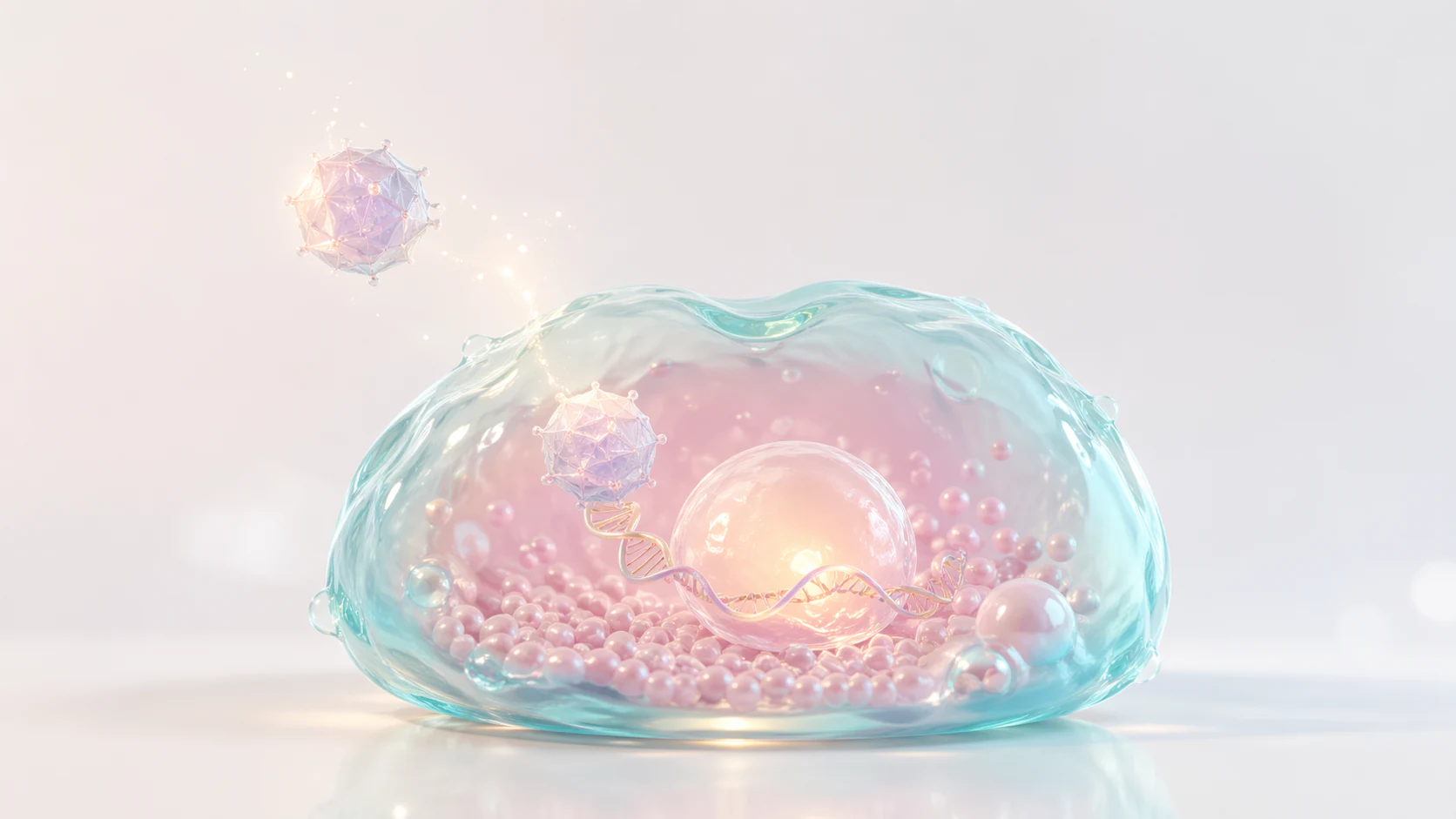
Tropism, payload and expression often compete for attention in AAV visuals. If they share one frame without hierarchy, the result can look comprehensive but feel unclear. The cleaner approach is to give each concept a visual language. Tropism can be shown through tissue context and selective signal. Payload can be shown as a restrained DNA or cassette motif inside the capsid. Expression can be shown as a downstream cellular result after delivery, not as a glowing effect everywhere at once.
Color discipline is especially important. AAV visuals can quickly become a rainbow of capsids, organs, cells, DNA strands and immune signals. A restrained palette helps the viewer know what changed. For example, the capsid can stay aqua, the payload can stay pale gold and the target cell state can use blush or lavender. This makes the animation easier to review scientifically because visual changes become meaningful rather than ornamental.
Regulatory context also matters. FDA guidance on long-term follow-up underscores that gene therapy products are evaluated with attention to vector persistence, delayed adverse events and product-specific risk. A commercial visual does not need to reproduce guidance language, but it should avoid overclaiming. The best AAV gene therapy vector animation communicates mechanism and evidence while leaving clinical claims to the approved data.
- Assign one stable visual role to capsid, payload and target-cell response.
- Avoid glowing effects that imply efficacy without supporting data.
- Keep safety and persistence concepts clear but visually restrained.
AAV Platform Visuals Need Evidence Not Just Beauty
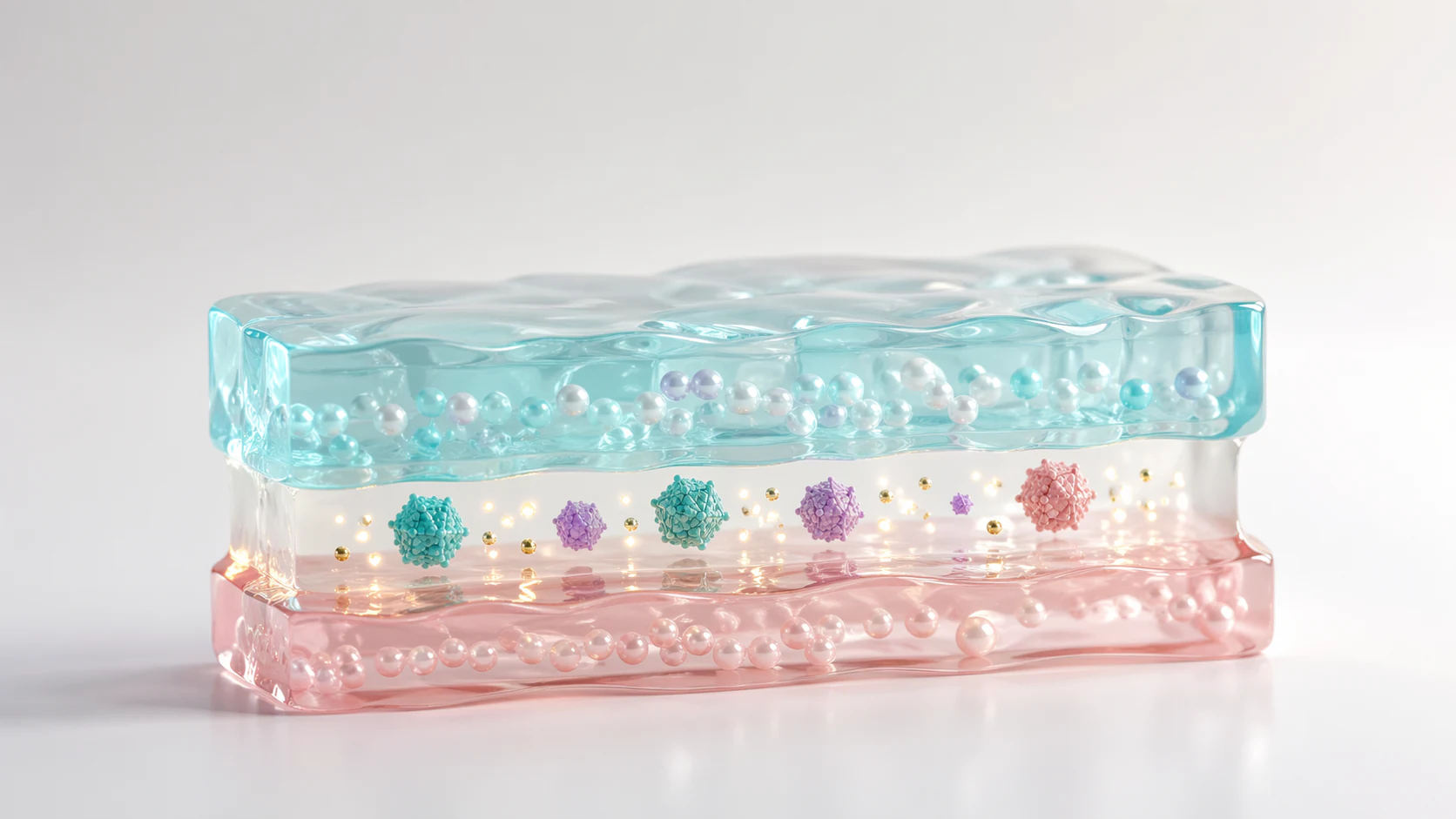
Beautiful AAV renders can attract attention, but platform buyers need more than polish. They need to understand what the visual is proving. A capsid engineering company may need to show how a library moves from design to screening to selected variants. A therapeutic developer may need to show why a payload fits within vector constraints and reaches the relevant tissue. A manufacturing group may need to show full-empty characterization, purity or comparability logic in a way that supports confidence.
This is where production design has to stay close to scientific review. A good creative workflow starts with source materials: vector biology notes, assay outputs, sequence constraints, target tissue context and any approved claim language. The visual team can then translate those materials into scenes that keep the core evidence intact. The result is more useful than a generic viral particle animation because every visual choice points back to the platform story.
The same principle applies across complex biotech communication. Our post on single-cell multiomics visualization explains how multimodal evidence needs staging. AAV platform communication needs the same discipline: orient the audience, reveal the differentiator and support the claim with clear visual evidence.
- Ground each scene in a real data point, mechanism step or platform claim.
- Avoid generic viral-particle shots that could belong to any company.
- Create still-frame exports so the same asset can support decks and landing pages.
Workflow Comparison for AAV Animation Deliverables
Not every AAV program needs the same deliverable. Some teams need a single website render. Others need a full mechanism animation with reusable stills, figure panels and short social clips. The right format depends on the stage of the program and the audience.
The comparison below shows how common AAV visual deliverables map to buyer needs. The most efficient projects usually start with one core storyboard and then export a set of stills that can be used across multiple surfaces.
| Deliverable | Best Use | Strength | Likely Limit | Buyer Signal |
|---|---|---|---|---|
| Hero render | Website or launch deck | Creates a premium platform first impression | Cannot explain the full delivery sequence alone | Strong for positioning |
| Static figure set | Manuscript deck or data room | Holds exact comparisons and evidence | Can feel dense without a narrative path | Strong for scientific review |
| Short MOA animation | Partner pitch or conference presentation | Explains order and mechanism quickly | Needs careful scripting to avoid overclaiming | Strong for buyer comprehension |
| Platform visual system | Multiple programs or pipeline pages | Keeps capsid payload and tissue stories consistent | Requires upfront design rules | Strong for brand consistency |
FAQ About AAV Gene Therapy Vector Animation
What is AAV gene therapy vector animation used for?
It is used to explain how an adeno-associated viral vector carries a therapeutic payload to target cells, how the capsid and tissue context shape delivery and how the mechanism supports a therapeutic or platform story.
How long should an AAV mechanism animation be?
Many buyer-facing animations work best between 45 and 90 seconds. A shorter website loop can focus on the visual concept while a longer partner-deck version can include route of administration, tissue targeting, cellular entry, nuclear delivery and expression.
Should AAV visuals show exact clinical claims?
No. Mechanism visuals should stay aligned with approved data and reviewed language. They can explain the biological logic, but efficacy, durability and safety claims should be handled with appropriate scientific and regulatory review.
Can one AAV animation support multiple teams?
Yes. A well-planned storyboard can generate a cover render, website hero, deck stills, conference visuals and a full mechanism video. That reuse is one reason teams invest in a coherent visual system instead of isolated one-off graphics.
CTA: Build a Clear AAV Visual Story
If your AAV program has strong science but the story still feels hard to explain across scientific and commercial settings, Animiotics can help turn delivery mechanism, capsid strategy, payload logic and platform evidence into clear renders, figures and animation-ready scenes.
We work with biotech, platform and research teams that need visuals accurate enough for scientific review and clear enough for buyer-facing communication. If you need AAV gene therapy vector animation for a deck, launch page, conference story or partner presentation, start a project discussion or see how Animiotics supports biotech visuals.