Why Cryo-EM Visualization Services Matter
Cryo-EM visualization services help structural biology teams turn complex density maps into visuals that buyers, partners and internal stakeholders can understand. A cryo-electron microscopy result may contain exceptional scientific value, but the commercial audience often sees only a technical map, a model screenshot or a figure panel that requires expert interpretation.
The communication challenge is not just aesthetic. Biotech and pharma teams need to show what the structure proves, which conformation matters, how a ligand or antibody engages the target and why the finding changes a program decision. When the visual story is unclear, strong structural evidence can feel like a specialist artifact instead of a reason to believe in a platform.
Animiotics builds premium 3D scientific renders and animations for teams that need cryo-EM structures to support websites, investor decks, pharma partnering meetings, publication-adjacent explainers and conference presentations. The goal is to preserve scientific credibility while making the evidence visible enough for non-specialists to follow.
- Turn density maps into clear visual evidence.
- Show the structure before asking buyers to parse the data.
- Connect molecular detail to platform or program value.
Start With The Structural Claim
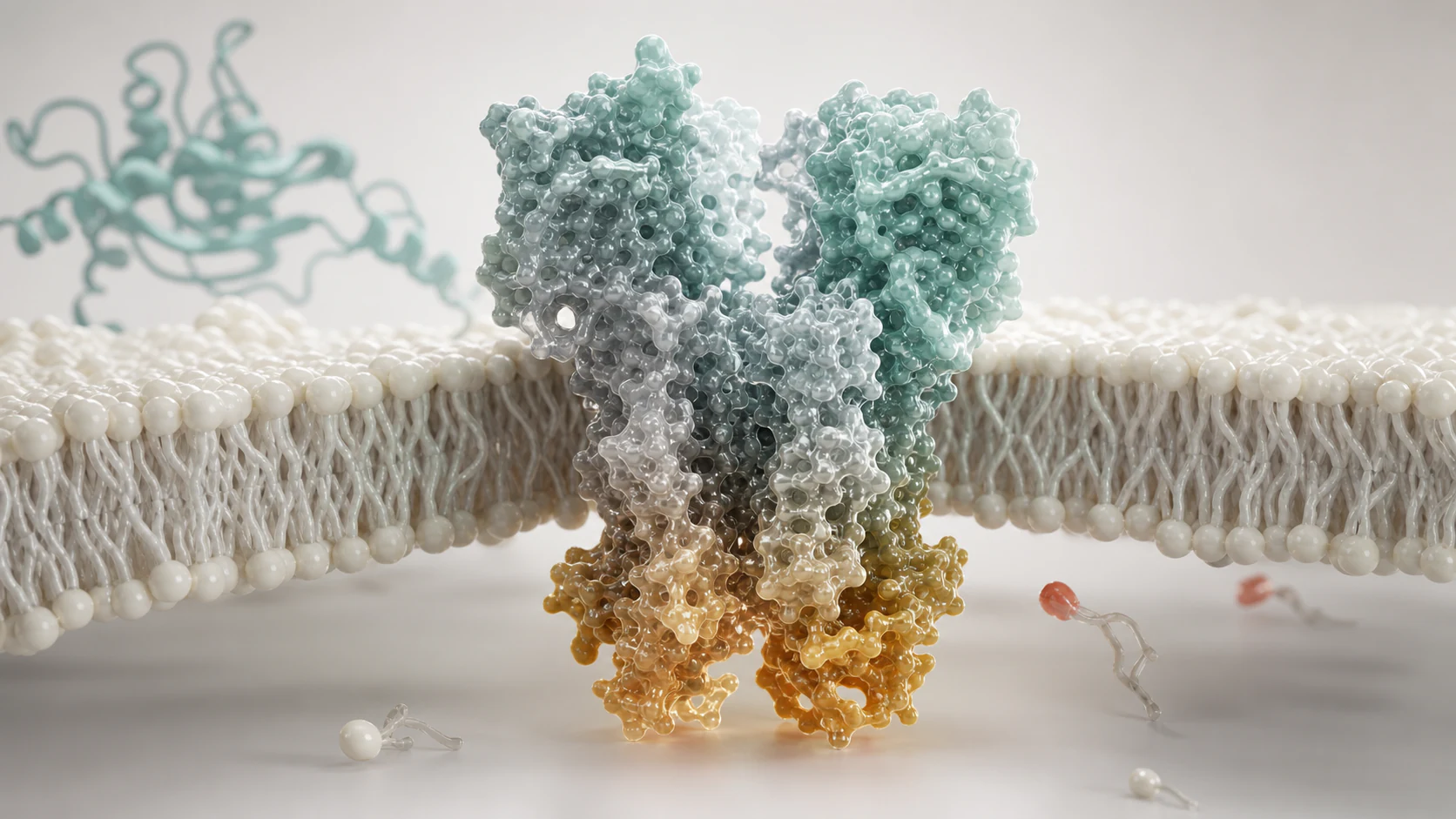
A strong cryo-EM visual should begin with the structural claim. Is the structure revealing a binding mode, an allosteric pocket, an antibody epitope, a receptor conformation, a ribonucleoprotein assembly, a membrane protein state or a druggable interface? The answer shapes every scene that follows.
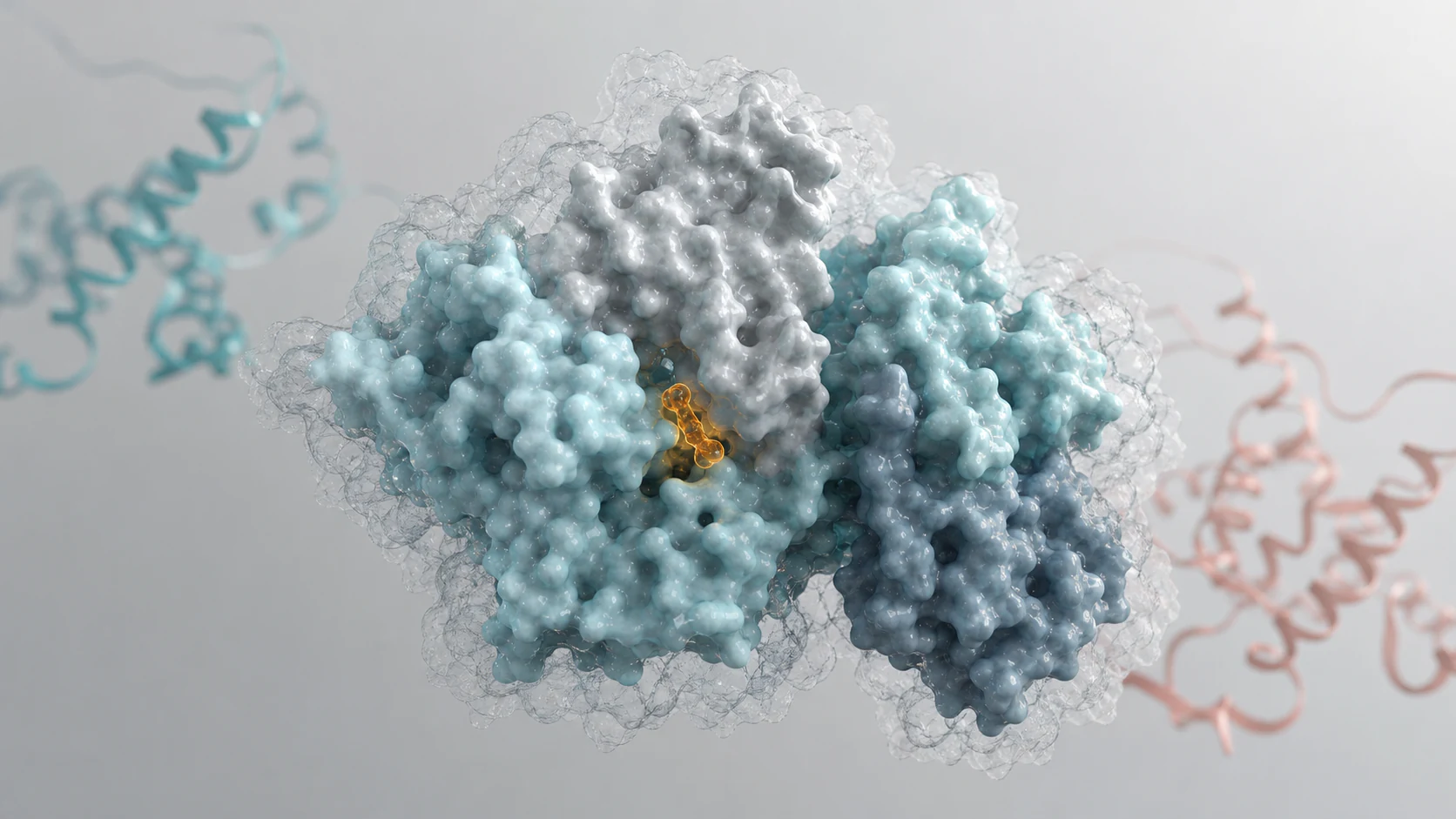
Many teams start by showing the full map because the dataset is impressive. That can work for a technical audience, but buyer-facing communication usually needs a more guided sequence. The visual can open on a clean density envelope, resolve into a refined protein surface, then focus attention on the pocket, interface or conformational shift that carries the story.
This is where cryo-EM visualization services become commercially useful. The map is not treated as background decoration. It becomes proof. A translucent density volume can frame the atomic model, while restrained color and camera movement point the viewer toward the evidence that affects partnering, licensing, discovery strategy or clinical positioning.
- Name the evidence before choosing the camera path.
- Use density as proof rather than visual noise.
- Focus the first hero scene on one claim the audience must remember.
What Buyer-Ready Cryo-EM Visuals Should Show
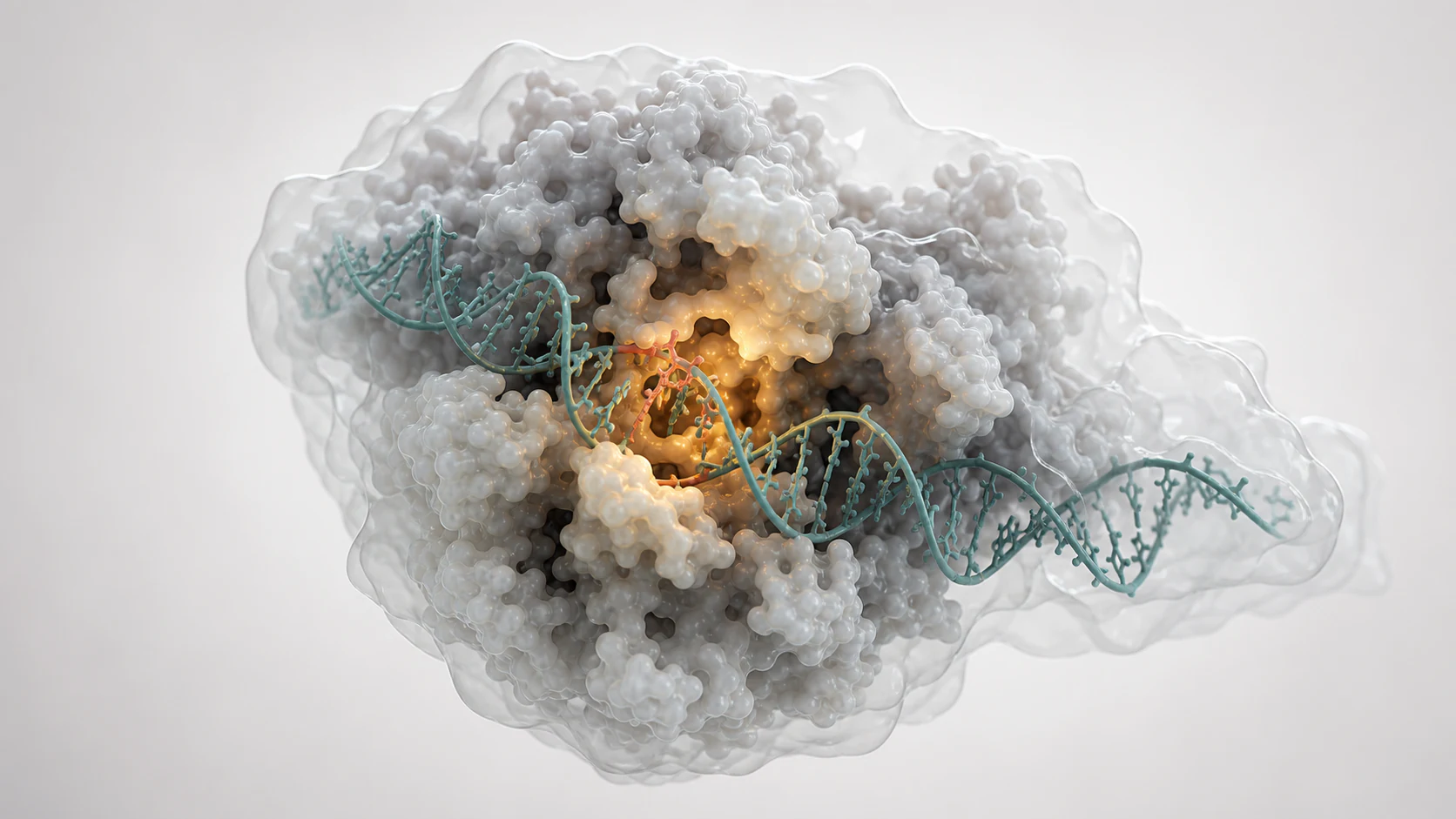
Buyer-ready cryo-EM visuals usually need four layers. The first layer is the biological system: receptor, enzyme, channel, viral protein, RNA complex or therapeutic target. The second layer is the evidence source: density map, fitted model, local resolution cue or conformational class. The third layer is the mechanistic insight: binding, gating, assembly, stabilization, inhibition or activation. The fourth layer is the business consequence: why this structural evidence supports a stronger program or platform claim.
These layers should be sequenced instead of stacked into one dense frame. A premium animation might start with the full complex, soften the density map into a transparent envelope, reveal the fitted molecular surface, then move into the binding site or moving domain. The viewer sees both the evidence and the interpretation without needing to read a figure legend.
For related context, see https://animiotics.com/blog/structure-based-drug-design-visualization-services-how-to-explain-pockets-poses-sar-and-platform-value-clearly/ and https://animiotics.com/blog/molecular-dynamics-visualization-services-how-to-explain-protein-motion-binding-pathways-and-simulation-evidence-clearly/. Those topics focus on design and simulation, while cryo-EM communication focuses on making experimentally observed structural evidence clear.
A useful cryo-EM asset system can also support repeated communication. The same model can become a website hero, deck still, mechanism animation, scientific poster asset, conference loop and partner-specific render. Planning those uses early helps the production team build the model with the right detail, materials and camera language.
- Show the biological system before zooming into detail.
- Make density, model and mechanism visually distinct.
- End with the decision the structural evidence supports.
How To Visualize Density Maps Without Losing The Audience
Density maps can become visually overwhelming fast. Meshes, thresholds, model fragments and color ramps can all be scientifically meaningful, but they may confuse a viewer who only needs to understand what the map proves. A buyer-facing cryo-EM render should reduce visual load while keeping the evidence honest.
One practical approach is to use density as a translucent envelope around the key molecular surface. The model remains readable, while the map signals experimental support. Another approach is to show a short transition from fuzzy density to refined structure so the audience understands that the polished molecular scene is grounded in data.
The visual should avoid fake dashboards, dense labels and figure-panel compositions when the goal is commercial clarity. Those elements can work in a paper or technical appendix, but they usually weaken a homepage, pitch deck or partner-meeting visual. The render should feel like a premium structural biology scene rather than a cropped software screenshot.
- Use transparency to make density supportive instead of dominant.
- Show model fitting as a visual transition when the audience needs context.
- Keep technical map details out of the main hero frame unless they drive the claim.
Showing Conformations Binding And Mechanism
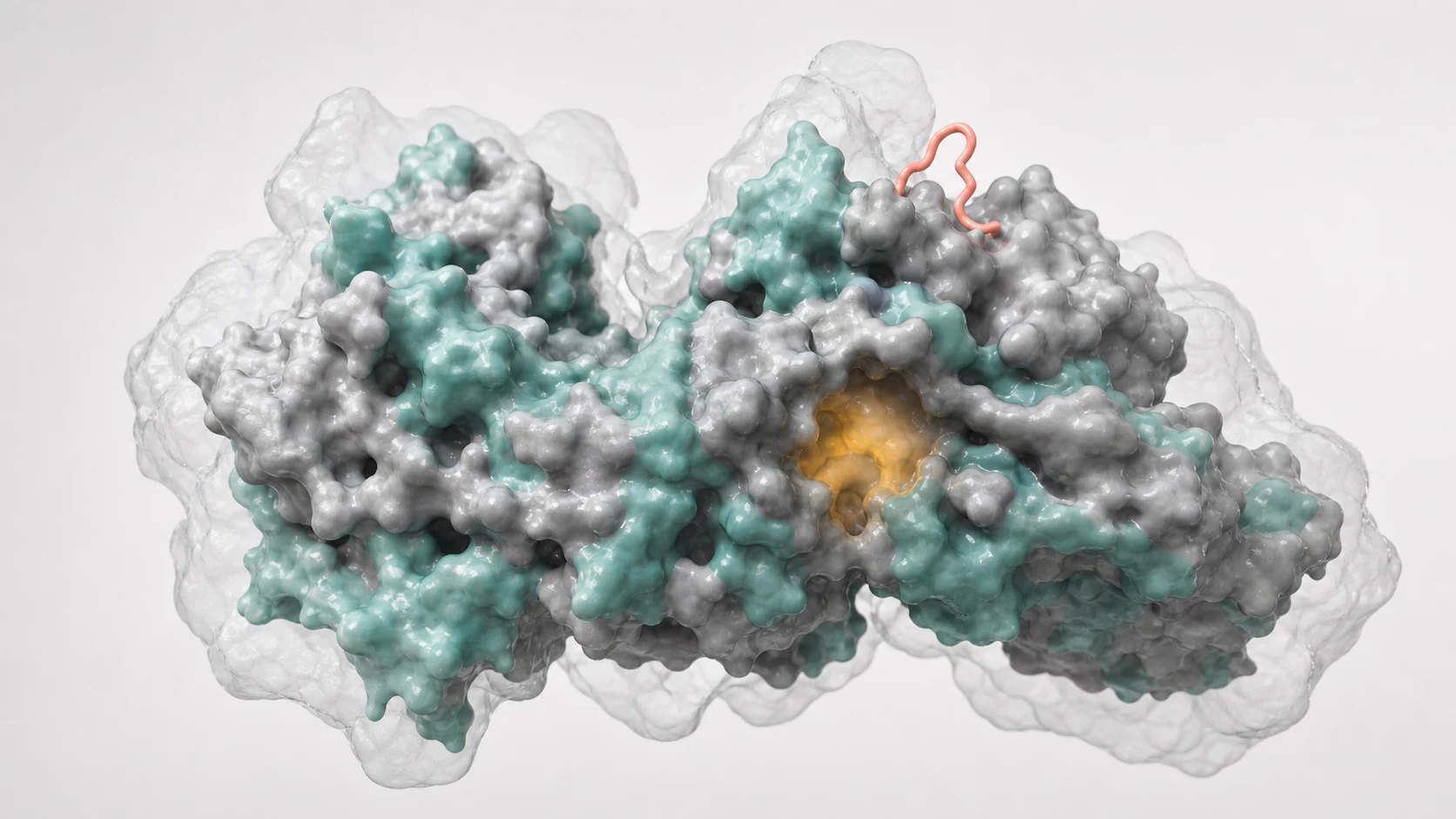
Cryo-EM is especially powerful when it reveals states. A receptor may shift between inactive and active conformations. A channel may open or close. A therapeutic antibody may stabilize a specific arrangement. A ligand may lock a pocket into a productive pose. Visualization should make those changes legible without turning the scene into a busy comparison chart.
The cleanest approach is often one hero complex with a controlled state transition. A domain can rotate, a loop can move, a pocket can open or a binding partner can settle into an interface. Color should guide attention: muted teal and silver can separate protein regions, warm amber can highlight the active pocket and sparse coral can mark the feature that changes.
When cryo-EM evidence connects to discovery, the animation can bridge structure and function. A ligand binding scene can lead into target modulation. An antibody epitope scene can lead into receptor blocking. A ribonucleoprotein structure can lead into payload processing or editing logic. The structural result becomes a mechanism story that buyers can evaluate.
- Use one conformational change per scene.
- Highlight the pocket, epitope or interface that changes the program decision.
- Connect the structural state to a mechanism or platform claim.
Deliverables For Structural Biology Teams
Most teams need more than one cryo-EM image. A structural biology group may need a hero render for the website, a short animation explaining a state transition, stills for a business development deck, transparent-background model crops for figures and social crops for launch or conference use. A platform company may also need modular scenes that can adapt to several targets.
A practical scope often includes a cleaned structural model, one or two density-map treatments, a focused binding-site or interface scene, a state-change animation and export formats for web, deck and event screens. The same production system can support a technical audience without forcing every public-facing asset to look like a raw molecular viewer.
The table below maps common cryo-EM communication needs to useful visual deliverables.
| Communication need | Useful deliverable | Why it helps |
|---|---|---|
| Website platform proof | Wide structure render with subtle density envelope | Shows that the platform produces tangible structural evidence |
| Pharma partnering deck | Pocket or epitope stills plus state transition sequence | Connects the structure to a clear discovery or licensing decision |
| Conference presentation | Looping model-to-density animation | Makes the experimental evidence readable from a distance |
| Program-specific update | Target, ligand and conformation scene set | Adapts the same visual language to a specific molecule or target |
Common Mistakes In Cryo-EM Visualization Projects
The first mistake is showing the whole complex without hierarchy. A large biomolecular assembly may be impressive, but buyers still need to know which interface, domain or pocket matters. The visual should guide attention instead of asking the viewer to search.
The second mistake is making the density map too literal. Raw density can communicate authenticity, but a dense mesh or noisy surface can obscure the model. A buyer-facing render should preserve the evidence while making the structural claim obvious.
The third mistake is using generic science decoration. Floating particles, fake screens, glowing labels and abstract data effects can make cryo-EM evidence feel less credible. Structural biology already has a strong visual language. Premium materials, careful lighting and disciplined camera movement usually do more than decorative overlays.
The fourth mistake is forgetting reuse. A structure that only works in one slide is a missed opportunity. If the model is prepared with web, deck, social and animation outputs in mind, the team gets a reusable visual asset system rather than a single image.
- Do not let a large complex hide the actual evidence.
- Do not make raw density harder to understand than the result itself.
- Do not replace structural clarity with generic biotech effects.
FAQ About Cryo-EM Visualization Services
What do cryo-EM visualization services include?
A strong scope can include model cleanup, density-map treatment, scientific story planning, storyboard development, premium 3D rendering, animation, review rounds and final exports for websites, decks, publications, conferences and campaigns.
Can cryo-EM visuals use real structural data?
Yes. Production can start from available model files, map exports, internal structure assets or public reference structures when appropriate. The final render should respect the scientific claim while making the story readable for the intended audience.
How long should a cryo-EM animation be?
A website loop may only need 10 to 20 seconds. A partner-facing explanation often works best at 45 to 90 seconds when it moves from density to structure to binding or conformational evidence.
What makes cryo-EM visuals credible?
Credible visuals use clear hierarchy, realistic biomolecular surfaces, transparent density treatments, restrained color, polished lighting and purposeful camera movement. They avoid fake text, noisy labels and crowded figure panels when the audience needs a clean commercial story.
Ready To Make Structural Evidence Clear
Cryo-EM visualization services are most valuable when they turn specialist structural evidence into a story that buyers can act on. The right visual system shows what the map supports, why the structure matters, how the conformation or binding event changes the mechanism and where the program creates value.
Animiotics creates premium 3D scientific renders, mechanism animations and structural biology visual systems for biotech, pharma, platform and research teams. The work is designed to help complex evidence become clear enough for websites, decks, partner meetings and launch campaigns.
If your cryo-EM structure, membrane protein program, antibody complex or platform evidence needs to be clear outside the structural biology team, start with Animiotics and turn the structure into visuals buyers can understand.
- Explain density and structure without overwhelming the viewer.
- Turn conformational evidence into a clear mechanism story.
- Build reusable structural visuals for web, deck and partner use.