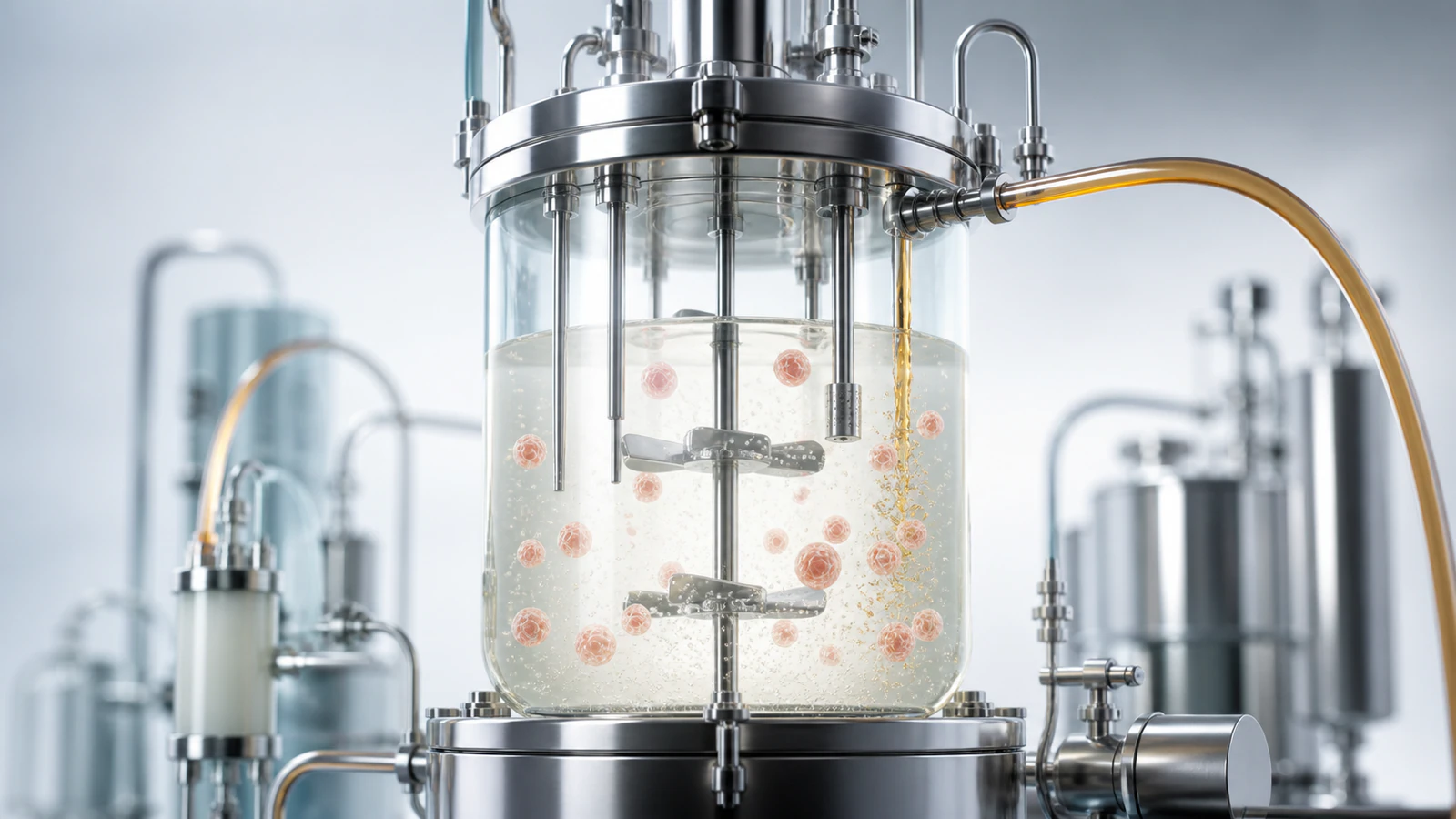
Bioreactor Scale-Up Animation Services For CMC Buyers
Bioreactor scale-up animation services turn an upstream process from a dense technical package into a clear manufacturing story. A biotech team may understand clone selection, media development, seed train design, fed-batch strategy, dissolved oxygen control, pH control, harvest timing and risk mitigation. A buyer, partner, investor or cross-functional reviewer often sees only a stack of process diagrams and disconnected assay readouts. A focused 3D animation gives that audience a guided view of how a living culture becomes a repeatable platform process.
The strongest scale-up visuals do not try to show every valve, sensor and recipe parameter at once. They show the critical logic. The viewer sees cells expanding through the seed train, then entering a controlled production bioreactor where mixing, gas transfer, nutrient feed and metabolite control support expression. The story connects cell behavior to process design, then connects process design to yield, quality and transfer readiness.
For Animiotics clients, this matters because upstream process value is usually commercial. A platform team needs to explain why its process can move from lab scale to pilot scale, why the control strategy is credible and why the product quality story is not fragile. A clean animation can support investor decks, partnering pages, CMC presentations, conference loops, launch content and internal training without forcing non-specialists to decode manufacturing documentation.
Why Scale-Up Stories Are Hard To Explain In Static Slides
A static slide can show a bioreactor diagram, but it struggles to show how scale changes the biology. Cell culture is dynamic. Oxygen transfer, carbon dioxide stripping, shear exposure, nutrient gradients, temperature control and feed timing all interact over time. When those relationships are reduced to icons, the process can look like a generic tank story rather than a specific platform advantage.
The problem becomes sharper when the audience includes business development, venture investors, clinical leadership, program teams or strategic partners. These groups want to know whether the manufacturing plan supports the product story. They need to see where risk sits, what has been measured and how the team will defend comparability as the process matures. A well-built upstream animation turns those questions into visible cause and effect.
This is why bioreactor scale-up animation services often sit beside other scientific visualization needs. A team may already use mechanism visuals to explain a therapeutic concept and assay visuals to explain evidence. See https://animiotics.com/blog/cell-line-development-animation-services-how-to-explain-clone-selection-expression-stability-and-platform-value-clearly/ for the clone selection side of the story. See https://animiotics.com/blog/protein-purification-animation-services-how-to-explain-chromatography-capture-polishing-and-platform-value-clearly/ for the downstream processing side. Scale-up animation bridges those pieces by making upstream manufacturing readiness visible.
- Show changing culture conditions over time instead of one fixed vessel diagram.
- Connect process parameters to cell performance, product titer and quality attributes.
- Make scale transition points visible from shake flask to bench top, pilot and production scale.
- Separate proven evidence from planned process improvements so the story stays credible.
What A Buyer-Ready Bioreactor Scale-Up Render Should Show
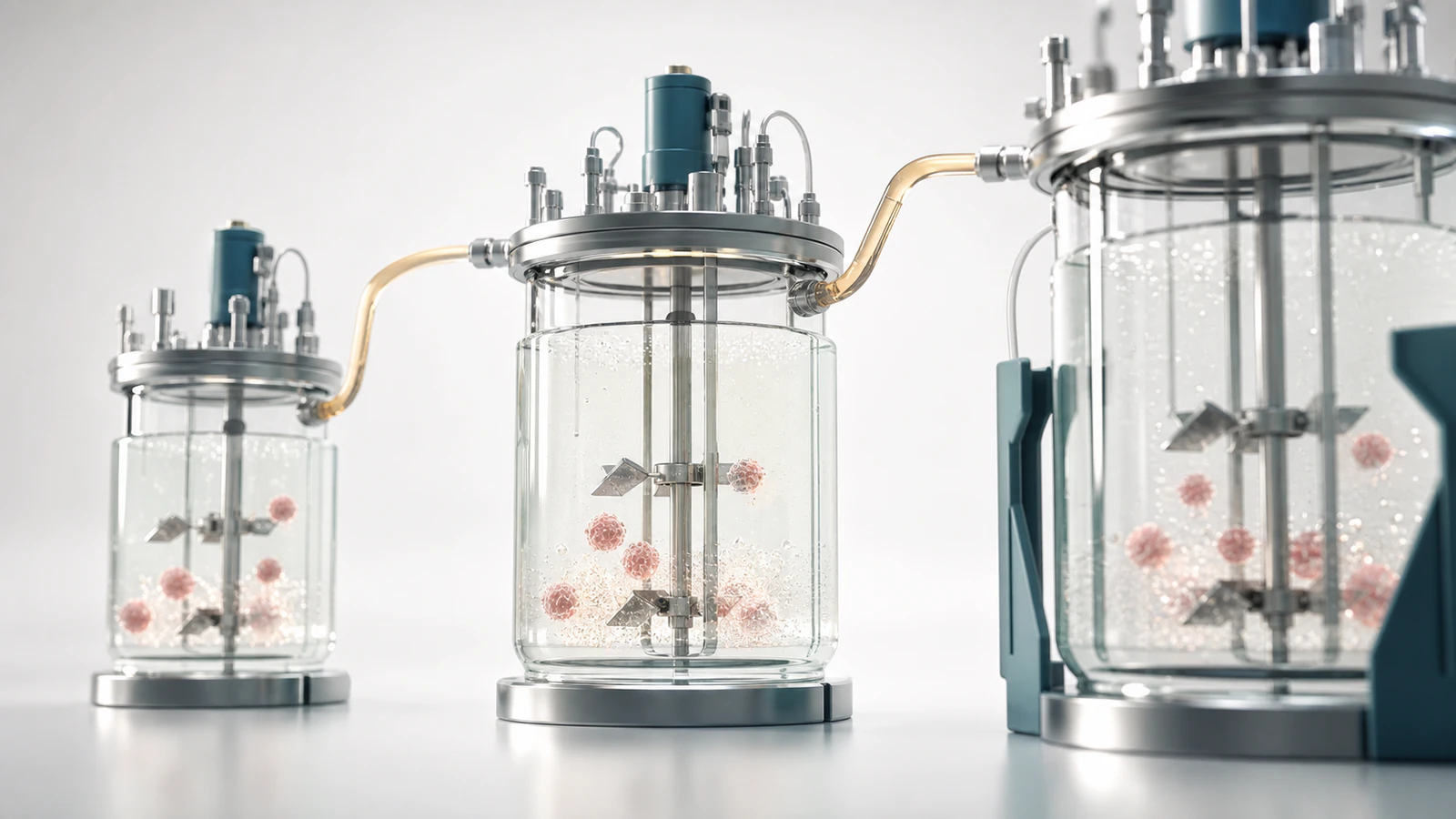
The most useful render starts with one clear hero subject: a bioreactor volume with cells, media flow, bubbles, impeller motion and sensor cues shown as clean scientific forms. The goal is not photoreal plant documentation. The goal is a polished visual model that helps the audience understand a process decision in seconds. This is where a premium Blender or Maya style matters. Physically plausible liquid, glass, stainless steel, membrane filters and cellular materials make the visual feel serious enough for biotech buyers without becoming visually cluttered.
A strong hero scene usually includes only a few supporting elements. The culture should remain legible. Cells can be shown as a sparse, readable population rather than a noisy particle cloud. Feed streams can be shown as controlled amber ribbons entering the vessel. Oxygen transfer can appear as subtle pearl microbubbles. Sensor readouts should be implied through physical probes, not fake dashboards or text overlays. The audience should understand the process without seeing labels inside the image.
Animiotics uses this kind of scene to communicate value across multiple deliverables. The same central render can become a website hero, an investor slide, a conference booth loop or the foundation of a longer explanatory animation. When paired with precise narration, the visual can explain why a cell culture process is scalable, why a process transfer plan is ready and why the platform deserves confidence.
- Central subject: one production bioreactor or one scale transition scene.
- Supporting forms: cells, bubbles, feed streams, probes and a minimal background system.
- Material logic: glass, brushed metal, translucent media, soft cellular surfaces and controlled lighting.
- Commercial point: yield, quality, robustness, transfer readiness or platform repeatability.
Scale-Up Narrative From Seed Train To Production Run
A bioreactor story works best when it has a sequence. The first beat establishes the seed train. Cells expand in controlled stages, each one preparing enough viable biomass for the next. The second beat moves into the production vessel. The camera can follow the inoculum into a larger volume, then reveal the controlled environment that supports growth and expression. The third beat shows the production phase where feed strategy, oxygen transfer and metabolite management keep the culture inside a defined operating window.
The fourth beat should connect process behavior to product quality. For a biologic, this might mean secreted antibody, recombinant protein or viral vector particles moving toward harvest. For a cell therapy or engineered cell platform, the product may be the cells themselves. In either case, the animation should make it clear that upstream process control is not decorative. It is the route to consistent output.
The final beat should show transfer readiness. A clean visual can compare bench top, pilot and production scale using similar vessel geometry, consistent process cues and a controlled change in camera distance. This helps teams explain why scale-up is a managed progression rather than a leap of faith.
| Stage | Visual Focus | Buyer Question | Animation Purpose |
|---|---|---|---|
| Seed train | Cell expansion through staged vessels | Can the culture start reliably | Show viable biomass growth before production |
| Production inoculation | Cells entering a larger controlled bioreactor | Is transfer into scale controlled | Make the scale transition feel planned |
| Fed-batch control | Feed streams, bubbles, mixing and probes | How is the culture kept productive | Link process inputs to cell behavior |
| Harvest readiness | Product or cell output moving to collection | Does the process support quality | Connect upstream control to downstream value |
| Scale comparison | Bench, pilot and production vessels in one clean progression | Can this process transfer | Show platform readiness without crowding the frame |
How Animation Supports CMC, BD And Platform Marketing
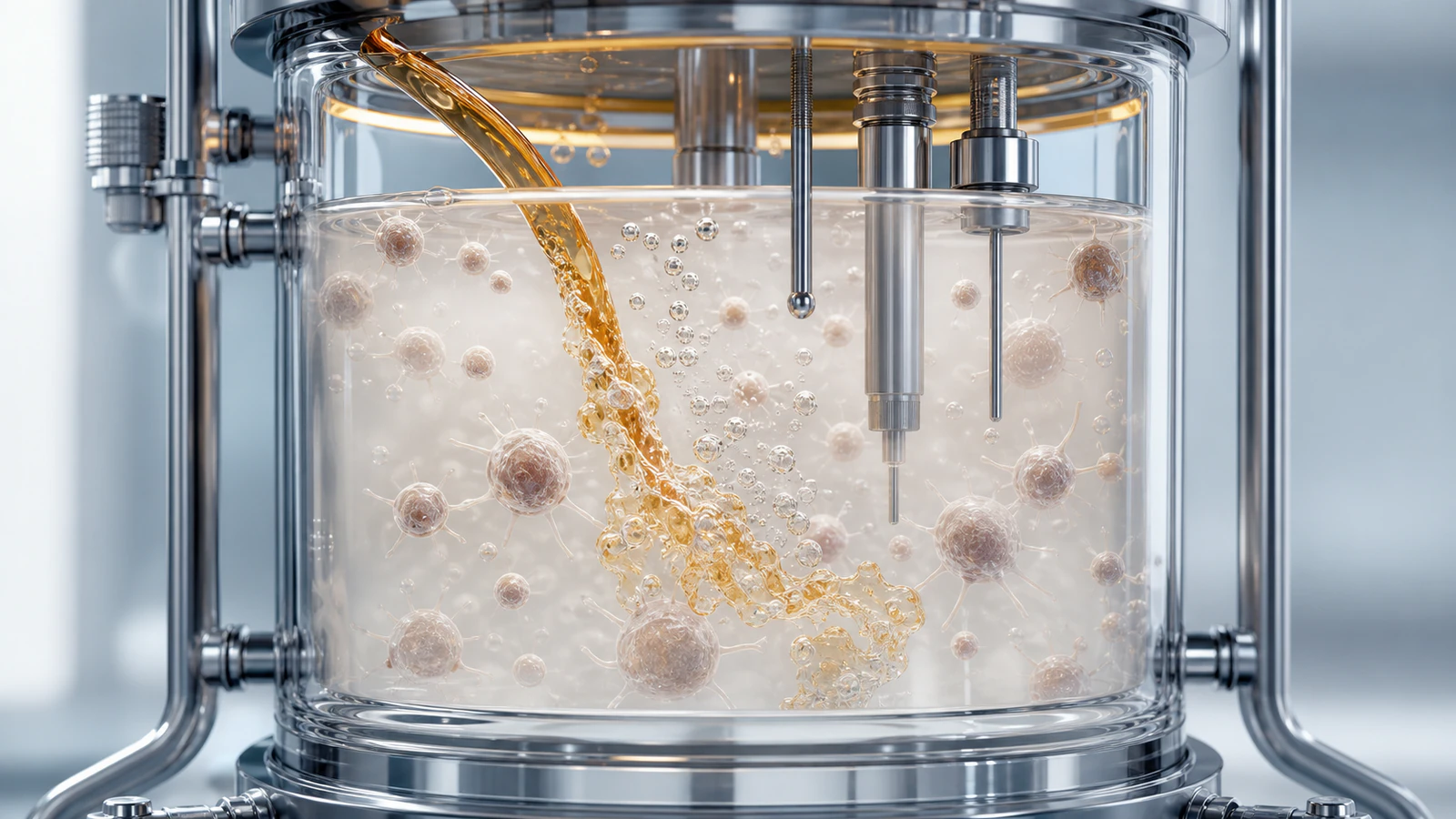
Bioreactor scale-up animation is not only a science communication asset. It is a commercial asset for teams that must prove a platform can become a product. CMC teams can use it to align reviewers around process logic. Business development teams can use it to make manufacturing readiness part of the partnering story. Platform marketing teams can use it to show that the company is not only describing a molecule, it is building a repeatable production system.
The best CMC visuals respect uncertainty. They do not overclaim. Instead, they show what has been characterized, what is being transferred and what controls are designed to protect quality. That distinction matters because manufacturing credibility depends on disciplined framing. A render that looks beautiful but implies unsupported certainty can create risk. A render that clearly shows the evidence pathway can build trust.
For a biotech website, the article page or campaign section can pair a short animation with supporting copy about scale, process control and quality. For a deck, the same animation can become a 20 second loop that helps a presenter explain the process without pausing over a dense flow diagram. For a conference booth, the visual can act as a silent proof point that makes the platform feel tangible.
- CMC use: explain control strategy, process transfer and comparability planning.
- BD use: show a partner why the platform can move beyond discovery biology.
- Investor use: connect manufacturing readiness to program risk reduction.
- Marketing use: turn a complex upstream process into a confident visual proof point.
Scientific Accuracy Checks Before Production
Before a scale-up animation moves into final rendering, the scientific review should define what the visual is allowed to imply. A subject matter expert should confirm vessel type, culture mode, cell type, feed logic, gas transfer logic, product form, harvest timing and the level of process maturity. This keeps the animation aligned with the actual CMC package rather than a generic manufacturing metaphor.
Accuracy also depends on visual hierarchy. If the image includes too many bubbles, cells and streams, it can imply chaotic mixing or uncontrolled process behavior. If it shows perfect uniformity, it can imply unrealistic simplicity. The right answer is a clean abstraction that shows the dominant process logic while leaving space for narration, captions outside the image and supporting data in the surrounding page or deck.
A useful production checklist includes the following review questions. What process stage is being shown? What variable is changing? What must remain constant? Which quality attribute is being protected? What evidence supports the claim? Which audience will see the asset? Answering those questions before rendering saves revision time and makes the final visual more persuasive.
- Confirm whether the process is batch, fed-batch, perfusion or a hybrid workflow.
- Review cell density, media color, mixing behavior and oxygen transfer cues.
- Keep probes and tubing plausible without turning the scene into equipment documentation.
- Avoid unsupported claims about yield, quality, cost, speed or regulatory readiness.
- Use external captions and page copy for data, not fake text inside the render.
FAQ About Bioreactor Scale-Up Animation Services
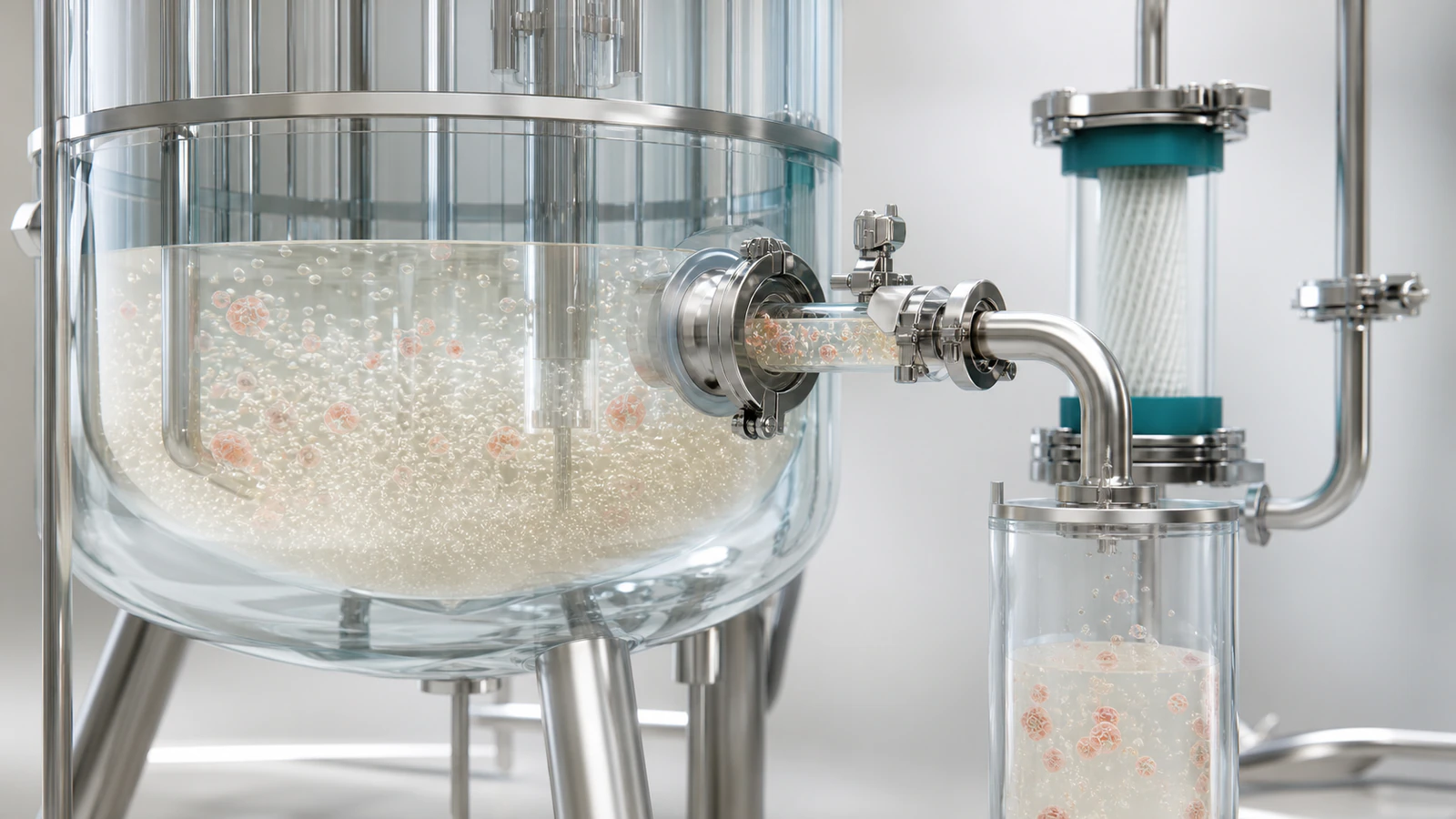
What should a bioreactor scale-up animation include?
It should include the process stage, the culture behavior, the main control variables and the commercial point the team needs to communicate. For many clients, that means seed train expansion, production culture control, fed-batch or perfusion logic, harvest readiness and process transfer.
Can the visuals be used before the process is fully locked?
Yes, if the asset is framed carefully. Early platform visuals should distinguish validated process details from planned process direction. A good animation can show a credible target operating concept without pretending that every parameter has been finalized.
How technical should the animation be?
The answer depends on the audience. CMC reviewers may need more process specificity. Investors and partners usually need a clean view of why the process is scalable and defensible. Animiotics can build a visual system that supports both levels by reusing the same core render with different narration, captions and surrounding copy.
Does this replace process diagrams?
No. It complements them. Diagrams remain useful for documentation. Animation is better for showing time, motion, scale transitions and cause-and-effect relationships that static diagrams cannot explain quickly.
CTA: Build A Buyer-Ready Scale-Up Story
If your upstream process is central to your platform value, it should not be hidden inside a dense CMC slide. Animiotics can help turn bioreactor scale-up, cell culture control, process transfer and manufacturing readiness into polished 3D visuals built for biotech buyers, partners, investors and internal teams.
Start with one clear question: what does the audience need to believe about the process after 30 seconds? From there, the visual can focus on the vessel, the biology, the control strategy and the evidence that supports platform confidence.