
Why Protein Design Visualization Services Matter
Protein design visualization services matter because many protein engineering platforms are evaluated before a buyer has time to understand the design logic. A homepage visitor, pharma partner or investor may see a designed binder, enzyme or scaffold for only a few seconds before deciding whether the science feels differentiated. If the visual story is generic, the platform can look like every other computational biology company even when the models, assays or design rules are meaningfully different.
A strong visual sequence shows how a team moves from sequence space to structure, binding interface, function and evidence. It can explain why a designed protein is stable, selective, manufacturable or ready for a specific therapeutic or research application. That is commercially useful because buyers are not only asking whether the render looks impressive. They are asking whether the design process appears credible enough to support a program, platform claim or partnership conversation.
Animiotics builds protein design visualization services around that decision. The work can become website hero renders, mechanism animations, investor deck figures, BD visuals, scientific presentation assets and reusable visual systems for platform teams.
- Use protein design visuals when sequence, structure or interface logic drives the claim.
- Show the design workflow before showing a polished final molecule.
- Keep explanatory renders separate from measured assay evidence so each asset has a clear role.
Translate Design Data Into Buyer-Ready Visuals
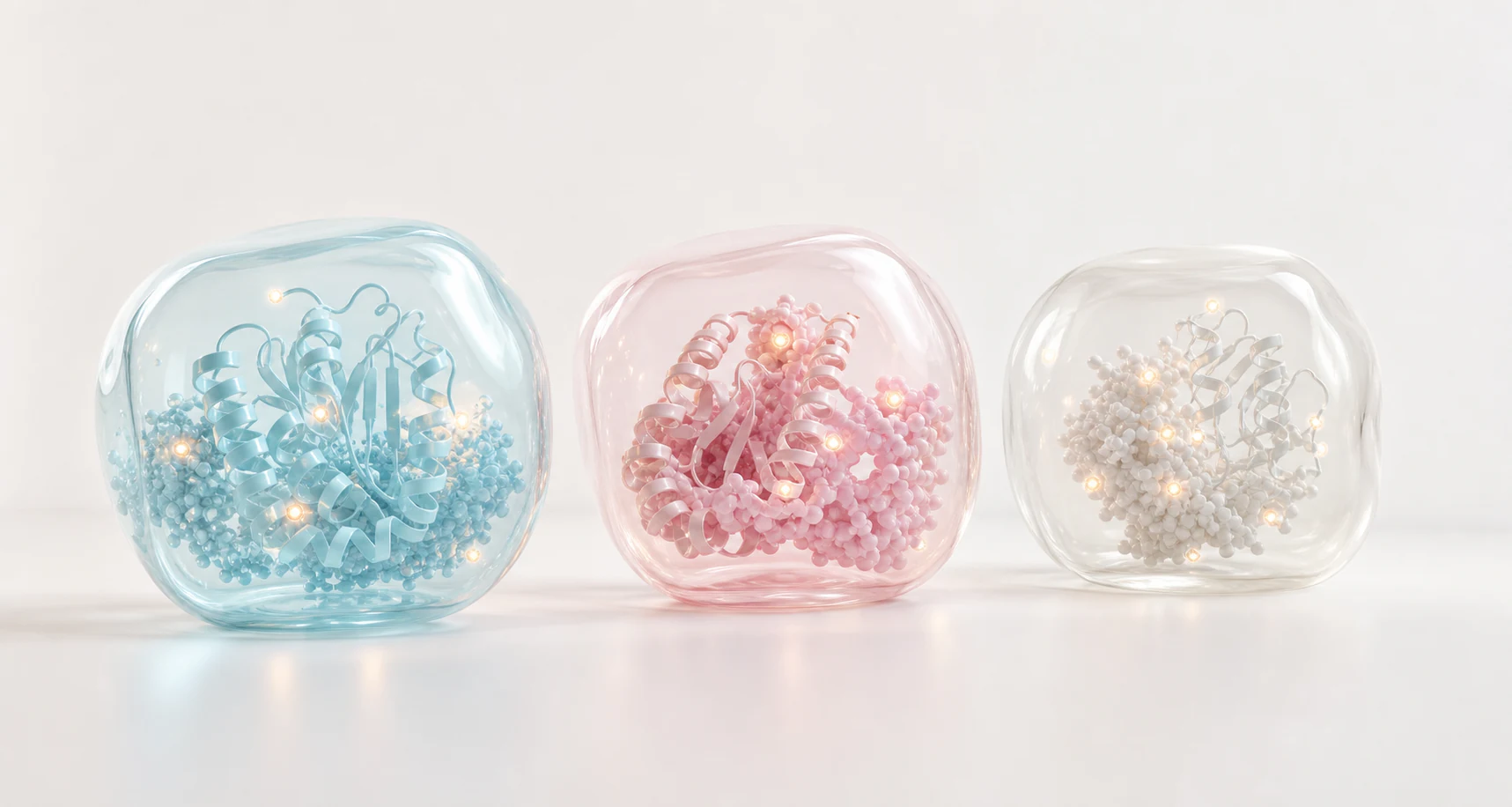
Protein design projects often begin with information that is hard to read outside the technical team: sequence libraries, model confidence, structural predictions, interface scores, thermostability screens, expression results and functional assays. A useful visual strategy does not try to put all of that on one slide. It turns the design workflow into a clean set of scenes that help different audiences understand the same core story.
For a platform website, the first visual may need to say that the company can generate protein candidates with defined shapes and functions. For an investor deck, the same concept may need to connect candidate generation to evidence and pipeline reuse. For a pharma partnering deck, it may need to show how design constraints, binding surfaces and developability criteria are handled before wet-lab validation.
This planning logic is related to AlphaFold 3 complex visualization because structure predictions only become persuasive when they are framed around interpretation. Protein design adds the need to show why a candidate was designed that way.
- Map each visual to the audience decision it must support.
- Group design inputs, candidate structures and evidence as separate communication layers.
- Use simplified scenes for the first read, then reserve technical panels for deeper review.
Show Sequence Structure and Function as One Story
The most common mistake in protein design visualization is treating the final structure as the whole story. A beautiful ribbon render can attract attention, but it does not explain why the candidate matters. The viewer needs to understand how sequence choices shape folding, how folding supports a binding or catalytic surface and how that molecular behavior connects to a platform or program claim.
A clear animation can move from abstract sequence space to a compact fold, then to a functional surface. The sequence layer does not need to show every residue. It can use restrained patterning or modular candidate blocks to imply design search. The structure scene can then reveal helices, sheets or surface patches only where they help the viewer understand function.
This approach also helps teams avoid overclaiming. When the design is computational, the visual should distinguish predicted structure from measured function. When the design has assay support, the render can be paired with concise evidence visuals that show what has actually been demonstrated.
- Do not let a final ribbon render replace the design story.
- Show how sequence constraints lead to fold and function.
- Keep predicted, modeled and measured claims visually distinct.
| Visual Layer | Buyer Question | Useful Treatment |
|---|---|---|
| Sequence search | How are candidates generated? | Abstract candidate modules with restrained variation |
| Structure model | What shape does the design produce? | Clean ribbon or surface scene with limited detail |
| Functional surface | Why should the molecule work? | Focused binding, catalytic or stability region |
| Evidence context | What has been validated? | Separate assay-linked figure or deck panel |
Make Binding Interfaces and Mechanisms Understandable
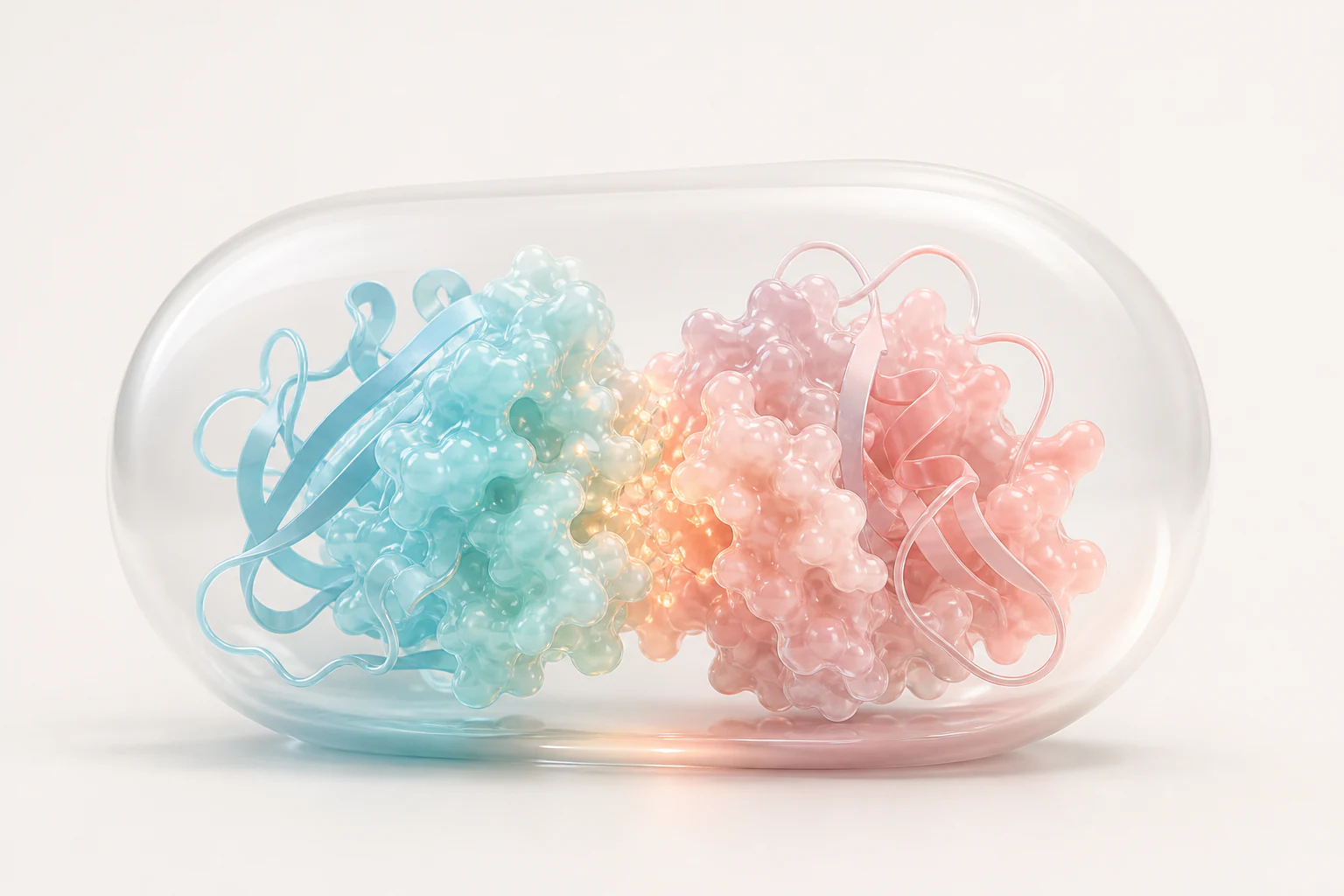
Many protein design teams need to explain interfaces: a designed binder engaging a target, an enzyme positioning a substrate, a scaffold presenting an epitope or a multispecific format organizing two molecular partners. These scenes can become confusing quickly if every atom, score and contact is shown at once. The visual should highlight the interface logic before adding technical detail.
A buyer-ready interface scene can use two soft molecular surfaces, a focused contact region, a simplified ribbon and a small signal at the designed interaction site. The goal is not to make a literal structural biology figure. The goal is to help a commercial or technical reviewer understand what was designed, where contact occurs and why that contact supports the value proposition.
For therapeutic platforms, this can connect directly to the broader mechanism story. A binder may block a receptor, bring two partners together, stabilize a protein state or deliver a payload. Protein design visualization services should make that action legible without turning the first asset into a dense methods figure.
- Focus attention on the designed interface rather than the entire molecular system.
- Use surface and ribbon views only where they clarify the claim.
- Pair mechanism scenes with evidence when affinity, selectivity or activity is central.
Build Assets for Websites Decks and Partner Conversations
Protein design visualization services should produce assets for the places where platform value is judged. A homepage needs an immediate visual category signal: designed proteins, candidate selection, binding or mechanism. An investor deck needs clear progression from platform to program. A BD deck may need modular visuals that show target selection, candidate generation, interface design, validation and reuse across programs.
Planning crops and formats early prevents the common problem where one hero render is stretched across every channel. The same core design system can produce a wide cover image, supporting section renders, slide-ready figures, transparent protein assets, short animation loops and social crops. Each output should keep the same scientific language while matching the practical constraints of the channel.
This channel-first thinking overlaps with biotech pitch deck animation services because protein design teams often need to explain platform logic under tight attention limits. The visual must create confidence before the audience reads every technical detail.
- Design separate crops for website, deck and conference use.
- Keep platform visuals consistent across candidate classes and programs.
- Use captions that explain the claim without adding unsupported biology.
Create a Reusable Protein Design Visual System
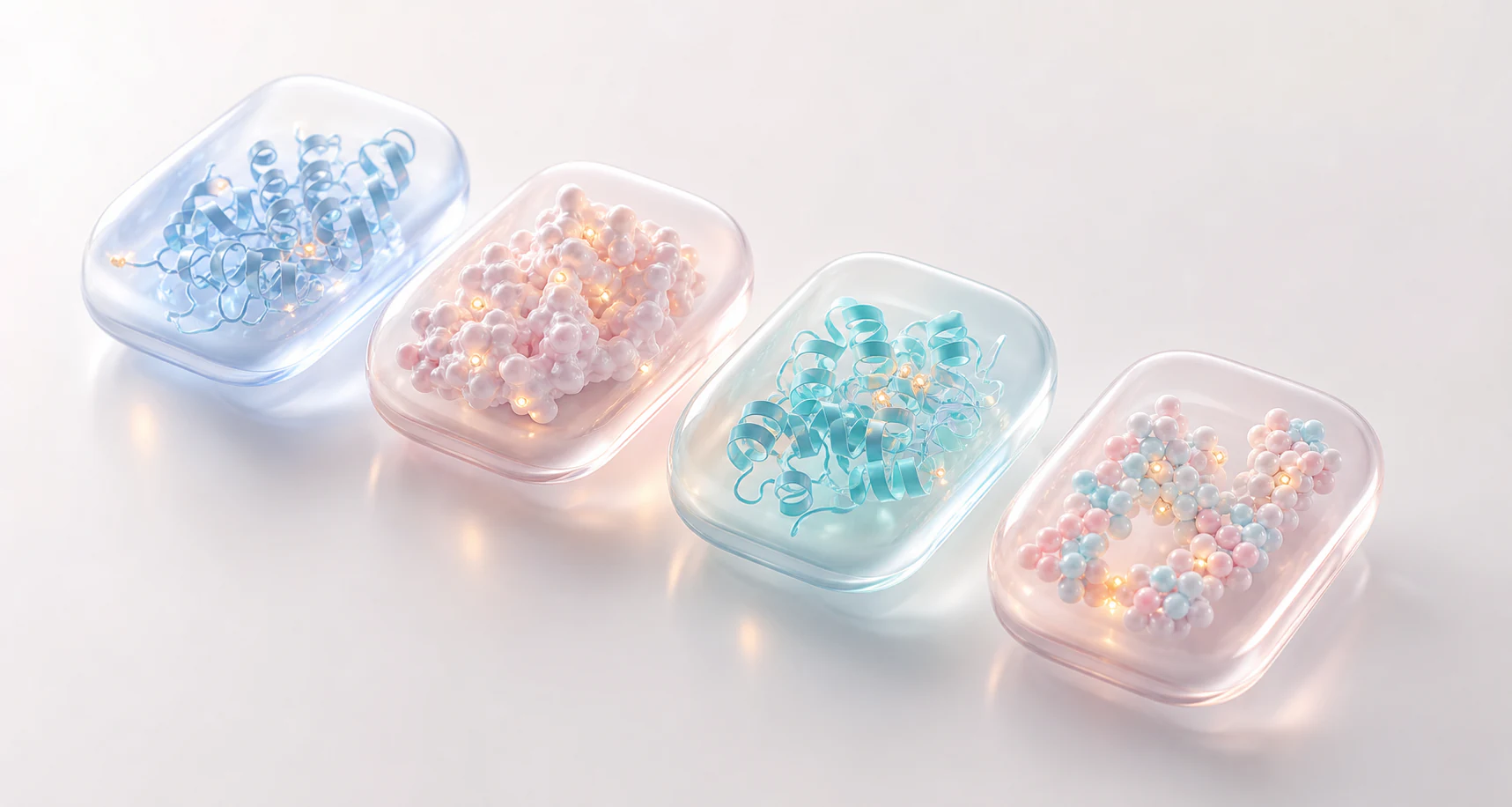
A reusable visual system is often more valuable than one finished illustration. Protein design companies may need to show binders, enzymes, miniproteins, scaffolds, degrader components, delivery proteins or diagnostic reagents across several programs. If each asset is built from scratch, the story becomes inconsistent and review cycles get longer.
The system should define how designed candidates look, how targets are represented, how interfaces glow, how sequence-to-structure transitions are framed and how evidence panels are paired with explanatory renders. It should also define what not to show, including unsupported clinical outcomes, fake software screens, decorative charts or molecular details that imply evidence the team does not have.
With a clear system, new program visuals can inherit the same camera language, materials, color rules and caption patterns. That makes websites, BD decks, investor updates and scientific talks feel connected even when each asset serves a different audience.
- Standardize the visual language for candidates, targets and interfaces.
- Build modular assets that can support new programs without starting over.
- Keep scientific review close to the system before campaign assets scale.
FAQ About Protein Design Visualization Services
What are protein design visualization services?
They are scientific visualization services that turn protein engineering workflows, designed structures, binding interfaces, functional mechanisms and evidence into clear renders, figures, storyboards and animations.
When should a biotech team invest in protein design visuals?
Invest when the platform or program depends on design logic that is hard to explain with copy alone, especially before a website launch, financing round, pharma partnering push, conference presentation or program announcement.
Can protein design visuals show real structures and predictions?
Yes. The strongest assets often combine simplified explanatory renders with real structural models, prediction confidence, assay results or developability evidence. The important step is making clear which visuals are explanatory and which are data-backed.
How many visuals does a protein design campaign need?
Many teams start with one cover render plus three to five supporting section images, then expand into animation loops, slide figures and reusable molecular assets as the platform story grows.
- Use protein design visuals when design workflow and mechanism need fast explanation.
- Separate predicted structure, designed function and measured data.
- Build reusable modules if the platform supports multiple candidates or targets.
Ready to Build Protein Design Visuals
Protein design visualization services are most useful when they turn a complex design process into a story buyers can understand quickly. The right visual explains how candidates are generated, why a structure matters, where an interface works and how evidence supports the platform value.
Animiotics helps biotech, platform and research teams create protein design renders, mechanism animations, deck figures, website assets, interface scenes and animation-ready storyboards. The work can support launch pages, investor decks, BD campaigns, scientific presentations and conference graphics.
Talk to Animiotics about protein design visualization services
- Bring the design workflow, validation evidence and audience decision into the first brief.
- Use a reusable visual system for platform and program-level assets.
- Turn protein design complexity into buyer-ready visuals without losing scientific discipline.