
Why GPCR Signaling Animation Matters
GPCR signaling animation matters because G protein coupled receptors sit at the intersection of structure, pharmacology and commercial decision making. A receptor changes shape when a ligand binds. That conformational shift can favor G protein coupling, beta-arrestin recruitment, internalization, second messenger production or a program-specific pattern of pathway bias. The biology is familiar to receptor scientists but difficult to explain in one static figure.
For biotech teams, the communication problem is not only accuracy. Partners and investors need to understand why a receptor target is tractable, why a ligand profile matters and why a platform can produce differentiated pharmacology. A crowded pathway diagram can list every kinase and messenger. It rarely shows why ligand engagement at the membrane changes the story downstream.
A strong GPCR signaling animation gives the audience a clean mental model. It starts with ligand recognition, moves into receptor activation and then shows the downstream path that supports the product claim. The goal is not to decorate a deck with a beautiful receptor. The goal is to help a buyer see the mechanism clearly enough to remember it after the meeting.
- Use animation when receptor state, timing and downstream choice affect the message.
- Keep the membrane, ligand, receptor and signaling partner visually distinct.
- Build the asset so still frames can support decks, web pages and conference screens.
Start With the Buyer Question

The first planning question is not which pathway looks most cinematic. It is what a buyer needs to believe after seeing the asset. A discovery platform may need to show that it can connect ligand chemistry to receptor behavior. A clinical-stage program may need to show why pathway selectivity could affect efficacy, dosing or tolerability. A tools company may need to show how assay readouts map back to receptor events.
That decision shapes the storyboard. If the commercial point is ligand selectivity, the opening scene should make the binding pocket and receptor state easy to inspect. If the point is biased agonism, the animation should compare two downstream outcomes without implying unsupported clinical benefit. If the point is platform breadth, the visual system should be modular so multiple receptors can share one polished language.
This is closely related to the challenge described in our guide to protein-ligand interaction visualization. GPCR signaling animation adds membrane context, receptor motion and pathway branching. The ligand still matters, but the commercial story depends on what the receptor does next.
- Define whether the asset sells a molecule, a platform or a mechanistic hypothesis.
- Choose one primary downstream path before adding secondary biology.
- Use a reusable visual system if the company has several GPCR programs.
Build the Receptor Activation Sequence
The receptor activation sequence is the core of most GPCR stories. The viewer needs to understand that ligand binding is not just a contact event. It stabilizes receptor conformations that change how intracellular partners engage the receptor. A useful animation can show this with restrained motion: a ligand seats into the extracellular pocket, transmembrane helices shift slightly and the intracellular surface becomes competent for coupling.
Scientific restraint is important here. GPCR activation involves subtle structural rearrangements and receptor-specific details. A commercial animation should not invent a dramatic hinge if the project has no structural basis for that motion. Instead, it can use clear spatial cues, modest helix repositioning and a consistent glow or material change to indicate activation while preserving review confidence.
The same principle applies to structure-driven visuals in our cryo-EM animation guide. When the asset is based on a structure, the audience should sense that the motion comes from evidence. When the structure is conceptual, the animation should be honest about abstraction.
- Show receptor activation as a sequence rather than a single before-after swap.
- Use subtle motion cues when structural evidence is limited.
- Keep the binding event visible long enough for non-specialists to follow.
Show G Protein Coupling Without Overloading the Frame
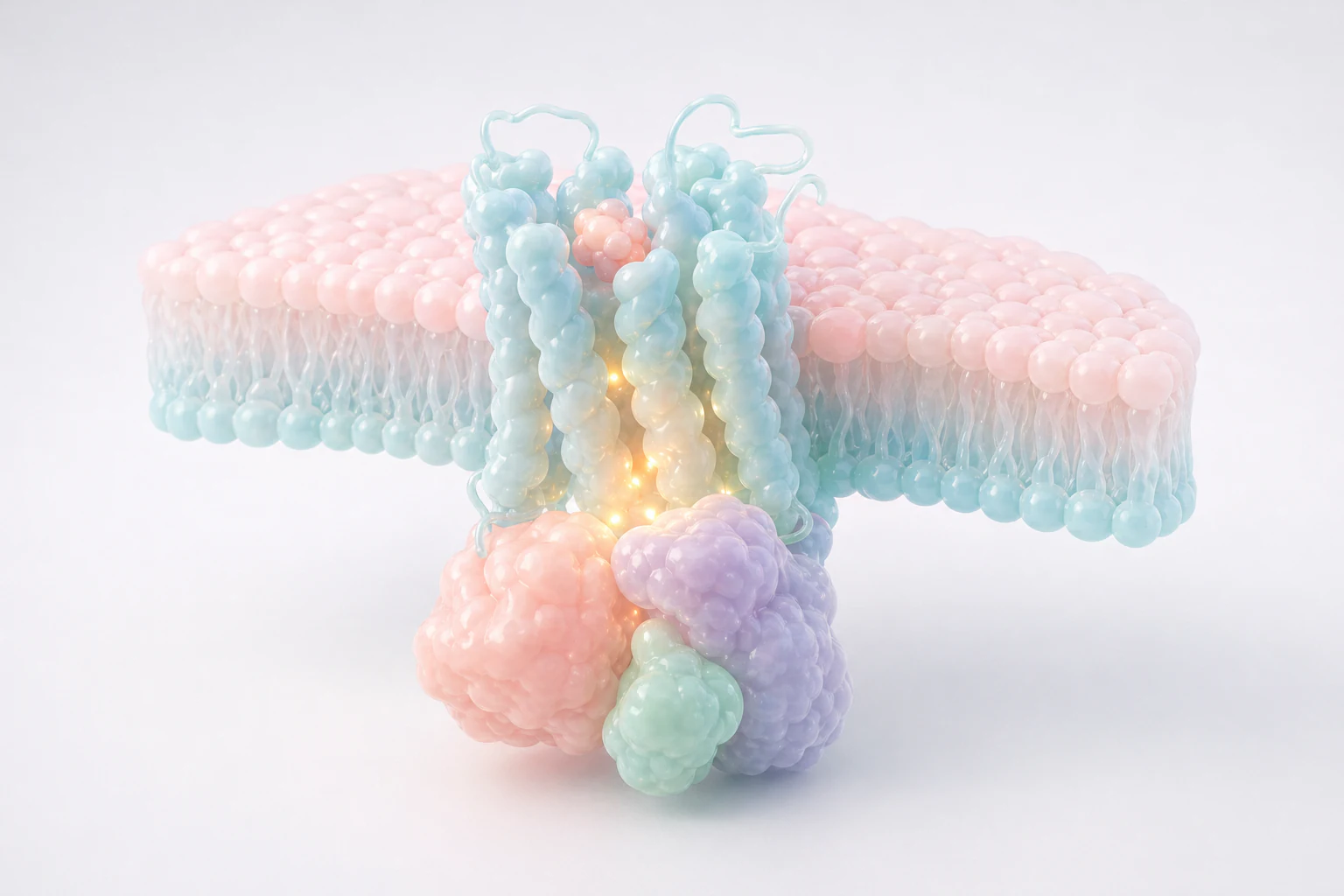
G protein coupling is where GPCR signaling animation can add the most clarity. Many static figures show the receptor, G alpha, G beta gamma, GDP, GTP and downstream enzyme as a dense cluster. Animation can separate those steps into digestible beats. First the activated receptor presents an intracellular interface. Then the heterotrimeric G protein approaches. Next nucleotide exchange or subunit rearrangement can be represented at the level of detail appropriate for the audience.
A buyer-facing version usually does not need every molecular transition. It needs the causal link between receptor activation and downstream signal generation. A clean sequence can show the G protein as three coordinated pastel forms, with a warm signal at the interface and a second messenger cluster appearing later. That keeps the biology readable while preserving enough detail for a scientific audience.
This section is also a useful place to decide whether the animation should emphasize receptor class, ligand class or assay output. A platform deck might show coupling as one scene in a broader pharmacology workflow. A product page might spend more time on one specific receptor and downstream readout. The storyboard should match the decision the asset supports.
- Break coupling into approach, engagement and signal generation.
- Use object identity to distinguish receptor, G alpha and G beta gamma.
- Reserve pathway detail for the claim that matters commercially.
| Visual Beat | What It Explains | Best Use |
|---|---|---|
| Ligand docking | Why the receptor enters an active state | Target and molecule overview |
| Intracellular coupling | How receptor state recruits a signaling partner | Mechanism and platform decks |
| Second messenger output | How receptor activation becomes a measurable response | Assay, efficacy and pharmacology stories |
Explain Pathway Selectivity and Biased Agonism Carefully
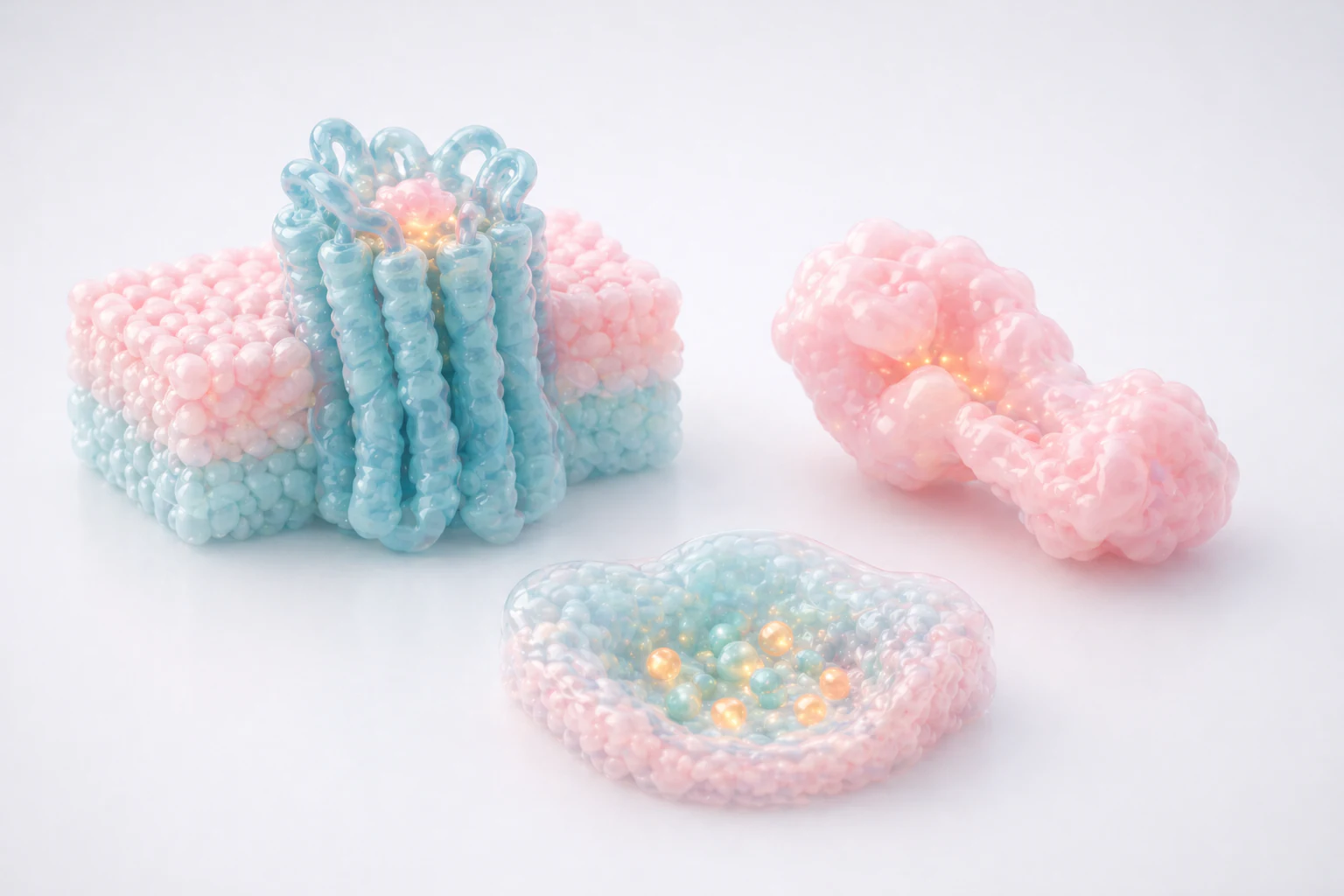
Pathway selectivity is often the reason a GPCR visual is commissioned. Many teams need to explain why two ligands that bind the same receptor can produce different downstream outcomes. Animation can make that concept accessible by showing two receptor states or two downstream branches with distinct visual emphasis. The key is to avoid turning a nuanced pharmacology story into a simple good path versus bad path diagram.
Biased agonism visuals should stay close to the evidence. If the data show preferential beta-arrestin recruitment, make that the visual focus. If the data show a second messenger shift, show the receptor event leading to that readout. If the program is still exploratory, use language and visuals that frame pathway bias as a hypothesis or design goal rather than a proven clinical advantage.
The best GPCR signaling animation treats branching as a decision point in the story. The viewer sees the same receptor environment, a different ligand or receptor state and a different downstream partner. That is more persuasive than a generic cascade because it connects molecular recognition to the pharmacology claim buyers are evaluating.
- Show pathway branching only when it supports a specific claim.
- Avoid visual language that implies benefit beyond the data.
- Use paired scenes when comparing ligands, receptor states or readouts.
Make the Visual System Useful Across Teams
A GPCR signaling animation should become more than a single video. The receptor model, membrane patch, ligand style, signaling partner materials and second messenger objects can form a visual kit. That kit can support investor slides, business development meetings, conference booths, web pages, still figures and short social loops. Planning for those outputs early makes the project more useful and more consistent.
The strongest asset systems use one visual grammar across all formats. Ligands keep the same color and shape language. Receptor states use consistent motion and material cues. Downstream partners have stable identities. Camera moves are clean enough that important frames can be exported as stills. This reduces review friction because scientific, commercial and brand teams are reacting to one coherent system.
Animiotics often approaches this as a modular communication build. First we map the core claim. Then we storyboard the mechanism. Then we create a set of renderable objects that can be reused across the campaign. The result is a mechanism visual that helps people explain GPCR pharmacology repeatedly rather than a one-off animation that only works in one presentation.
- Plan stills, loops and slide crops before final rendering.
- Keep receptor and ligand identities stable across campaign assets.
- Create reusable membrane, partner and messenger objects for future programs.
FAQ About GPCR Signaling Animation
How long should a GPCR signaling animation be?
Most commercial mechanism videos work best between 60 and 120 seconds. A shorter loop can show ligand binding or coupling, while a longer version can compare pathway branches or explain assay context.
Do we need a solved receptor structure?
A solved structure helps when accuracy is central to the claim, but conceptual GPCR animation can still be useful if the abstraction is clear. The review process should decide which movements are evidence-based and which are illustrative.
Can one GPCR visual system cover multiple targets?
Yes. A modular receptor, membrane and ligand style can be adapted for related programs while preserving a consistent platform identity. Target-specific details can be added where they matter.
Should the animation include every downstream pathway?
Usually no. The best version shows the pathway that supports the commercial or scientific claim. A full pathway montage can make the story feel less credible if it buries the key decision point.
Next Step: Turn GPCR Pharmacology Into a Clear Visual Story
GPCR signaling animation is most valuable when it turns receptor pharmacology into a decision-ready story. The asset should help a buyer understand what binds, what changes, which partner couples and why the downstream path matters. That clarity is what separates a useful commercial mechanism visual from a beautiful but generic receptor render.
Animiotics builds scientific figures, 3D renders and animation-ready systems for biotech teams that need receptor stories with accuracy and commercial discipline. If your team is preparing a platform deck, program launch, partner presentation or investor update, start by defining the GPCR claim that must be understood after the first viewing.
From there, the visual plan can turn ligand binding, receptor activation, G protein coupling and pathway selectivity into a coherent asset system for slides, websites and motion. Open this template in Animiotics
- Align scientific, commercial and review teams around one storyboard.
- Build modular objects so future GPCR programs share the same visual language.
- Prioritize receptor state clarity before adding cinematic detail.