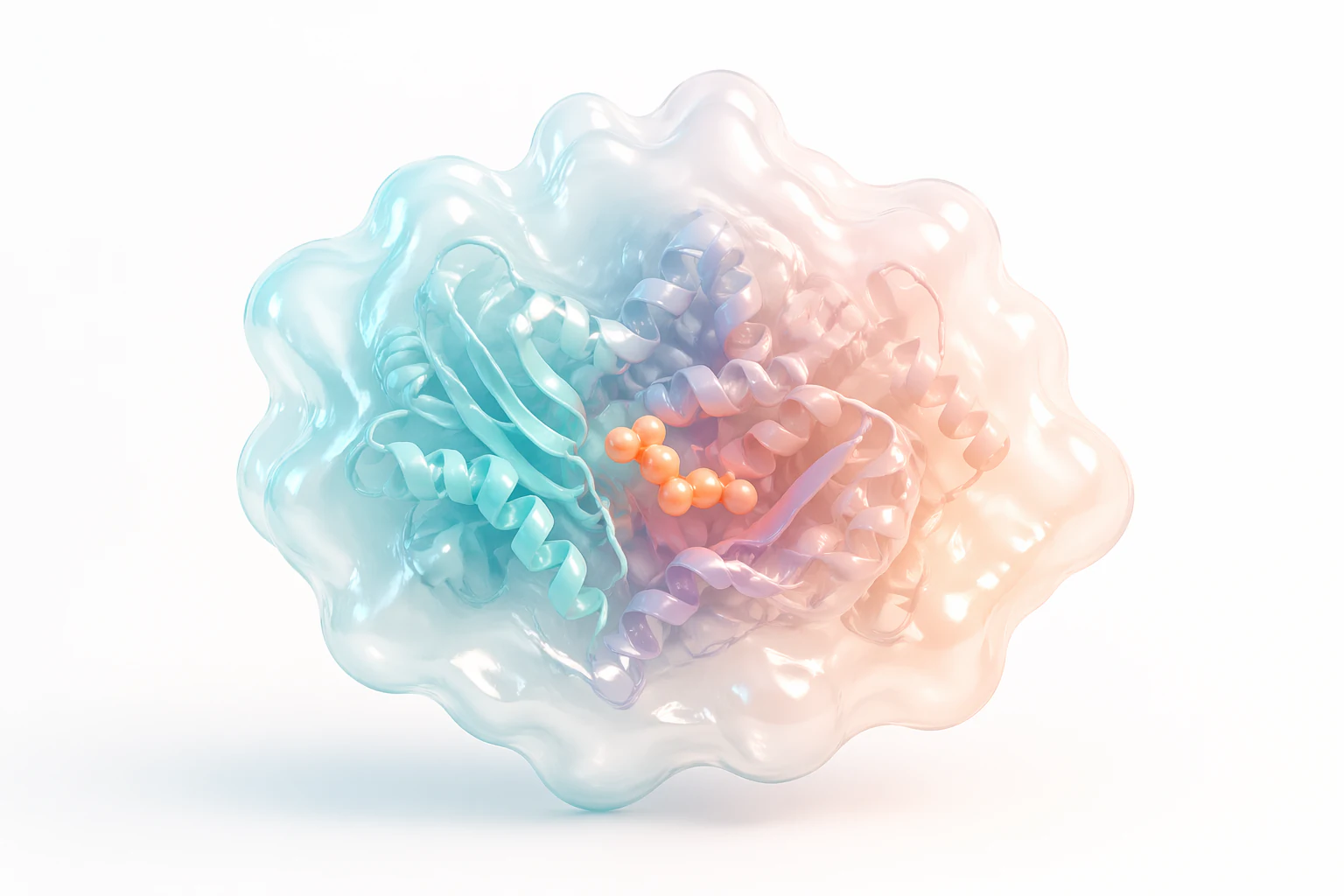
Why Cryo-EM Animation Matters for Biotech Communication
Cryo-EM animation has become more commercially important because cryo-electron microscopy is no longer confined to specialist structural biology meetings. Drug discovery teams now use cryo-EM to explain target engagement, state changes, allosteric effects and complex formation to executives, investors, partners and cross-functional scientists. A static density map can be convincing to an expert, but a clear motion sequence often communicates the same story faster to everyone else.
That communication gap is where many teams lose momentum. They have strong structural data, a compelling binding story and a real need to show mechanism or differentiation, yet the visual asset never rises above a few screenshots from a viewer. Those screenshots may be technically correct, but they rarely explain what the audience should notice first, how one conformational state differs from another or why the map quality supports the biological claim.
A strong cryo-EM animation solves that problem by separating evidence from explanation. The map, model and validation data provide the evidence. The animation provides the narrative logic that helps non-specialists track density, fitted models, ligand position and state transitions without feeling lost.
- Use motion to clarify what changed between states rather than to decorate the structure.
- Make map context and fitted model context visible before focusing on the ligand or interface.
- Plan the asset for the actual audience whether that is a platform review, partner deck or launch video.
What Buyers Should Expect a Cryo-EM Animation to Show
The best cryo-EM visualization work starts from one practical question: what does the audience need to believe after watching. For a platform team, the answer may be that the map supports a confident model and a biologically meaningful conformational change. For business development, the answer may be that a candidate binds a validated pocket in a way that differentiates it from competitors. For researchers, the answer may be that the animation preserves the real logic of the map rather than overselling certainty.
This is why cryo-EM animation should show more than a polished protein spin. The audience needs to see map envelope, contour choices, fitted coordinates, ligand placement, local focus and state comparison in a sequence that feels deliberate. ChimeraX documentation reflects the practical building blocks here because density maps are not just background scenery. They are the volumetric context that supports the visual claim. EMDB makes the same point at the resource level by treating maps as first-class structural data objects rather than decorative companions to atomic models.
When teams skip those foundations, the result is a shiny structural biology animation with weak scientific posture. It may look expensive while still failing to answer the exact question a client, partner or reviewer is asking.
- Map first: establish the experimental volume before simplifying into a cleaner presentation scene.
- Model second: show how the fitted structure relates to the density instead of presenting coordinates in isolation.
- Story third: explain state change, binding event or functional implication only after the viewer understands the geometry.
Core Capabilities a Good Cryo-EM Animation Workflow Must Handle
A production-ready cryo-EM animation workflow needs to handle map import, contour control, model fitting, state alignment and clean exports without forcing the team to rebuild the story from scratch every time a new revision appears. In practice this means starting with tools that can manage maps and atomic models reliably, then moving into a design pipeline that adds lighting, focus, labels and camera structure without distorting the biology.
The workflow also needs to respect uncertainty. Cryo-EM drug binding visualization becomes misleading when the asset hides weak regions, erases flexibility or implies a level of precision the map does not support. Good teams therefore decide early which parts of the story belong in the experimental scene and which belong in a simplified editorial scene. That separation protects credibility while still producing a more persuasive visual.
For clients, this is the hidden buying criterion that matters most. A vendor or studio should be able to move from EMDB or internal map data to publication-ready figures, still renders and animation sequences with repeatable logic. If every deliverable depends on ad hoc screenshots and manual repair, the workflow will break as soon as the program expands.
- Stable handling of maps, models and alternate states.
- A reproducible way to compare apo, bound and activated conformations.
- Export paths that support static figures as well as animation frames.
- Editorial refinement that improves clarity without inventing unsupported detail.
Cryo-EM Animation Workflow Comparison for Platform Teams
Most biotech teams do not need one perfect tool. They need a stack that moves cleanly from structural analysis to client-ready communication. The comparison below frames the common workflow layers in those practical terms.
If your real goal is faster partner communication or cleaner launch visuals, the winning workflow is the one that reduces narrative friction between map review and final storytelling.
| Workflow Layer | Best Use | Strengths | Likely Limits | Commercial Signal |
|---|---|---|---|---|
| EMDB and internal cryo-EM data packages | Source evidence | Map provenance, metadata and direct access to deposited volumes | Not built for polished storytelling | Essential for scientific grounding |
| ChimeraX map and model review | Exploration and prep | Strong density handling, contour control and scene setup | Default outputs still need design cleanup | Ideal for structural review before editorial work |
| Static editorial figure pipeline | Papers and decks | Cleaner hierarchy, labels and panel logic | Limited for dynamic state transitions | Best for publication and investor slides |
| Full cryo-EM animation pipeline | Mechanism and partner storytelling | Shows state change, pocket access and binding sequence clearly | Needs stronger planning and scientific review | Best when the story must persuade quickly |
How to Show Density Maps Without Losing the Audience
Density maps are the hardest part of cryo-EM animation for non-specialist audiences because they are visually unfamiliar. To an expert, contour surfaces and threshold changes are normal evidence. To everyone else, they can look like fog, noise or arbitrary blobs. The solution is not to hide the density completely. The solution is to stage it carefully.
Start with one broad establishing shot that shows the map as the experimental envelope. Then transition to a fitted model scene that makes the geometry legible. After that, return to local density only where it supports a specific claim such as ligand fit, loop movement or interface change. This sequence keeps the viewer anchored while preserving scientific honesty. It follows the same communication logic we recommend in our PDB to animation guide where the structure must be introduced before the explanation becomes more cinematic.
A related mistake is treating contour level as a dramatic reveal tool rather than as a scientific parameter. If the animation changes thresholds, the reason for that choice should be consistent and justifiable. Otherwise the viewer may remember the flourish but not trust the conclusion.
- Use density sparingly and purposefully.
- Move from global map context to local evidence rather than the reverse.
- Avoid constant threshold shifts that feel more theatrical than explanatory.
Visualizing Flexible States, Drug Binding and Mechanism Claims
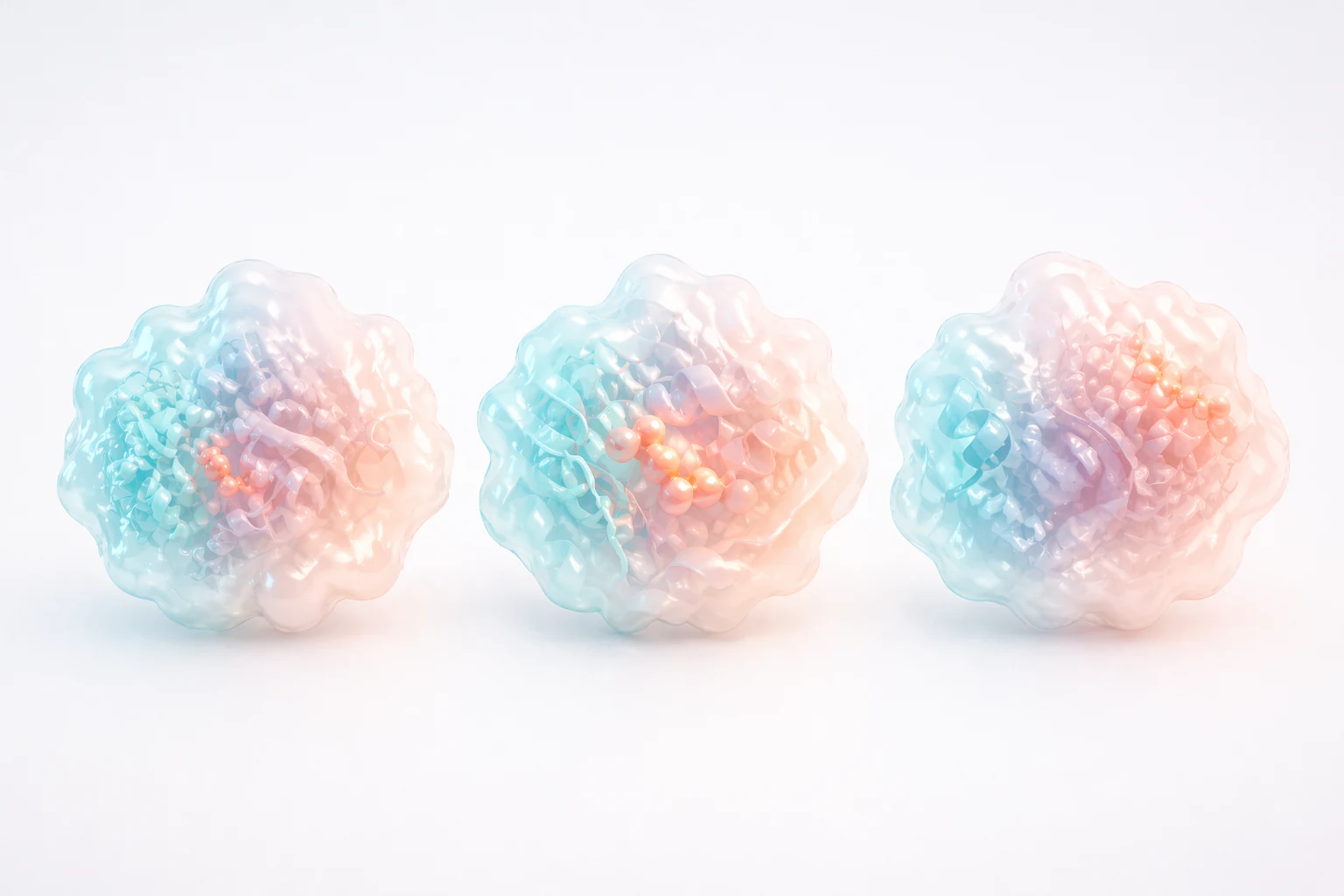
Many of the most valuable cryo-EM stories are really state-comparison stories. The target is open instead of closed. The receptor is active instead of inactive. The ligand stabilizes one pocket geometry instead of another. That is where protein conformational change animation becomes useful, but only if the scene architecture is disciplined. The viewer should always know which state they are seeing and why the transition matters.
A practical approach is to separate the mechanism claim into three beats. First show the reference state. Next show the alternate or ligand-bound state with aligned orientation. Then isolate the local region where the change drives the conclusion. This is especially important for cryo-EM drug binding visualization because partners care less about a beautiful protein surface by itself and more about what the structure implies for specificity, potency or tractability.
The same principle applies to static assets. Our post on protein-ligand interaction visualization explains why pocket clarity, residue focus and visual hierarchy matter so much in drug discovery communication. Cryo-EM animation simply extends that logic into time.
- Keep camera orientation stable across compared states.
- Highlight one mechanistic difference at a time.
- Make ligand emphasis proportional to the actual scientific claim.
When to Use Cryo-EM Animation Instead of Static Figures
Not every structural story needs motion. If the claim is mainly about one binding pose or one pocket annotation, a figure may be better. If the claim depends on transitions, progressive assembly, domain motion or comparing multiple states in sequence, cryo-EM animation usually creates more understanding per second than a crowded slide ever will.
The most effective teams choose the medium based on cognitive load. Figures are efficient when the viewer can pause and inspect. Animation is efficient when order matters. A launch deck explaining state-selective pharmacology may benefit from a short sequence that introduces apo state, ligand approach, bound state and downstream implication. A paper supplement may still need static panels for exact residue calls and validation context.
Commercially, this matters because buyers do not need motion for its own sake. They need the right asset mix. A good partner should be able to recommend when a cryo-EM figure design workflow is enough and when a structural biology animation will create more value.
- Choose figures for dense reference information.
- Choose animation for ordered state changes and mechanism narratives.
- Package both when one audience needs persuasion and another needs detail.
FAQ About Cryo-EM Animation
What is cryo-EM animation used for?
Cryo-EM animation is used to explain density maps, fitted structures, conformational changes and ligand binding in a format that is easier for mixed audiences to follow. Biotech teams use it for investor decks, partner presentations, launch assets, conference talks and internal platform reviews.
What makes a good cryo-EM animation scientifically credible?
A good cryo-EM animation keeps the relationship between map and model explicit, respects uncertainty, avoids unsupported geometric detail and makes state comparisons traceable. It should help the viewer understand the evidence rather than hiding the evidence behind pure polish.
Can cryo-EM animation support drug discovery communication?
Yes. Cryo-EM drug binding visualization is especially useful when a program needs to explain target engagement, allosteric modulation, conformational selection or competitive differentiation to non-specialist stakeholders. The key is to show why the structure matters, not just that a structure exists.
Should we animate directly from ChimeraX output?
ChimeraX is excellent for map review, scene setup and export preparation. For final marketing, publication or partner-facing assets, teams often need additional design and rendering work so the final visual has clearer hierarchy, better pacing and stronger consistency across deliverables.
CTA: Turn Cryo-EM Animation Into a Clear Biotech Story
If your team has cryo-EM data but needs sharper figures, cleaner still renders or a more persuasive mechanism story for partners and investors, Animiotics can help turn map-heavy structural work into visuals that are easier to trust and easier to remember.
We work with biotech, platform and research teams to convert structural biology data into cryo-EM animation, publication-ready figures and supporting renders that stay accurate while communicating faster. If you need an asset pipeline that bridges scientific evidence and visual clarity, see how we can help or start a project discussion.