
Why Bioprocess Animation Services Matter
Bioprocess animation services matter because manufacturing is often the part of a biotech story that buyers care about but struggle to evaluate quickly. A therapeutic platform may have strong biology, yet the commercial question still depends on cell line development, upstream yield, downstream recovery, formulation, analytics, quality control, GMP readiness and scale-up risk. When those ideas sit across dense process maps or technical manufacturing slides, the platform can feel harder to trust than it should.
A clear bioprocess animation or render gives the audience a guided way to understand how material moves from starting inputs to purified product. It can show where cells grow, where product accumulates, how impurities are removed, how quality is checked and why a process is designed for consistency. The visual does not need to show every valve or unit operation. It needs to explain the manufacturing logic that supports the business claim.
Animiotics builds bioprocess animation services for biotech, CDMO, platform and research teams that need buyer-ready visuals for websites, investor decks, partner outreach, conference screens, technical explainers and scientific presentations. The goal is to turn manufacturing complexity into useful communication assets without making process claims that outrun the data.
- Use bioprocess visuals when manufacturing strategy, quality and scale-up need one coherent story.
- Show the process journey before adding unit-operation detail.
- Build assets that help scientific, technical and commercial audiences evaluate the same platform claim.
Turn Upstream Manufacturing Into a Clear Story Architecture
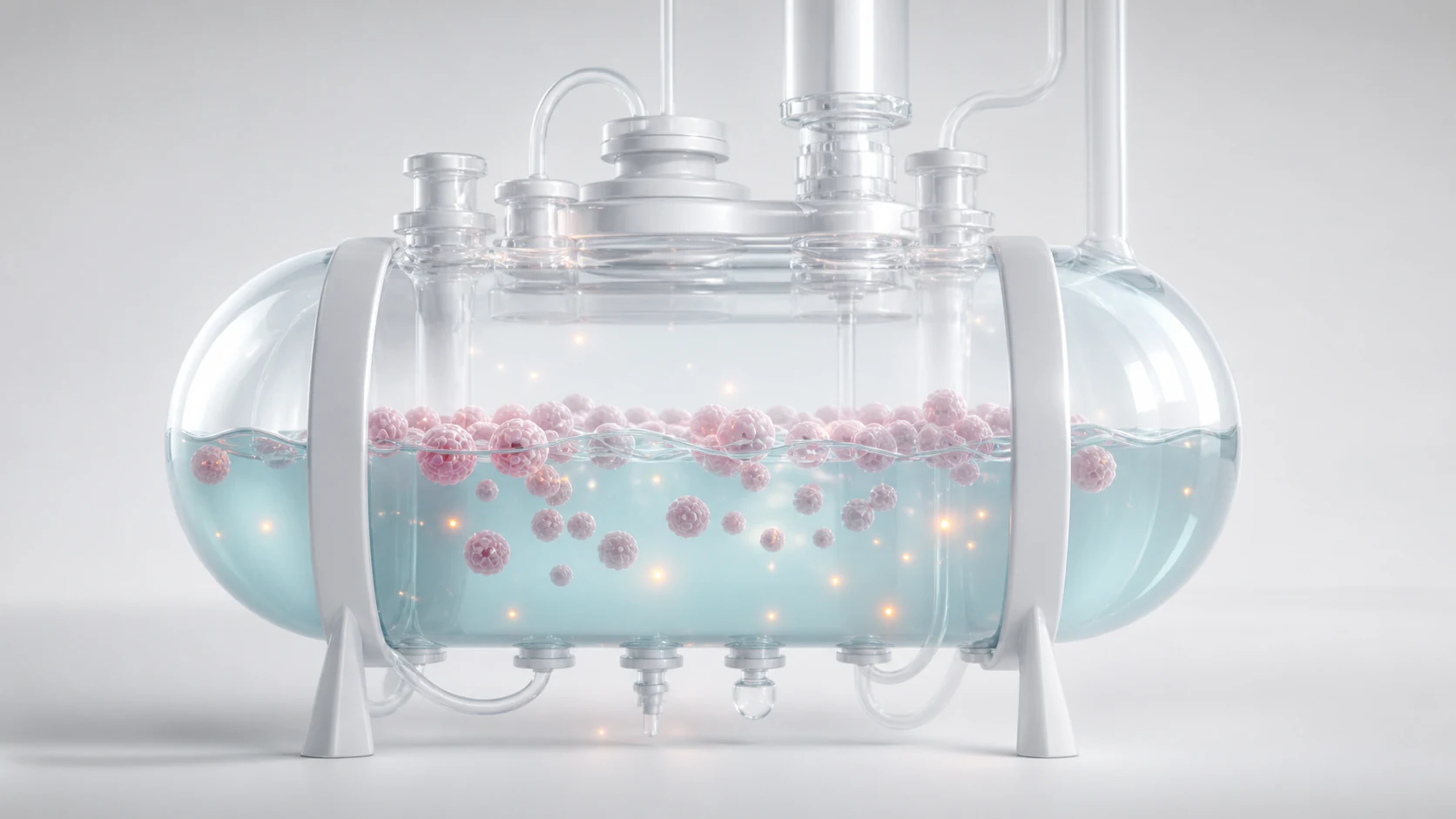
A strong bioprocess project starts with story architecture. Before rendering vessels or tubing, the team should decide what the audience needs to understand first: expression system, cell culture strategy, media conditions, process control, product formation, yield improvement, process robustness or scalability. That decision shapes the visual sequence and prevents the animation from becoming a decorative equipment tour.
The most useful upstream story usually moves from biological system to controlled environment to product output. A viewer first sees the cell or biological platform, then sees the bioreactor environment that supports growth or production, then sees the product signal that explains why the process matters. This sequence keeps the science tied to manufacturing value.
This connects naturally with protein design visualization services when engineered proteins or biologics are involved. The difference is that bioprocess animation services must keep production feasibility visible. The audience should understand not only what the molecule is but how the platform can make it reliably.
- Define the biological system, controlled process environment and output claim before designing scenes.
- Use closeups only after the audience understands the process context.
- Tie each visual beat to a buyer question about feasibility, reliability or scale.
Explain Scale Up Without Turning the Process Into a Maze
Scale-up stories can become confusing because they involve many variables at once. Teams may need to discuss volume, oxygen transfer, mixing, feeding, process time, yield, impurity profiles, equipment constraints, tech transfer and comparability. A buyer-facing visual should not try to display every parameter. It should show the decision logic that makes the process credible.
For early-stage biotech companies, the animation may need to show how a bench-scale process can mature into pilot or GMP production. For CDMOs, it may need to show platform flexibility across molecules or modalities. For tools and manufacturing platforms, it may need to show how a workflow reduces bottlenecks or improves repeatability. In each case, the visual should separate conceptual scale-up logic from measured performance data.
A practical approach is to use modular scenes. One scene shows the controlled production environment. A second scene shows process transfer or parallelization. A third scene shows quality checkpoints and final product readiness. This makes the story easier to follow while leaving room for real data tables, charts or technical appendices elsewhere.
- Choose one scale-up claim per scene.
- Separate process concept visuals from measured yield or comparability evidence.
- Use repetition, color and spatial layout to show continuity across scales.
| Bioprocess Story Element | Buyer Question | Useful Visual Treatment |
|---|---|---|
| Upstream production | How is product generated? | Translucent bioreactor scene with visible cell and product layers |
| Scale-up path | Can the process grow beyond bench scale? | Modular vessel sequence that preserves the same visual grammar |
| Downstream purification | How are impurities removed? | Clean filtration or chromatography modules with separated product signal |
| Quality control | What supports release confidence? | Dedicated analytical checkpoints shown as process gates or clean sample scenes |
Connect Downstream Purification to Quality Confidence
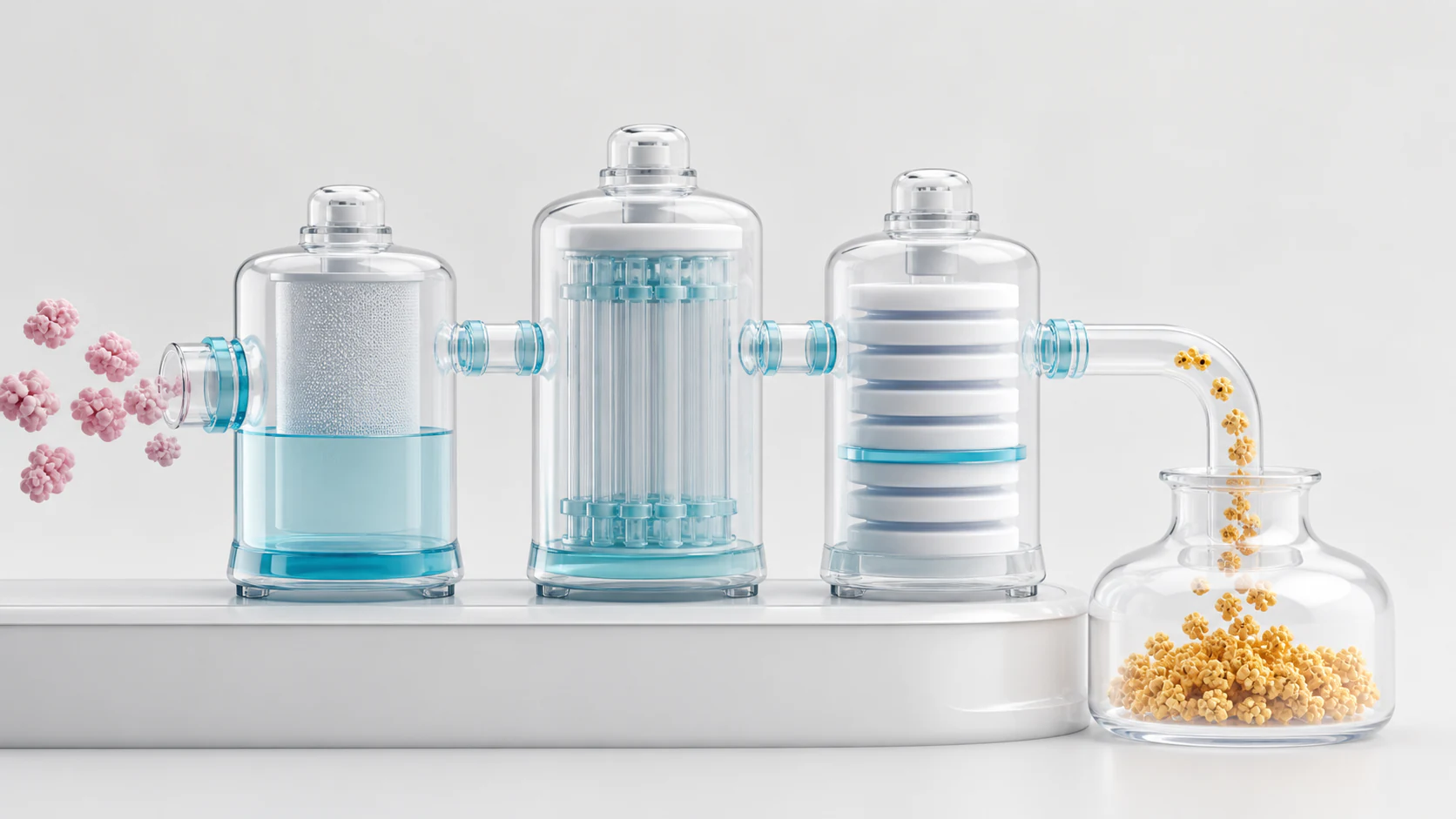
Bioprocess animation services become commercially useful when they connect downstream purification to quality confidence. Buyers do not only need to know that a product can be expressed. They need to understand how the process removes host-cell proteins, DNA, aggregates, media components or other impurities that could affect consistency, safety or development readiness.
A clean downstream visual can show material entering filtration, chromatography or polishing steps and emerging as a refined product stream. The scene should be simple enough to understand at a glance. Translucent modules, controlled color changes and separated product particles can help the viewer see what changes without requiring labels or dense process diagrams.
This is related to biotech 3D rendering services but downstream bioprocess work needs stronger emphasis on control, evidence and repeatability. The render should make purification and quality feel concrete, not ornamental.
- Show where the product stream becomes cleaner, more concentrated or better characterized.
- Keep purification scenes readable for non-manufacturing stakeholders.
- Avoid visual claims that imply regulatory readiness beyond the available evidence.
Build Assets for Websites Decks and CDMO Partnering
The best bioprocess animation services produce more than one hero image. A platform website may need a clean visual that signals manufacturing sophistication quickly. An investor deck may need a three-step manufacturing sequence, a scale-up figure, a quality-control scene and a process-risk mitigation visual. A CDMO or partnering deck may need to show where a capability fits inside a larger development path.
Planning those uses early prevents asset sprawl. A practical asset package can include a cover render, an upstream production scene, a downstream purification scene, a quality checkpoint image, slide-ready crops and animation-ready storyboards. The same visual language can support web pages, pitch decks, conference screens, technical explainers, BD outreach and recruiting material.
Good assets also clarify what is conceptual and what is evidence-backed. Conceptual process scenes can make workflow logic easier to understand. Evidence figures can show yield, purity, comparability, titer, recovery or release testing. Mixing those roles too casually can weaken credibility. Separating them makes the manufacturing story look more disciplined.
- Plan web, deck, conference and partner outreach crops before final rendering.
- Use one visual grammar for upstream production, scale-up, purification and quality.
- Write captions that make the communication role of each image clear.
Create a Reusable Bioprocess Visual System
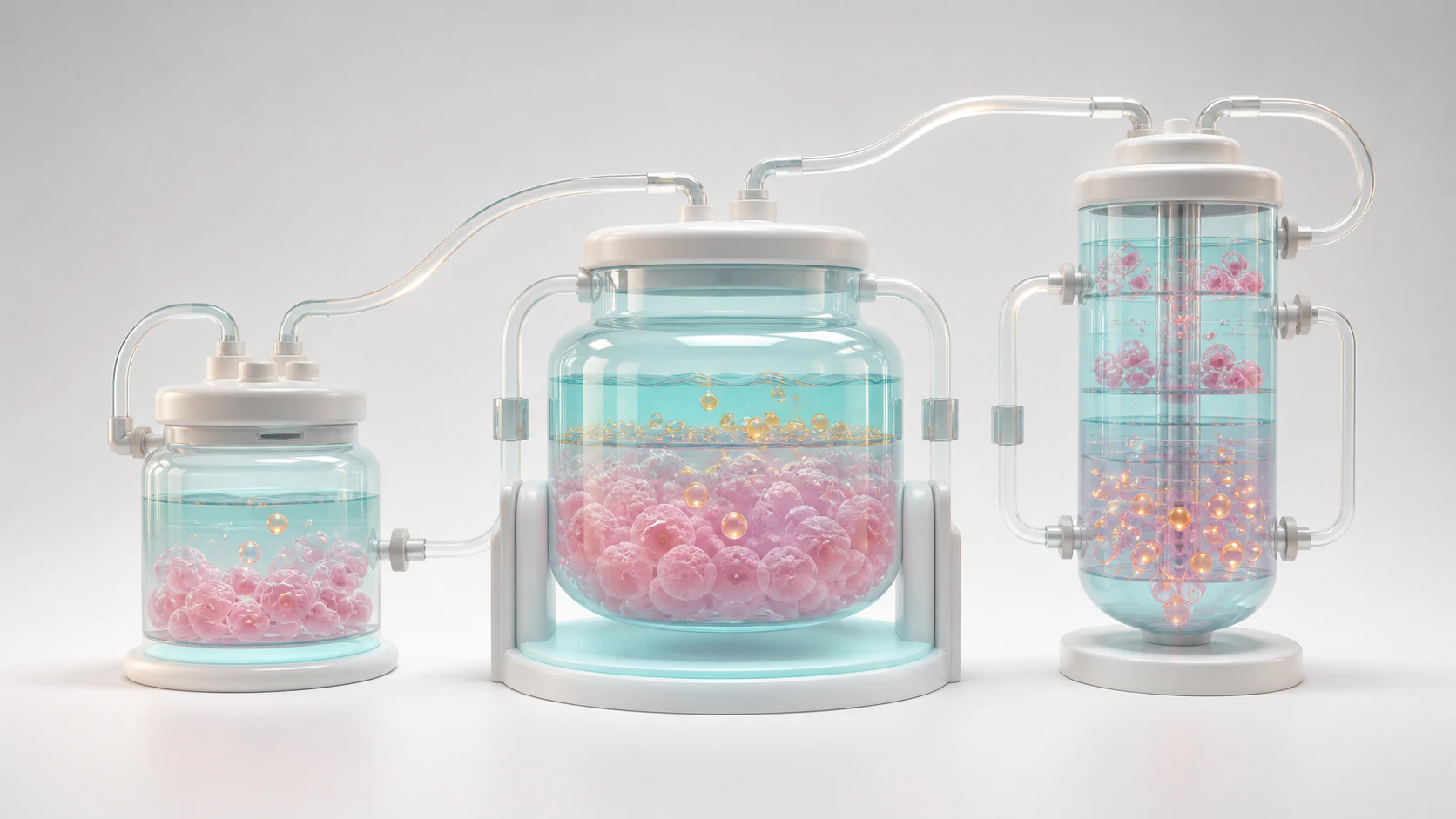
A reusable bioprocess visual system is often more valuable than a single polished animation. Biotech and manufacturing teams may need to explain different molecules, modalities, scales, process updates, analytical packages and development milestones over time. If each asset uses a different style, the manufacturing story can feel fragmented even when the process is consistent.
A visual system can define how cells are represented, how liquid layers appear, how product particles are shown, how purification modules look, how quality checkpoints are displayed and how scale changes are communicated. It can also define what to avoid: fake dashboards, unsupported glowing effects, crowded P and ID detail, unreadable labels and equipment decoration that does not explain the platform.
That system helps teams scale communication from early fundraising to later partnering and launch preparation. It can support biologics, enzymes, cell therapies, viral vectors, RNA platforms, fermentation workflows, formulation stories and analytical packages while preserving a recognizable scientific identity.
- Standardize cell cues, product cues, purification cues and quality cues.
- Build reusable modules that adapt to new processes and modalities.
- Review the system with process development, quality and commercial stakeholders before broad use.
FAQ About Bioprocess Animation Services
What are bioprocess animation services?
They are scientific visualization services that turn upstream production, downstream purification, scale-up strategy, quality control and manufacturing platform value into clear renders, figures and animation-ready storyboards.
Who needs bioprocess visuals?
Biotech startups, CDMOs, manufacturing platform companies, process development teams, translational groups and research organizations use these visuals when manufacturing strategy is central to fundraising, partnering, technical education or commercial positioning.
Can the visuals include real process data?
Yes. Strong projects often combine conceptual 3D process scenes with yield, purity, recovery, comparability or analytical evidence. The important point is to separate explanatory scenes from measured data so viewers understand the evidence boundary.
How many assets should a project include?
Many teams start with one cover image plus three or more supporting visuals, then expand into a short process animation, investor deck figures, website crops and a reusable bioprocess asset library.
- Use bioprocess visuals when manufacturing logic and buyer confidence need a fast clear explanation.
- Keep upstream, downstream and quality scenes visually connected.
- Create reusable assets if the platform supports several molecules, scales or process stages.
Ready to Build Bioprocess Visuals
Bioprocess animation services are most useful when they make manufacturing easier to evaluate. The right assets explain how the process works, where scale-up risk is controlled, what quality checkpoints support confidence and why the platform matters for buyers, partners or investors.
Animiotics helps biotech, CDMO, platform and research teams create bioprocess renders, upstream and downstream visuals, scale-up figures, manufacturing explainers, website assets, pitch deck visuals and animation-ready storyboards. The work can support fundraising, partnering, technical education, launch pages, scientific presentations and conference campaigns.
- Bring process stage, modality, quality goals and buyer context into the first brief.
- Use a reusable visual system for both platform-level and process-level assets.
- Turn biomanufacturing complexity into buyer-ready visuals without losing technical discipline.