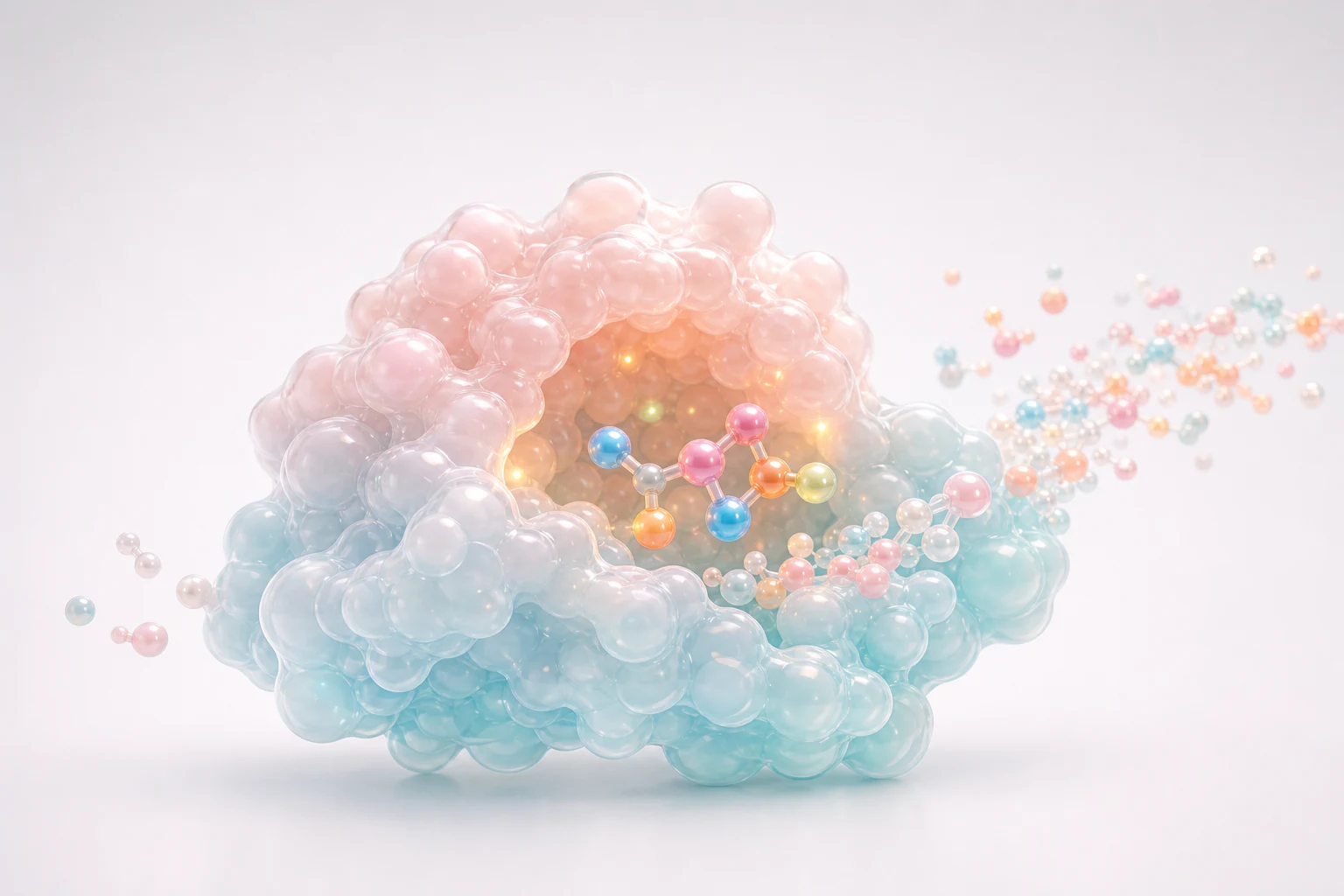
Why AI Drug Discovery Visualization Services Matter
AI drug discovery visualization services matter because computational platforms are judged long before a buyer has time to inspect every model, assay or dataset. A pharma partner, investor or scientific lead may understand the promise of machine learning in theory, but still need a fast visual answer to a practical question: what does this platform do that changes discovery decisions?
The challenge is that AI drug discovery can look abstract if it is shown only as code, model architecture, heat maps or generic network graphics. Buyers need to see how the platform moves from target biology to candidate generation, target engagement, experimental feedback and program decisions. A strong visual story turns the platform into a sequence of choices instead of a vague claim that artificial intelligence improves discovery.
Animiotics builds AI drug discovery visualization services for biotech and research teams that need credible scientific assets for websites, investor decks, BD conversations, conference talks and campaign launches. The goal is not to decorate an AI claim. The goal is to make model-guided discovery legible enough that a buyer can understand the platform value and ask better follow-up questions.
- Use AI drug discovery visuals when model outputs and biology must be understood together.
- Show the decision path from target to candidate to assay feedback.
- Avoid generic neural network art when the buyer needs proof of discovery relevance.
Turn Model Outputs Into a Discovery Story

AI platforms often produce outputs that are meaningful to the internal team but hard to read in a commercial setting: ranked targets, predicted structures, embeddings, docking poses, binding scores, selectivity hypotheses, pathway signals and assay updates. If every output is placed into one figure, the result feels technical but not persuasive. Visualization has to organize the outputs around the decisions they support.
A buyer-ready story might start with target biology, then show how the model narrows a design space, proposes candidate molecules or proteins and prioritizes experiments. The visual sequence can use simplified biomolecular scenes, candidate clusters and evidence panels without pretending that the render itself is the data. That separation is important because credible AI drug discovery communication distinguishes model suggestion from measured validation.
This is similar to the thinking behind drug discovery animation services but with more emphasis on how computational reasoning changes the search space. The visual should help a reviewer understand what the model contributes and where human or wet-lab review still anchors the claim.
- Translate model outputs into decision points rather than decorative data texture.
- Separate candidate generation, prioritization and validation as distinct visual layers.
- Use simplified scenes for the first read, then add technical depth where reviewers need it.
Explain Targets Candidates and Assay Feedback
The most useful AI drug discovery visuals connect three worlds that are often presented separately: the biological target, the candidate space and the experimental feedback loop. Without the target, the platform can feel detached from biology. Without candidate context, it can feel like an analytics product. Without assay feedback, it can look like unvalidated prediction.
A clear visual system can show target biology as a simplified molecular or cellular scene, candidate generation as a controlled set of designs and feedback as a separate evidence layer. The point is not to show every datapoint. The point is to help buyers see how the platform learns and how that learning changes the next discovery decision.
For platform teams, this structure is commercially useful because it works across several audiences. Scientific advisors can discuss assumptions and validation. BD teams can explain why a pharma partner should trust the workflow. Investors can see a repeatable system rather than one isolated asset or single program graphic.
- Anchor AI claims in target biology before showing prediction outputs.
- Show candidate choice as a narrowing process, not a random cloud of molecules.
- Pair explanatory renders with measured assay evidence when validation drives confidence.
| Visual Layer | Buyer Question | Useful Treatment |
|---|---|---|
| Target biology | What disease or mechanism is being pursued? | Simplified target scene with limited visual complexity |
| Model reasoning | How does the platform narrow choices? | Candidate clusters, ranked families or controlled search spaces |
| Candidate mechanism | Why should the molecule work? | Focused binding, pathway or perturbation scene |
| Assay feedback | What has been measured? | Separate validation panel with clear evidence boundaries |
Make Binding Selectivity and Target Engagement Visible
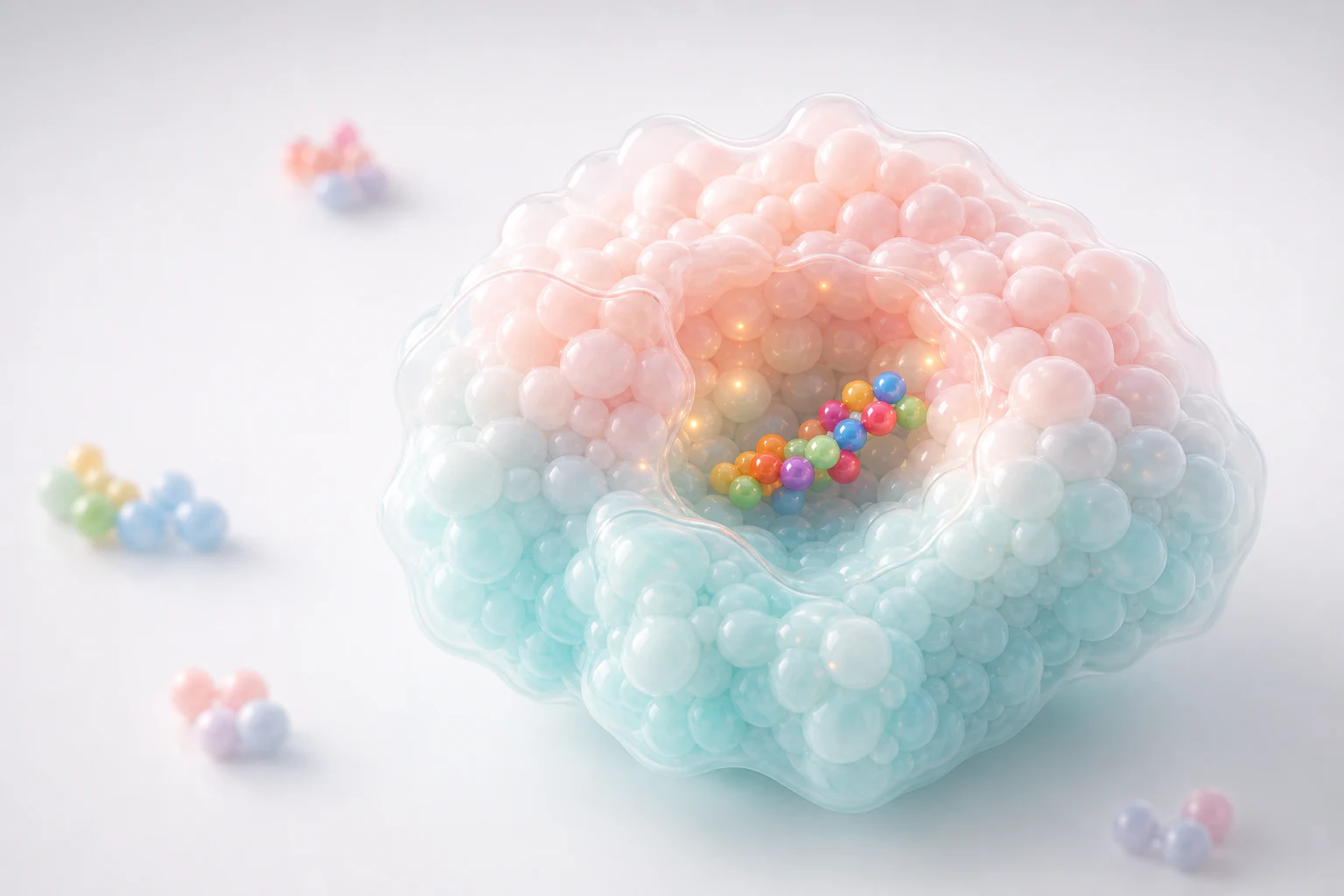
Many AI discovery companies need to explain target engagement. The claim may involve better binding, improved selectivity, a novel site, a conformational state, a protein-protein interaction or a candidate that changes pathway behavior. A generic molecule floating near a protein will not carry that story. The visual has to focus attention on the interaction that supports the platform claim.
A clean target engagement scene can use a soft molecular surface, a restrained candidate ligand, a focused binding pocket and a subtle signal where the interaction matters. It should avoid overloading the first asset with residue labels, docking scores or pseudo-interface metrics. Those details can appear in deeper technical material, but the top-level render should communicate the biological logic in seconds.
This approach connects naturally with protein-ligand interaction visualization because binding visuals become stronger when they clarify what the viewer should compare. AI drug discovery visualization adds the platform layer: why this candidate was found, why it was prioritized and why it deserves experimental attention.
- Show the designed or predicted interaction site before adding technical annotations.
- Use candidate comparisons sparingly so selectivity remains readable.
- Do not imply measured binding or clinical activity unless the team has evidence.
Design Assets for Websites Decks and Partnering
AI drug discovery visualization services should produce assets for the channels where platform value is evaluated. A website hero needs to create immediate category recognition and differentiation. An investor deck needs to show repeatability, evidence and pipeline relevance. A pharma partnering deck may need to explain the workflow in enough detail for a technical team to assess fit without overwhelming non-specialists.
The same scientific idea often needs several formats: a wide cover render, slide figures, a short mechanism loop, a platform overview scene, candidate comparison visuals and social crops. Planning those uses early avoids the common problem where one complex diagram is stretched across every channel and fails in all of them.
For biotech teams, the best visuals make the company easier to evaluate. They help viewers understand what the platform does, what evidence supports it, which claims are still exploratory and why the science is commercially relevant. That discipline is especially important in AI-heavy categories where buyers are sensitive to hype.
- Plan separate crops for website, deck, conference and outreach use.
- Keep the same visual language across platform and program assets.
- Use captions that clarify evidence boundaries instead of adding hype.
Build a Reusable AI Discovery Visual System

A reusable visual system is often more valuable than one finished illustration. AI drug discovery platforms may need to show target selection, molecule generation, protein design, phenotypic screening, biomarker feedback, medicinal chemistry optimization and translational evidence over time. If every asset uses a different visual language, the platform can feel fragmented even when the underlying workflow is coherent.
The system should define how targets look, how candidate families are represented, how binding or perturbation is highlighted, how computational outputs are shown and how experimental evidence is separated from explanatory renders. It should also define what not to use: fake dashboards, unreadable network backgrounds, unsupported efficacy scenes or decorative AI motifs that do not explain the discovery process.
Reusable systems are especially useful for companies with multiple programs or partner-facing applications. The visual grammar can adapt to oncology, immunology, protein design, RNA, biomarkers or small molecules while preserving a recognizable platform identity.
- Standardize targets, candidates, evidence and feedback loops across campaigns.
- Build modular renders that can support new programs without starting over.
- Review the visual system with scientific and commercial stakeholders before scaling.
FAQ About AI Drug Discovery Visualization Services
What are AI drug discovery visualization services?
They are scientific visualization services that turn computational discovery workflows, model outputs, target biology, candidate mechanisms and validation evidence into clear renders, figures, storyboards and animations.
Who needs AI drug discovery visualization?
Biotech startups, platform companies, pharma innovation teams, CROs, research institutes and translational groups use these visuals when they need to explain how computational tools change discovery decisions.
Can these visuals include real data?
Yes. The strongest projects often combine explanatory 3D renders with real structures, assay results, target biology, model confidence or pipeline evidence. The key is to make clear which elements are conceptual and which are measured.
How many assets should a launch package include?
Many teams start with one cover image plus three to five supporting body visuals, then expand into animation loops, investor deck figures, BD visuals and reusable platform modules.
- Use AI discovery visuals when model-guided decisions need fast explanation.
- Keep model outputs, biology and assay evidence visually distinct.
- Build reusable assets if the platform supports several targets or programs.
Ready to Build AI Drug Discovery Visuals
AI drug discovery visualization services are most useful when they make the platform easier to evaluate. The right assets explain how models guide decisions, how candidates engage biology, how evidence returns to the workflow and why the system can create program value.
Animiotics helps biotech, platform and research teams create AI drug discovery renders, mechanism animations, deck figures, website assets, target engagement scenes and animation-ready storyboards. The work can support launch pages, fundraising, partnering, scientific presentations and conference campaigns.
Talk to Animiotics about AI drug discovery visualization services
- Bring the model workflow, validation evidence and audience decision into the first brief.
- Use a reusable visual system for platform and program-level assets.
- Turn AI discovery complexity into buyer-ready visuals without losing scientific discipline.