
Why NIH Grant Figures Matter
The best NIH grant figures do more than decorate a page. They reduce reviewer effort. They show that the project has a coherent logic. They help a busy study section member understand significance innovation and approach without rereading dense blocks of text. When a figure works the argument feels easier to follow and the application feels more credible.
That matters because reviewers do not reward visual complexity by itself. They reward clarity. Strong grant application figures make the research question legible at a glance. They show relationships among hypotheses methods decision points and expected outcomes. They also create memory hooks. A reviewer may forget a paragraph full of procedural detail. The reviewer is more likely to remember a clean schematic that shows how Aim 1 feeds Aim 2 and why the result changes the field.
For many teams the mistake is treating visuals as late stage formatting. In practice the most effective nih research strategy figures are part of scientific thinking itself. If you cannot draw the logic clearly there is a good chance the logic still needs work. That is why figure design often improves not just communication but the proposal.
This post explains how to plan nih grant figures that support reviewer comprehension from the Specific Aims page through the Research Strategy. It covers figure types layout choices accessibility and common pitfalls so your visuals help the science instead of competing with it.
What Reviewers Need from Grant Application Figures

Reviewers are looking for a fast answer to a small set of questions. Why is this problem important. What is new here. Why is this team positioned to solve it. What exactly will happen in each aim. What evidence suggests the plan is feasible. Good figures answer those questions in the same order that reviewers naturally process the application.
A strong figure usually has one job. It may orient the reader to the biological system. It may map the workflow. It may compare conditions or expected outcomes. It may summarize preliminary data. When one image tries to do all of that at once it becomes slower to decode. NIH grant figures work best when each panel has a distinct purpose and a readable visual hierarchy.
Text density is another issue. Reviewers should not need to hunt through tiny labels to understand the message. Use direct panel titles. Use short callouts that interpret the result. Use arrows and grouping to show causality or sequence. If a label is only there because the team could not decide what to cut the figure is probably still under edited.
Consistency across figures is equally important. If blue means control in one panel it should not mean treatment in the next. If icons represent cell types use the same shapes throughout. This continuity lowers cognitive load. If you want a useful model for maintaining visual consistency across scientific assets see our guide to clear publication-ready visual summaries and our practical article on figure accessibility and alt text.
- Match each figure to one reviewer question
- Prioritize legibility over decorative detail
- Keep symbols colors and panel logic consistent across the application
- Use captions and callouts to interpret the image instead of merely naming components
The Essential Types of NIH Research Strategy Figures
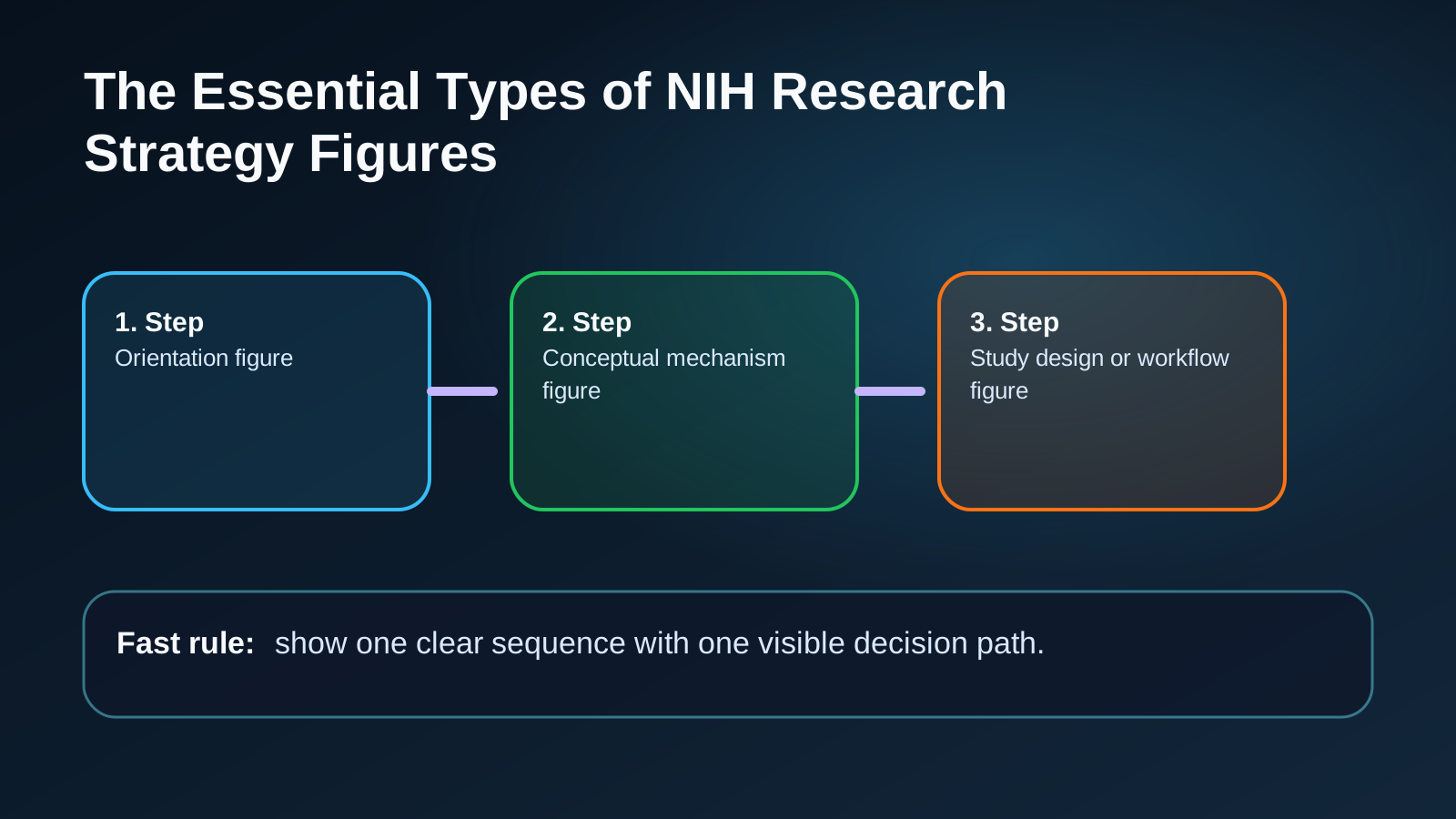
Most competitive applications use a small set of figure patterns. The first is the orientation figure. This is common on the Specific Aims page or early in Significance. It shows the disease model pathway target class patient workflow or experimental system so the reviewer can understand the domain quickly. The second is the mechanism or conceptual model figure. This explains the proposed biology and where the intervention or discovery sits within that biology.
The third type is the study design figure. This is often the backbone of the Approach. It maps cohorts conditions timepoints assays analytic branches and decision points. If a project includes branching logic a diagram is often clearer than prose. The fourth type is a preliminary data figure. Here the aim is not to reproduce a manuscript figure in full detail. The aim is to show the evidence that makes the proposed work believable.
A fifth type is the outcome or impact figure. This visualizes what success would produce. It can show how a new assay stratifies patients how a platform scales across targets or how a computational model informs an experimental loop. This matters because reviewers are evaluating future value not only current technique.
Projects in structural biology molecular engineering or mechanism of action storytelling may also benefit from controlled 3D imagery. If you work from structure files our posts on PDB to animation and AlphaFold 3 complex visualization show how to turn technical molecular views into figures that communicate scientific meaning rather than software output.
- Orientation figure
- Conceptual mechanism figure
- Study design or workflow figure
- Preliminary data figure
- Outcome or translational impact figure
| Figure Type | Best Use | Core Design Goal |
|---|---|---|
| Orientation | Early context | Help reviewers understand the system fast |
| Mechanism | Significance and Innovation | Show how the biology or intervention works |
| Workflow | Approach | Make the plan and dependencies easy to follow |
| Preliminary Data | Feasibility | Support confidence with selective evidence |
| Impact | Overall value | Show why successful execution matters |
How to Build NIH Grant Figures That Read Fast

Start with the message sentence not the artwork. Before opening any design tool write one sentence that begins with This figure shows. If the team cannot agree on that sentence do not move into production yet. Once the message is fixed decide what the reviewer must notice first second and third. That sequence should determine size color contrast and placement.
Next remove anything that does not support the message. Background texture extra gradients small legends and duplicated labels usually slow the figure down. White space is not empty. It is a tool for grouping and pacing. The reviewer should be able to scan a page and understand where one panel ends and the next begins.
Then make interpretation explicit. A panel title like Increased signal after treatment is stronger than Results. A short note like Validation in primary cells gives reviewers context without making them infer your intention. If the figure contains quantitative data use axis labels units and sample size where needed but resist the urge to miniaturize an entire manuscript panel into the grant.
For complex mechanisms use progressive disclosure. Show the simple model first. Then add only the critical detail. Teams working on multi component therapeutics often benefit from this approach because target binding trafficking and downstream effect can quickly become visually crowded. Our examples on bispecific antibody mechanism of action animation and ADC biology storytelling show how layered complexity can stay readable when each scene has one clear communication task.
- Define the message before designing
- Create a clear first second and third reading order
- Cut decorative or redundant detail
- Use explicit panel titles and interpretive callouts
- Reveal complex biology in layers instead of all at once
A Practical Workflow for Figure Planning
An efficient workflow starts earlier than most teams expect. As soon as aims are stable draft figure outlines in parallel with writing. Use boxes arrows and plain text. At this stage quality does not matter. What matters is whether the logic survives contact with the page. Many proposal weaknesses appear immediately when a workflow is drawn instead of described.
After that build a figure list tied to application sections. Note the purpose of each figure the key message the source material and the owner. This prevents duplication and keeps the package coherent. It also helps principal investigators decide where a grant infographic is actually useful and where text alone is enough.
Once rough layouts exist review them in the context of the full application. A figure that looks fine by itself may repeat points already made in the surrounding paragraph. Another may introduce terminology before the text defines it. Edit across the whole document not just inside each panel. The goal is a sequence that feels inevitable to the reviewer.
Finally perform an accessibility and legibility pass. Check color contrast. Verify that labels can survive PDF export. Make sure line weights and typography remain clear when printed. Replace jargon where a simpler term works. Accessibility is not optional polish. It is part of persuasive communication because any feature that slows reading can also weaken reviewer confidence.
- Sketch figure logic while drafting aims
- Maintain a figure list with purpose owner and source assets
- Review figures in page context not in isolation
- Run a final accessibility and print legibility check
Common Mistakes That Weaken NIH Grant Figures

The most common mistake is overloading a single figure. Teams often fear that adding a second panel or separate figure will look repetitive. The opposite is usually true. When information is split into manageable chunks the application feels more organized and more deliberate.
Another mistake is importing journal style visuals without adapting them for grant reading. Manuscript figures often assume deep specialist attention. Grants are read faster and under more comparative pressure. A dense heatmap or many line graph panel may be defensible in a paper yet ineffective in a proposal unless it is simplified and annotated for immediate interpretation.
A third problem is visual inconsistency across aims. If each contributor builds figures independently the application can feel stitched together. Reviewers may not say the figures caused concern. They may simply describe the package as diffuse or hard to follow. Shared templates color rules icon sets and caption patterns can prevent that impression.
Finally many teams underuse captions. A caption should not repeat the title word for word. It should state why the reviewer is seeing the figure now. In other words it should connect the visual to the argument. The best NIH grant figures are not isolated images. They are tightly integrated evidence inside a larger persuasive narrative.
- Too much information in one figure
- Journal style density carried over into grant pages
- Inconsistent visual language across aims
- Captions that name content without explaining significance
FAQ: NIH Grant Figures
Should every NIH application include figures?
ANot necessarily. Figures should appear where they reduce reviewer effort. If a paragraph communicates the point more clearly than a graphic use the paragraph. Add figures when the science includes process structure comparison decision logic spatial relationships or mechanism that benefits from visual explanation.
How many grant application figures are too many?
AThere is no universal number. The right amount depends on page limits and project complexity. A useful rule is that each figure should earn its space by answering a distinct reviewer question. If two figures do the same job merge them or cut one.
What makes a good grant infographic?
AA good grant infographic is selective. It emphasizes relationships and decisions rather than exhaustive detail. It uses consistent symbols readable labels and a clear path through the information. It should never feel like a poster shrunk into a manuscript page.
Can preliminary data figures be stylized?
AYes if style supports comprehension. Use clean design strong hierarchy and consistent color. Avoid effects that make values harder to read. The standard is not artistic novelty. The standard is whether the reviewer understands the evidence faster and more accurately.
- Use figures when they clarify logic or mechanism
- Judge quantity by usefulness not by an arbitrary count
- Keep infographics selective and readable
- Let style serve evidence instead of distracting from it
CTA: Turn Your Grant Story into Clear Visual Evidence
If your team is preparing nih grant figures now the highest leverage move is to treat visuals as part of strategy not decoration. The strongest figures make your aims easier to trust because they expose the logic of the work. They show how the pieces connect and what success looks like.
Animiotics helps research teams turn complex biology workflows mechanisms and structural stories into grant application figures that read quickly and hold together across the full submission. If you need help with a Specific Aims schematic a set of nih research strategy figures or a polished grant infographic we can help you turn expert knowledge into reviewer friendly visuals.
See examples and discuss your project at Animiotics.