
Why an ai scientific figure generator matters now
An ai scientific figure generator is no longer a novelty for research teams. It is quickly becoming a practical layer in the figure production workflow because the demand for visual communication keeps rising. Papers need sharper summary figures. Grants need faster visual framing. Startup decks need scientific credibility at a glance. The old workflow of sketching in slides then redrawing everything by hand is often too slow for modern labs.
The appeal is simple. A strong research figure generator helps scientists move from concept to draft in minutes instead of days. That speed matters when a team is comparing mechanisms, iterating on a graphical abstract or building multiple versions of the same story for a manuscript and a presentation. Used well the tool does not replace scientific judgment. It removes repetitive layout work so researchers can spend more time on accuracy and message.
This shift also lines up with what publishers expect from modern figures. Nature’s research figure guide emphasizes clarity accessibility sizing export quality and image integrity. Those standards do not disappear when AI enters the workflow. In practice they become even more important because faster generation creates more options and more chances to choose poorly. The value of a scientific figure AI is not just that it can generate visuals. The value is that it can help teams reach a cleaner first draft that is easier to review and refine.
For labs already thinking beyond static figures this is part of a larger communication stack. If you also build broader visuals for papers and promotion you may want related workflows from How to Create a 3D Graphical Abstract for Nature and Cell and The Rise of the Video Abstract.
- AI speeds up rough drafting when the visual goal is already clear.
- Human review is still required for scientific accuracy and journal readiness.
- The best outcome is faster iteration with tighter visual hierarchy.
What AI scientific illustration does well
The strongest use case for AI scientific illustration is not fully automatic art. It is guided construction. Researchers know the pathway cell state molecule assay or device they need to show. The software helps assemble that story with cleaner composition consistent iconography and faster layout decisions. This is where a scientific figure AI earns its place because most figure bottlenecks are not scientific. They are visual organization problems.
A good system handles recurring tasks well. It can propose layouts for multi-panel figures. It can keep labels aligned across panels. It can standardize color use for the same object across different views. It can help generate alternative compositions for a methods figure a mechanism summary or a grant concept page. Those gains are useful because consistency is hard to maintain when several people edit the same asset over time.
This is also where automatic figure generation becomes practical. You can start from a prompt or a structured form then turn that draft into something your team can critique. Instead of asking whether the figure is pretty you can ask whether it makes the claim easier to understand. That is a better review question and it leads to better outputs.
The most effective teams treat the first AI output as a sketch with momentum. They then correct labels simplify the scene and remove any visual element that does not support the point. That review step is what turns a fast draft into publication-ready figures. If your team is also evaluating tool options in the market the roundup at Best BioRender Alternatives for 3D Science Animation offers useful context.
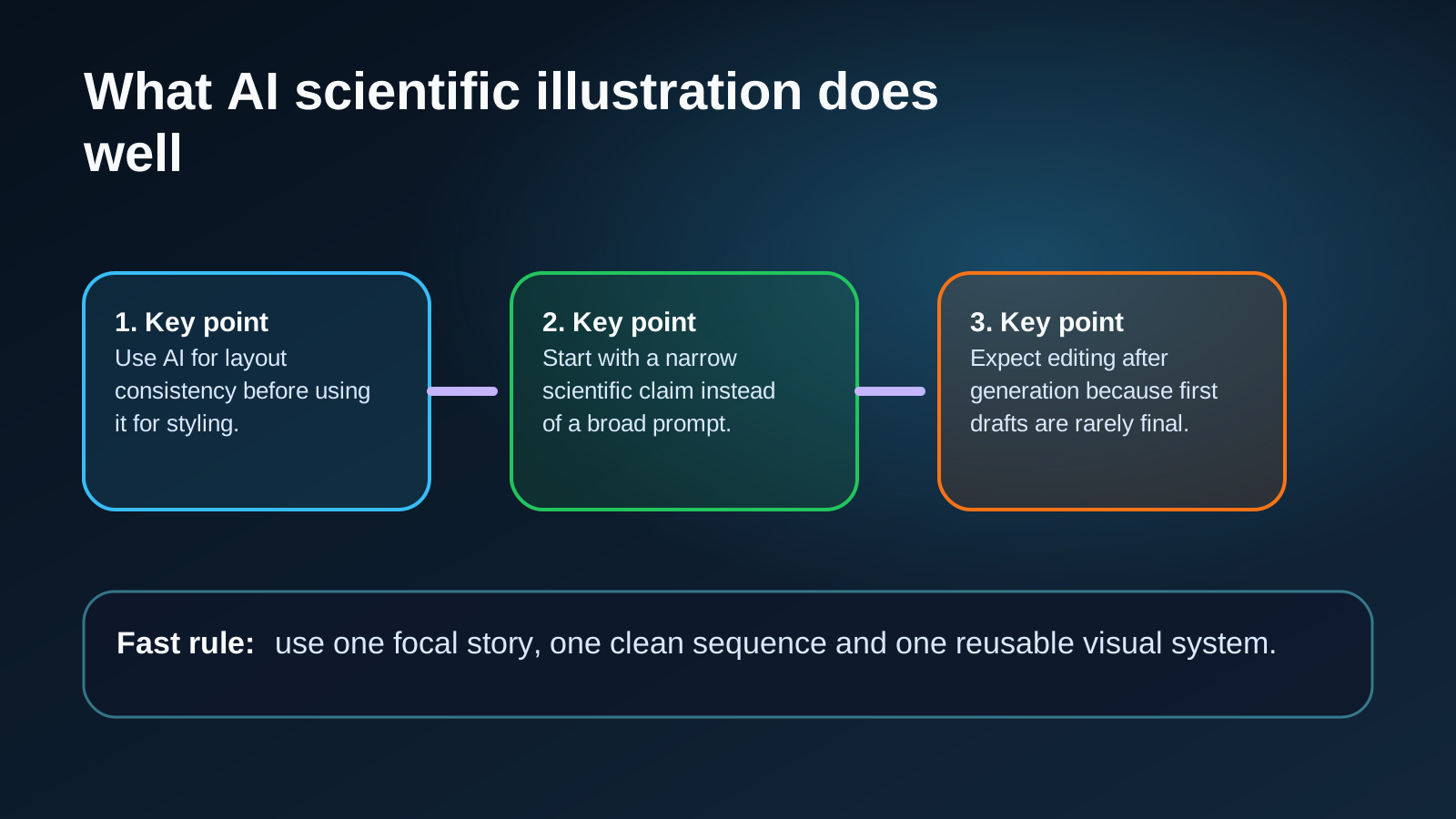
- Use AI for layout consistency before using it for styling.
- Start with a narrow scientific claim instead of a broad prompt.
- Expect editing after generation because first drafts are rarely final.
| Task | What AI helps with | What still needs human review |
|---|---|---|
| Panel layout | Fast composition and spacing | Scientific emphasis and reading order |
| Labeling | Consistent placement and formatting | Terminology gene names and residue accuracy |
| Visual style | Color and icon consistency | Journal fit accessibility and meaning |
| Versioning | Quick alternate drafts | Final approval and submission readiness |
How to get publication-ready figures from a scientific figure AI
Publication-ready figures do not come from generation alone. They come from a controlled workflow. Start with a figure brief. Define the audience the claim the core objects and the decision the reader should make after seeing the image. A vague prompt produces vague visuals. A clear brief gives the AI scientific figure generator enough structure to build something useful.
Next separate scientific truth from visual expression. Scientific truth includes sequence orientation pathway direction experimental timing molecule identity and relative scale when scale matters. Visual expression includes icon style color palette spacing and whether the figure is flat or dimensional. When these two layers are mixed too early teams often spend time polishing a figure that is conceptually wrong.
Then review against publication constraints. Nature’s figure specifications highlight readability export quality color handling and accessibility. Those criteria are a strong checkpoint even when you are not submitting to Nature. Text should stay legible at target size. Colors should still work for readers with impaired color discrimination. Panels should feel related without becoming crowded. A fast AI workflow is only valuable if the final asset survives downsampling PDF export and journal layout.
Finally build a revision loop. One scientist should check content. One editor or designer should check hierarchy. One final reviewer should check whether the image says too much. This step is where many teams recover clarity. It is also where a research figure generator becomes more than a speed tool. It becomes a collaboration tool because it gives everyone something concrete to revise early in the process.
- Write a figure brief before generating anything.
- Lock scientific facts first then refine visual style.
- Review every figure at final output size before approval.
Where automatic figure generation creates the most value

Automatic figure generation is most valuable in high-iteration environments. Grant teams benefit because they need to test several visual framings quickly. Early-stage biotech teams benefit because they often need the same mechanism shown across website pages investor materials and conference slides. Academic labs benefit when one paper contains several related overview figures that need a shared visual language.
Methods and workflow figures are especially good candidates. These figures often have clear steps known inputs and familiar layouts. AI can help organize them faster than manual drawing while keeping the scene clean. Mechanism summaries are another strong use case as long as the science is well scoped. A prompt like "show how this receptor activates downstream transcription" is too broad. A structured input with receptor state ligand event kinase activation and nuclear output is much more likely to generate a useful draft.
Teams also see strong returns when translating a static concept into multiple formats. A figure first created as a paper schematic can later become a lightweight motion asset or a homepage explainer. That is why communication planning matters early. If your visual system may evolve into motion later the ideas in How to Create a Mechanism of Action Animation Without a $20,000 Budget and Animiotics Scientific 3D Animation Software can help you design with reuse in mind.
The common pattern is simple. The more repeated structure your figure type has the more value a scientific figure AI can provide. The more your figure depends on original data interpretation the more careful your review process must be.
- Use AI heavily for workflows summaries and concept panels.
- Use extra caution when a figure interprets original experimental data.
- Plan for reuse if the same story may appear in paper slide and website formats.
Common mistakes when using a research figure generator
The biggest mistake is treating the tool like an authority. An AI scientific figure generator can suggest a visual answer that looks polished but still introduces biological confusion or incorrect emphasis. This is especially risky in pathway diagrams where one misplaced arrow or one ambiguous compartment can change the meaning of the story.
The second mistake is asking for too much in one figure. Teams sometimes use a research figure generator to merge background model mechanism assay design and results context into a single panel. The output may look dense and expensive but it usually reads slowly. A better approach is to split the work into one overview figure and one supporting figure with a clear relationship between them.
The third mistake is ignoring integrity and disclosure issues. Nature has stated that it will not publish imagery created wholly or partly using generative AI in many contexts and Elsevier’s journal policy also restricts the use of generative AI to create or alter images in submitted manuscripts. That does not mean AI has no place in research communication. It means teams must understand where AI-assisted drafting is acceptable and where journal policy draws a hard line. If a figure is headed for formal submission the policy check should happen early rather than at the end.
The fourth mistake is stopping after the first acceptable draft. Good figure work usually needs simplification. If a label can be removed remove it. If two panels say the same thing keep one. If the focal object is not obvious after two seconds the composition is not done yet. For broader scientific storytelling principles the article on grant-winning figures for NIH and NSF is a strong companion read.
- Do not assume visual polish equals scientific correctness.
- Break overloaded figures into smaller claims.
- Check journal AI policies before a figure reaches final submission.
- Simplify after generation because clarity usually improves with subtraction.
FAQ
What is an ai scientific figure generator?
AIt is a tool or workflow that helps researchers produce figure drafts from prompts structured inputs templates or existing assets. The best versions support AI scientific illustration while still allowing detailed editing and scientific review.
Can an ai scientific figure generator create publication-ready figures on its own?
AUsually no. It can create a strong starting point fast. Publication-ready figures still need expert review for terminology scientific accuracy accessibility consistency and journal fit.
When is scientific figure AI most useful?
AIt is most useful for overview panels methods diagrams mechanism summaries grant visuals pitch decks and any workflow that needs multiple versions of the same visual story.
Is automatic figure generation safe for journal submission?
AIt depends on the journal and on how the figure was created. Some publishers restrict or prohibit AI-generated images in submitted manuscripts. Always review the current policy before finalizing a submission workflow.
How do I choose between a manual workflow and a research figure generator?
AChoose based on complexity and speed. If the figure is highly original data art with strict submission constraints a manual route may be safer. If the figure is a communication layer around known science an AI-assisted workflow can save significant time.
What makes AI scientific illustration effective instead of generic?
AA precise brief strong internal review consistent visual rules and a willingness to cut unnecessary detail. The technology helps most when the team already knows the message it wants to communicate.
- Use AI for acceleration not for unreviewed authority.
- Publisher rules matter as much as design quality.
- A strong figure brief improves output quality immediately.
CTA: Build better figures with Animiotics
If your team needs faster figure production without sacrificing scientific clarity Animiotics can help. Use Animiotics to turn complex ideas into cleaner visuals with a workflow designed for scientists startups and research-driven teams.
If you want an ai scientific figure generator workflow that supports sharper drafts stronger AI scientific illustration and faster iteration toward publication-ready figures start with Animiotics and build from a system made for scientific communication.
- Move from idea to draft faster.
- Keep visual language consistent across projects.
- Start at / today.